The ADA estimates that nearly 42% of American adults aged 30 and older have some form of periodontal disease — and for millions of them, non-surgical treatment isn’t enough. Periodontal pocket reduction surgery exists for exactly these cases: when the pockets between your teeth and gums are so deep that bacteria can’t be effectively removed without a surgical approach.
If your periodontist is recommending this procedure, you’re probably wondering what it costs, whether insurance will help, and whether it’s worth it. Here’s what you need to know.
What Is Periodontal Pocket Reduction Surgery?
Your gums should fit snugly around each tooth, with pocket depths of 1–3 mm. In healthy gums, that’s shallow enough to clean with brushing and flossing. Gum disease causes these pockets to deepen — 4–6 mm pockets are concerning, and 7 mm or deeper indicates advanced periodontitis.
Pocket reduction surgery (also called osseous surgery or resective surgery) involves:
- Folding back the gum tissue to expose roots and underlying bone
- Removing bacteria, infected tissue, and calculus deposits
- Reshaping or smoothing the bone (ostectomy/osteoplasty) to eliminate pockets where bacteria accumulate
- Repositioning and suturing the gums closer to the bone
The goal is to reduce pocket depths to 3–4 mm — shallow enough for you and your hygienist to maintain effectively with regular cleanings.
Periodontal Pocket Reduction Cost Breakdown
| Treatment Scope | Low | Typical | High |
|---|---|---|---|
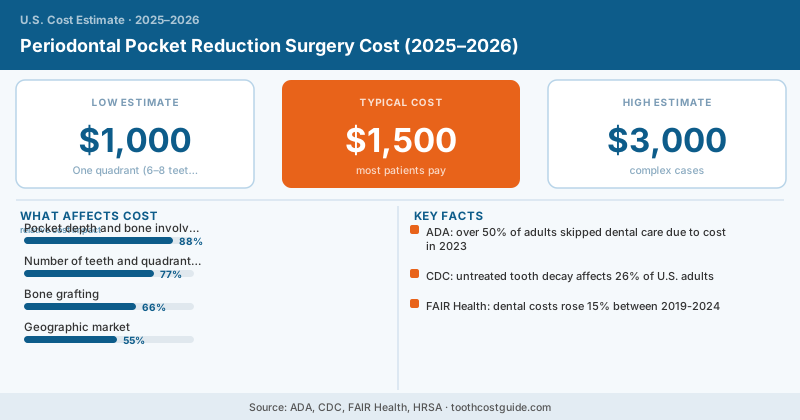
| One quadrant (6–8 teeth) | $1,000 | $1,500 | $3,000 |
| Two quadrants | $2,000 | $3,000 | $5,500 |
| Three quadrants | $3,000 | $4,500 | $8,000 |
| Full mouth (four quadrants) | $4,000 | $6,000 | $12,000 |
| Bone graft per site (if added) | $300 | $700 | $1,500 |
| IV sedation (optional) | $400 | $750 | $1,500 |
These are the surgeon’s fees. They don’t always include anesthesia, X-rays, or follow-up visits — ask for an itemized estimate.
What Determines the Price?
Pocket depth and bone involvement. Deeper, more irregular pockets require more surgical time. Bone defects (craters, angular defects) that need reshaping or grafting add cost and complexity.
Number of teeth and quadrants. Periodontists typically treat one or two quadrants per appointment, staged over several weeks. Each quadrant is priced separately, so a full-mouth treatment involves multiple billing cycles.
Bone grafting. If significant bone loss exists, regenerative techniques — including bone graft material, membranes, or growth factors — can help rebuild the support structure around teeth. This is significantly more expensive than simple resective surgery but may save teeth that would otherwise be lost.
Geographic market. Periodontal fees in major metro areas run 40–70% higher than in rural markets. The same one-quadrant procedure that costs $1,100 in Kansas City might be $2,500 in Manhattan.
Specialist training and reputation. Board-certified periodontists command higher fees. That training matters for complex cases involving extensive bone loss or multiple teeth with questionable prognosis.
If you need full-mouth treatment and your insurance has a $1,500–$2,000 annual maximum, have two quadrants treated in Q4 of one year and two more in January of the next. You’ll collect two separate annual-maximum payouts — potentially saving $1,500–$2,000 compared to scheduling everything in a single year. Most periodontists are familiar with this strategy and happy to accommodate it.
Insurance Coverage for Pocket Reduction Surgery
Most PPO dental plans classify periodontal pocket reduction as a major periodontal service and cover 50% of the allowed fee after your deductible — similar to how they handle crowns or dentures.
The problem is the annual maximum. With a $1,500 annual cap and 50% coverage, your insurer might pay $750 per year. If your treatment costs $6,000 total across four quadrants, insurance covers maybe $1,500 over two years — leaving you with $4,500 out of pocket. That’s still meaningful savings, but it’s not the 50% you might expect when you see “50% coverage.”
What to do before you schedule:
- Request a pre-authorization from your insurer
- Have your periodontist’s billing team submit the periodontal charting and X-rays with the request
- Ask explicitly: what is the allowed fee, what percentage is covered, what’s my remaining deductible, and what’s my remaining annual maximum?
The CDC reports that severe periodontitis affects approximately 8–9% of U.S. adults — roughly 22 million people. Many have insurance, but are surprised by how much remains out-of-pocket given annual maximum limitations.
Non-Surgical Alternative: When Is It Enough?
Not everyone with deep pockets needs surgery. Scaling and root planing (SRP) — a deep cleaning performed with the gums intact — is the first-line treatment for periodontal disease and costs $200–$400 per quadrant. Your periodontist will reassess pocket depths 6–8 weeks after SRP. If pockets reduce to 4–5 mm and there’s no bleeding, surgery may not be needed.
Surgery is typically recommended when pockets remain 6 mm or deeper after SRP, or when there are bone defects (craters, furcation involvement) that can only be addressed through direct access.
Skipping periodontal treatment because of cost leads to a much more expensive outcome. As disease progresses, more teeth are lost. Replacing each tooth with an implant costs $3,000–$5,500. A full-arch implant solution runs $20,000–$40,000. The math strongly favors treating the disease now.
Recovery: What to Expect
Pocket reduction surgery is done under local anesthesia as an outpatient procedure. Most patients:
- Return to work in 2–3 days (desk work) or 3–5 days (physical work)
- Have swelling and soreness for 3–5 days
- Wear a periodontal dressing over the wound for 1–2 weeks
- Eat soft foods for 1–2 weeks
- Return for suture removal at 1–2 weeks
Most patients are surprised that the procedure is significantly more tolerable than they expected.
Long-Term Maintenance
After surgery and healing, you’ll need periodontal maintenance (deep cleaning) every 3–4 months — typically indefinitely. These visits ($150–$300 each) keep bacteria levels from rebuilding in the treated areas. Skipping maintenance is the most common cause of disease recurrence. Budget for this ongoing cost as part of your long-term care plan.
Bottom Line
Periodontal pocket reduction surgery costs $1,000–$3,000 per quadrant, with full-mouth treatment ranging from $4,000–$12,000 depending on extent and complexity. Insurance covers 50% of allowed fees, but annual maximums mean significant out-of-pocket costs for extensive treatment. Staging across two calendar years, requesting pre-authorization, and using FSA/HSA funds are the most effective ways to manage the financial burden. Most importantly — treat this disease now. Every tooth you save is worth far more than the cost of the surgery protecting it.
Frequently Asked Questions
Periodontal pocket reduction surgery typically costs $1,000–$3,000 per quadrant (section of your mouth), meaning a full-mouth procedure can range from $4,000–$12,000 depending on the number of quadrants treated and your location. Factors like your dentist's experience, local market rates, and the severity of your periodontal disease can push costs toward the higher or lower end of this range.
Most dental insurance plans cover 50% of periodontal surgery costs after you meet your deductible, though some plans may cover only 40% or exclude the procedure entirely if deemed cosmetic rather than therapeutic. Your out-of-pocket cost typically ranges from $500–$2,000 per quadrant, but you should verify your specific plan's periodontal coverage limits and any waiting periods before scheduling.
Recovery from periodontal pocket reduction surgery usually takes 2–3 weeks, with most patients able to return to normal eating and oral hygiene routines after 7–10 days. You may experience swelling, tenderness, and minor bleeding during the first week, and your dentist will typically schedule follow-up visits at 1 week and 4–6 weeks to monitor healing.