You’re told one of your teeth is “mobile” — dentist shorthand for loose. Maybe it’s been bothering you when you bite. Maybe it was found on a routine exam. Either way, the next question matters a lot: is this tooth worth saving, and how much will it cost to stabilize it?
Tooth splinting is the procedure designed to answer the first question by buying time for the second. Here’s what you’ll pay.
Periodontal Splinting Cost
| Splinting Type | Typical Cost |
|---|---|
| Resin-bonded fiber splint (1–4 teeth) | $400–$900 |
| Resin-bonded fiber splint (full arch, 6+ teeth) | $700–$1,500 |
| Fixed wire splint (bonded to inside of teeth) | $500–$1,200 |
| Temporary splint after trauma | $200–$600 |
| Occlusal adjustment (often needed alongside) | $75–$250 |
| Splint removal | $150–$350 |
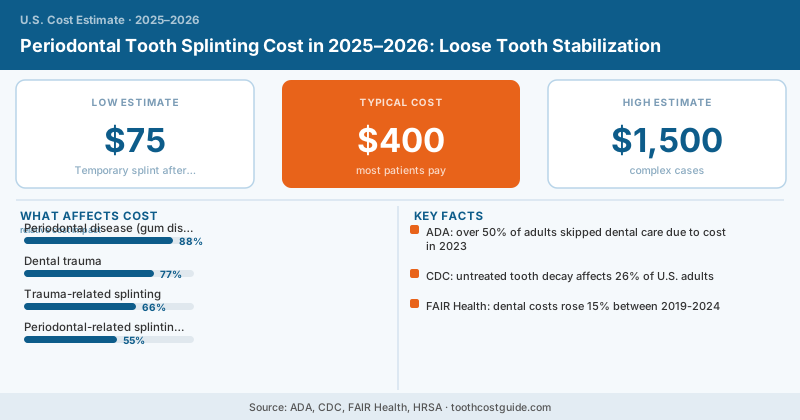
Pricing varies by how many teeth are involved, which type of splint is used, and the clinical complexity. A simple three-tooth splint after dental trauma costs far less than stabilizing an entire arch of teeth with advanced periodontal bone loss.
What Causes Teeth to Become Loose?
Teeth aren’t supposed to move when you press on them. When they do, it’s classified by degree:
- Grade 1 — Slight movement (1mm or less), barely perceptible
- Grade 2 — Moderate movement (1–2mm), noticeable when touched
- Grade 3 — Severe movement in all directions including vertical; tooth can be pressed down into the socket
The two main causes:
Periodontal disease (gum disease) — The most common cause. Advanced periodontitis destroys the bone that anchors teeth. The CDC reported in 2023 that 47% of American adults over 30 have some form of periodontal disease; severe forms affect around 9% of adults. When bone loss exceeds a critical threshold, the remaining bone can’t hold the tooth firmly.
Dental trauma — A blow to the mouth, sports injury, or fall can loosen a tooth without breaking it. Traumatic loosening may be temporary if the supporting structures aren’t permanently damaged.
Other causes: aggressive tooth grinding (bruxism), orthodontic treatment (intentional temporary mobility), or systemic conditions affecting bone density.
Splinting is appropriate when:
- Teeth are mobile but have sufficient remaining bone support
- Periodontal disease is being or has been treated (scaling, surgery)
- Traumatic injury with good bone support and prognosis
- Patient wants to preserve teeth while evaluating long-term options
- Loose teeth are causing pain with biting that splinting can relieve
Splinting is NOT appropriate when:
- Bone loss is so severe the tooth has no realistic long-term prognosis
- Periodontal disease is untreated and active
- The patient isn’t committed to periodontal maintenance
- Extraction and replacement would provide better functional outcome
How Tooth Splinting Works
The most common modern technique is the fiber-reinforced composite splint. It works like this:
- A small groove is prepared along the inner (lingual) surface of the teeth to be splinted
- A strong fiber ribbon (typically polyethylene or glass fiber) is placed in the groove
- Composite resin is bonded over the fiber, connecting the teeth together
- The splint is hardened with a curing light
The finished splint is essentially invisible from the front — it’s on the tongue-side of the teeth. The teeth are connected like a chain, sharing bite forces among all splinted teeth rather than concentrating stress on the loose tooth.
Older wire splints are still used in some trauma situations. These involve bonding orthodontic wire across the back surfaces of several teeth. They’re generally less comfortable than fiber splints but can be placed quickly in emergency situations.
A splint treats the symptom (mobility) but not the cause. If your teeth are loose due to gum disease, the splint must be accompanied by periodontal treatment — scaling and root planing, and potentially periodontal surgery. Without treating the underlying bone loss, splinted teeth will continue to deteriorate. Splinting alone is not a gum disease treatment.
Does Insurance Cover Tooth Splinting?
Coverage depends on the cause and your specific plan. Most dental PPO plans have CDT code D4321 (periodontal splinting, intracoronal) and D4322 (extracoronal) in their fee schedules — but whether it’s covered is another question.
Trauma-related splinting — Often covered under basic restorative at 70–80%, especially if the dental injury is recent and well-documented. Medical insurance may also contribute if the injury was an accident.
Periodontal-related splinting — Coverage is inconsistent. Many plans classify splinting as a “periodontal procedure” and cover it at the same rate as other perio services (50–80%). Some plans exclude it entirely.
Most plans won’t cover stabilizing teeth that have a poor prognosis — so your dentist’s documentation of reasonable expected outcomes matters.
The Real Question: Is This Tooth Worth the Investment?
This is where the math gets complicated. A fiber splint costs $400–$1,500. But if the splinted teeth ultimately fail and need extraction in 3–5 years anyway, you’ve spent that money to delay the inevitable.
Your dentist (or periodontist) should give you a prognosis before recommending splinting: “hopeless,” “poor,” “fair,” “good,” or “favorable.” Only teeth with at least a “fair” prognosis typically justify the investment of splinting.
- What’s the prognosis for each tooth being splinted — and what does that mean for a 5-year outlook?
- Is my gum disease fully treated, or do I need periodontal therapy first?
- What type of splint do you recommend and why?
- Will the splint affect my ability to floss between teeth?
- How long can the splint realistically last?
- What happens if the teeth fail anyway — what’s my extraction and replacement plan?
Long-Term Maintenance
Splinted teeth require modified oral hygiene. Flossing between bonded teeth isn’t possible in the conventional way — you’ll need floss threaders, interdental brushes, or a water flosser to clean under and around the splint. Your dentist will demonstrate the right technique.
Splints can last 5–15 years when maintained well. They can chip or debond, especially in heavy grinders. If you grind your teeth, you’ll likely also need a night guard to protect the splint — an additional $300–$800 but often worth it to extend the splint’s lifespan.
Regular periodontal maintenance appointments (every 3–4 months rather than every 6 months) are typically recommended for patients with splinted teeth.
Bottom Line
Tooth splinting costs $400–$1,500 depending on how many teeth and which technique. It’s a meaningful investment — but only makes sense for teeth with a realistic long-term prognosis. If gum disease is driving the mobility, the splint works alongside (not instead of) comprehensive periodontal treatment. Done right, it can give you years of additional function from teeth that would otherwise need extraction.
Frequently Asked Questions
Dental tooth splinting typically costs $400–$1,500 per arch (upper or lower teeth) in 2025–2026, depending on the number of teeth involved, splinting material used, and your dentist's location and experience. Additional costs may apply if bone grafting or other periodontal procedures are needed simultaneously.
Most dental insurance plans classify tooth splinting as a periodontal or restorative procedure and cover 50–80% of the cost after your deductible is met, though some plans limit coverage to cases involving trauma rather than gum disease. Your out-of-pocket cost typically ranges from $100–$750 per arch, depending on your specific plan and annual maximum benefits.
The splinting procedure usually takes 1–2 hours in a single appointment, and your tooth should feel noticeably more stable immediately after treatment. Most patients experience full stabilization and healing within 2–4 weeks as the supporting tissues strengthen, though your dentist may recommend avoiding hard foods during the first 1–2 weeks.