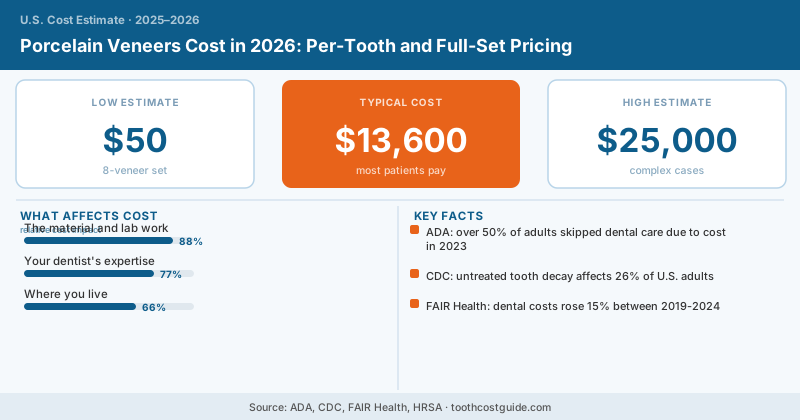
The $1,800-per-tooth quote you just got for porcelain veneers? That’s completely normal — here’s why. Porcelain veneers run $900 to $2,500 per tooth, and a full smile-zone set of 8 to 10 teeth lands between $7,000 and $25,000. It’s one of the priciest cosmetic dental treatments, and the range is enormous because three big factors swing the number. Let’s break them down so you know whether your quote is fair.
| Porcelain Veneer Scenario | Typical Cost |
|---|---|
| Single porcelain veneer | $900–$2,500 |
| Two front teeth | $1,800–$5,000 |
| 6-veneer “social smile” set | $5,400–$15,000 |
| 8-veneer set | $7,200–$20,000 |
| 10-veneer set | $9,000–$25,000 |
| Temporary veneers (during fabrication) | $50–$150 per tooth |
What Drives the Price
The material and lab work. Porcelain veneers are custom-made by a dental ceramist, often hand-layered for a natural look. Premium materials like Emax lithium disilicate cost more than standard feldspathic porcelain, and a top ceramist’s craftsmanship commands a premium. The lab bill is a real chunk of your fee.
Your dentist’s expertise. Veneers are irreversible front-tooth work, so cosmetic specialists with strong portfolios charge more — and for permanent work on teeth everyone sees, that experience matters. A general dentist may charge less; a renowned cosmetic dentist in a major metro may charge double.
Where you live. Big-city pricing can run 30–50% above smaller markets for identical work.
Porcelain veneers are permanent — placing them removes a thin layer of enamel that never grows back, so the teeth will always need to be covered. That irreversibility is exactly why choosing an experienced cosmetic dentist matters more than saving a few hundred dollars. This is not the place to bargain-hunt on quality.
How Long Do They Last?
With good care, porcelain veneers commonly last 10 to 15 years, and many go well beyond. The American Academy of Cosmetic Dentistry points to porcelain veneers as among the most durable and stain-resistant cosmetic restorations available when properly bonded and maintained. Grinding, biting hard objects, and poor gum health shorten that lifespan. A night guard, regular cleanings, and good home care stretch it.
Porcelain vs. the Alternatives
If you’re weighing your options, our full dental veneers guide compares every material. The quick version:
- Composite dental bonding is far cheaper ($300–$600/tooth) and reversible, but stains and chips faster.
- Porcelain costs more, looks more natural, resists stains, and lasts much longer.
- For a damaged or root-canal-treated tooth, a dental crown may be more appropriate than a veneer.
Porcelain wins when you want a lasting, stain-resistant, uniform front-zone transformation and you’re comfortable with the permanence.
The Whitening Rule
Porcelain can’t be bleached after placement. So if you want brighter teeth too, finish teeth whitening and let the shade stabilize for about two weeks before your veneers are matched and bonded. Get this backwards and your veneers won’t match your whitened natural teeth — an expensive mistake.
Does Insurance Help?
Veneers placed purely for looks aren’t covered. If a veneer is restoring a tooth that’s chipped from trauma or worn from a bite issue, part of it may be coded as restorative. Ask your dentist how they’ll bill it. If any portion is restorative, an FSA can cover it with pre-tax dollars.
Saving Money
Treat only what shows. A 6-veneer “social smile” set covers what most people reveal when they smile, for less than a 10-tooth set.
Preview before committing. A trial smile or digital design prevents a costly redo on irreversible work.
Use a savings plan. A dental savings plan can trim 10–20% at participating offices.
Finance the big cases. A full set is a major expense — CareCredit offers 0% promotional periods at most dental offices.
Bundle thoughtfully. If you also want whitening and gum work, price the whole smile makeover rather than adding pieces one at a time.
Ask whether your veneers will be lab-fabricated by a hand-finishing ceramist or milled same-day in the office. For front teeth, lab-crafted porcelain hand-layered by a skilled technician usually looks more natural — and that craftsmanship is a big part of what separates a $900 veneer from a $2,500 one.
Veneers are irreversible — the enamel removed for them never grows back, and the teeth will always need to be covered. Before committing to a full set, confirm you’re a good candidate (healthy gums, no untreated decay or active grinding), get a written treatment plan, preview the result, and review real before-and-after photos from the dentist who’ll actually do your case.
Frequently Asked Questions
Porcelain veneers typically cost $900 to $2,500 per tooth in the US, depending on the dentist's experience, location, and the complexity of your case. A full smile makeover covering 8 to 10 teeth usually ranges from $7,000 to $25,000 total.
Most dental insurance plans do not cover porcelain veneers because they are considered a cosmetic treatment rather than medically necessary. You should expect to pay the full cost out-of-pocket, though some plans may cover a portion if the veneer is needed to repair damage from an accident or injury.
Porcelain veneers typically last 10 to 15 years with proper care before needing replacement. The procedure itself takes about 2 to 3 weeks total (including preparation and placement visits), with minimal downtime—you can return to normal eating and speaking immediately, though you may experience slight sensitivity for a few days.