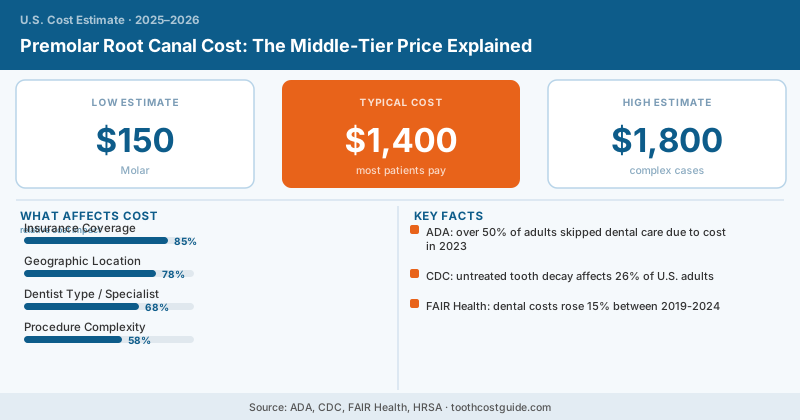
What does a root canal on a bicuspid actually cost? Right in the middle: $800–$1,100 without insurance. Premolars — the two teeth between your canines and your molars on each side — sit in the middle of the price chart because they sit in the middle of the complexity chart, too.
A premolar usually has one or two canals. That’s more than a front tooth’s single canal but fewer than a molar’s three or four. More canals, more time, more money. The pattern holds across every tooth in your mouth.
Where Premolars Land on the Price Map
| Tooth | Canals | Root Canal Cost (No Insurance) |
|---|---|---|
| Front incisor/canine | 1 | $700–$1,000 |
| Premolar (bicuspid) | 1–2 | $800–$1,100 |
| Molar | 3–4 | $1,000–$1,800 |
| Post and core buildup | — | $150–$400 |
| Crown afterward | — | $1,000–$1,800 |
The American Association of Endodontists estimates that more than 15 million root canals are performed in the US each year, and premolars are squarely in the mix. They’re common targets because they take real chewing force and crack or decay more readily than the protected front teeth.
The Crown Question for Premolars
Premolars chew. That means most need a dental crown after the root canal to prevent fracture — though not quite as universally as molars do. Your dentist will judge based on how much healthy tooth remains. If a lot of structure is gone, the crown isn’t optional.
Procedure: $800–$1,100. Add a post-and-core ($150–$400) plus a crown ($1,000–$1,800), and a premolar root canal totals roughly $2,000–$3,300 all in. The crown is usually the single biggest line item, so confirm whether you truly need one before you commit.
Specialist or General Dentist?
A premolar’s modest canal count means many general dentists handle them in-house without referring you out. That saves you the 20% to 40% specialist premium an endodontist would charge. If your dentist seems comfortable, doing the root canal there is often the budget-friendly call.
Don’t let a premolar infection linger hoping it’ll settle. Once the pulp dies, the cheaper options disappear fast, and you may face tooth extraction followed by a bridge or implant — both far pricier than the root canal you skipped.
How Premolars Get Damaged
Premolars take a beating you don’t notice. They’re the workhorses for tearing and crushing food, and they sit right where a cracked filling, a deep cavity, or grinding habits do the most harm. A premolar that’s had a large old filling for years is a prime candidate — the more of the natural tooth that’s been drilled away over time, the closer the decay creeps to the pulp. Once it reaches the nerve, you’re in root canal territory, often with little warning beyond sudden sensitivity to hot or cold.
Insurance and Savings
PPO plans typically cover root canals at 50% to 80%, but watch your annual maximum if a crown is involved. No coverage? A dental savings plan cuts 15% to 25% with no waiting period, and dental schools treat premolars at a steep discount under supervision. For spreading the cost, interest-free financing offers promotional periods. Even a basic understanding of how dental insurance works helps you time treatment against your annual maximum.
The Takeaway
A premolar root canal is the Goldilocks of the tooth-by-tooth price list — not the cheapest, not the priciest. Treat it promptly, ask whether the crown is genuinely required, and you’ll keep a functional tooth for far less than replacing it later.
Frequently Asked Questions
A premolar root canal typically costs $800–$1,100 without insurance. This price range reflects the middle complexity of premolars, which usually have one or two canals — more than a front tooth but fewer than a molar. You should budget an additional $800–$1,500 for a crown, which is typically needed after root canal treatment.
Most dental insurance plans cover 50–80% of root canal costs after you meet your deductible, leaving you responsible for 20–50% of the $800–$1,100 bill. However, some plans have annual maximums ($1,000–$1,500) that may limit coverage, and you should verify with your insurer whether your specific plan covers both the root canal and the necessary follow-up crown.
A premolar root canal typically takes 30–60 minutes to complete. You'll need to wait 2–4 weeks after the root canal is finished before getting your permanent crown, as the tooth requires time to settle and the dentist may place a temporary crown to protect it in the meantime.