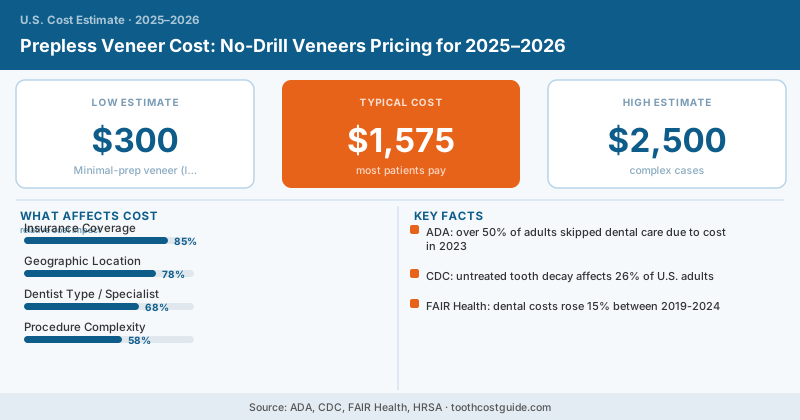
Traditional porcelain veneers come with an irreversible step: your dentist shaves off 0.5–0.7mm of enamel to make room for the veneer. Once it’s gone, it’s gone — you’re committed to veneers for life. Prepless veneers (also called no-prep or minimal-prep veneers) skip that grinding step entirely. The veneer bonds directly to your existing enamel with little or no tooth reduction.
Sounds ideal. Here’s the catch: you can’t be everyone’s candidate, and the cost is only slightly lower than traditional veneers — sometimes not at all.
Prepless Veneer Cost vs. Traditional
| Veneer Type | Cost Per Tooth |
|---|---|
| Traditional porcelain veneer | $925–$2,500 |
| Prepless / no-prep veneer | $800–$2,200 |
| Minimal-prep veneer (light reduction) | $850–$2,300 |
| Composite bonding (non-veneer alternative) | $300–$600 |
| Lumineers (brand-name prepless) | $700–$2,000 |
For a full set of 8 upper veneers, prepless typically runs $6,400–$17,600 vs. $7,400–$20,000 for traditional. The overlap is significant — your dentist’s technique, lab fees, and location matter more than the prep vs. no-prep distinction for most price quotes.
Who Is a Good Candidate?
This is the critical question. Prepless veneers work best when:
- Your teeth are naturally small or have spacing between them (the veneers add bulk without making teeth look oversized)
- You want to close minor gaps or add length without changing natural tooth shape much
- Your teeth aren’t rotated or significantly misaligned
- Your bite is stable and not particularly deep
Prepless veneers don’t work well when:
- Your teeth are already average to large size (the added veneer thickness will make them look bulky)
- You have significant crowding, rotation, or a deep overbite
- You’re covering dark discoloration (thinner veneers transmit more underlying color)
- You want dramatic shape changes
A 2023 study in the Journal of Esthetic and Restorative Dentistry found that no-prep and minimal-prep veneers showed comparable survival rates to traditional veneers over 5–10 years when patient selection criteria were properly applied. The keyword: proper selection.
Prepless veneers are often marketed as “reversible.” Technically true — the underlying tooth hasn’t been altered. But removal is rarely simple or perfect. The bonding agent can sometimes etch enamel microscopically. And once you remove prepless veneers, your natural teeth may look different than before due to minor surface changes. Ask your dentist to clarify what removal would actually look like in your case before assuming it’s a clean reset.
Lumineers: The Brand Name You’ll Encounter
Lumineers are the most recognized brand of prepless veneers. They’re fabricated from a specific feldspathic porcelain at a single lab (Den-Mat) and are typically 0.2–0.3mm thick — thinner than a contact lens.
Lumineers cost roughly $700–$2,000 per tooth. Not necessarily cheaper than standard prepless veneers from other labs, and some cosmetic dentists consider them less customizable than lab options they can design with more input. Brand recognition doesn’t always equal clinical superiority here.
Insurance Coverage
Veneers — prepless or traditional — are almost universally classified as cosmetic by dental insurers. They’re not covered. Period.
Exceptions exist when veneers address a documented structural issue (fracture repair, structural erosion) but these approvals are rare and require significant documentation.
FSA and HSA funds generally cannot be used for cosmetic veneers either. They can be used for diagnostic consultations leading to a clinical (non-cosmetic) treatment plan, but the veneers themselves don’t qualify.
Be cautious of dental tourism for veneers — prepless or traditional. Veneer success depends heavily on bite assessment, exact shade matching in natural light, and careful occlusal adjustment. Rushing through this remotely or in a high-volume overseas clinic increases the risk of ill-fitting veneers that cause bite problems or fail prematurely. The ADA recommends vetting credentials carefully for any cosmetic dental work performed outside the U.S.
Making the Decision
Prepless veneers are a genuinely good option for the right patient — thin teeth with spaces, minor corrections, minimal coverage. The cost savings over traditional veneers are modest, but the preservation of tooth structure is a real benefit that matters over a lifetime.
If you’re a candidate, expect to pay $800–$2,200 per tooth at a cosmetic dentist. Full sets of 6–8 teeth commonly run $5,000–$16,000. Get consultations from at least two cosmetic dentists and ask specifically whether your tooth size and bite make you a prepless candidate — or whether traditional prep would produce a better long-term result.
Frequently Asked Questions
Prepless veneers typically cost $800–$2,500 per tooth in the US, with an average of $1,200–$1,800 depending on your dentist's location, experience level, and the specific veneer material used. Most patients need 4–8 veneers for a full smile, bringing total costs to $3,200–$20,000 for a complete cosmetic case.
Dental insurance rarely covers prepless veneers because they are considered cosmetic rather than medically necessary; you should expect to pay 100% out-of-pocket unless your dentist can document a functional reason like tooth damage or enamel loss. Some dental discount plans offer 10–15% savings, and a few practices offer in-house financing or payment plans to spread costs over 12–24 months.
You are a good candidate for prepless veneers if you have healthy enamel, minimal tooth damage, and good tooth alignment; patients with severe discoloration, large gaps, or significant bite problems may need traditional veneers or other treatments instead. Your dentist can determine candidacy during a consultation, which typically takes 30–60 minutes and may cost $50–$150, though many offices waive this fee if you proceed with treatment.