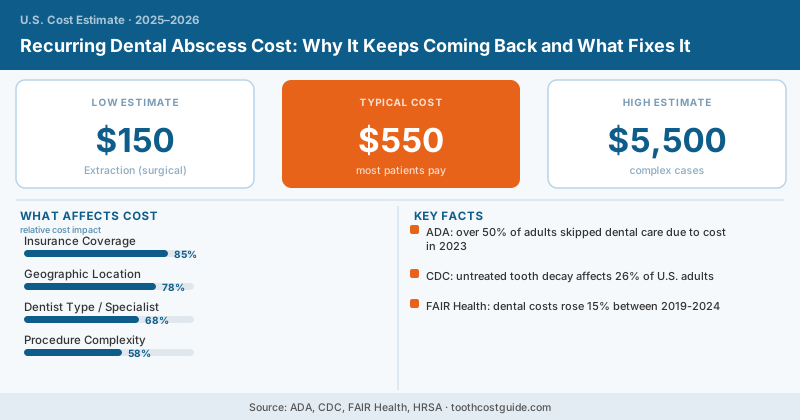
This is the third time in eight months that the same tooth has flared up. Antibiotics knock it down for a few weeks, then the swelling comes back. If that sounds familiar, you’re not imagining it — a recurring abscess is a signal that whatever treatment happened the first time didn’t finish the job.
Fixing it for good costs $600–$2,500, depending on whether the answer is retreating a root canal, doing surgery on the root tip, or pulling the tooth altogether. What it almost never requires is another round of antibiotics and a “let’s wait and see.”
| Fix | Typical Cost |
|---|---|
| Root canal retreatment | $1,000–$2,000 |
| Apicoectomy (root-end surgery) | $900–$1,500 |
| Extraction (simple) | $150–$450 |
| Extraction (surgical) | $300–$800 |
| Replacement implant after extraction | $3,000–$5,500 |
| Replacement bridge after extraction | $2,000–$5,000 |
Why the Infection Won’t Stay Gone
Root canal systems are not simple, single-channel tubes. Molars in particular often have three or four canals, and some branch into microscopic accessory canals that are nearly impossible to clean with standard instruments. The American Association of Endodontists estimates that missed or untreated canals are among the most common reasons a root canal fails and reinfects the surrounding bone.
Other causes of recurring infection include a cracked root that reopens a pathway for bacteria, a leaking crown or filling that lets saliva seep back into the tooth, or — less commonly — a cyst that formed around the root tip and needs surgical removal rather than another cleaning.
Antibiotics treat the symptom, not the source. Every time you take a course of amoxicillin or clindamycin for the same tooth, you’re buying a few weeks of relief while the underlying problem sits untouched. Eventually, that pattern stops working, and the infection can spread faster than expected.
Retreatment vs. Surgery vs. Extraction
Root canal retreatment ($1,000–$2,000): Your endodontist reopens the tooth, removes the old filling material, and re-cleans the canal system — often under magnification to find missed canals. This is the first choice when the tooth structure is otherwise healthy.
Apicoectomy ($900–$1,500): If retreatment isn’t possible or hasn’t worked, a small surgical procedure removes the infected tip of the root and seals it from the bottom. This is done through the gum, not through the crown of the tooth, and preserves teeth that would otherwise be extracted.
Extraction ($150–$800): When the tooth is cracked below the gumline or the bone loss around it is too extensive, pulling it is the more predictable option — followed by a replacement decision.
Your dentist or endodontist will order a new set of X-rays, sometimes a 3D cone-beam scan, to see exactly what’s going on around the root. Don’t agree to “just more antibiotics” for a third recurrence without this imaging — you need to know the actual cause before spending money on another fix.
Insurance and the Retreatment Question
Most dental plans cover retreatment and apicoectomy as major services, typically at 50% after the deductible, the same tier as the original root canal. If you’re close to your annual maximum from the earlier round of treatment, this is where things get tight — a second major procedure on the same tooth in one benefit year can blow through what’s left of your coverage.
Ask your insurer specifically whether retreatment counts against the same annual maximum as the original procedure. In almost every case, it does, since dental plans track by calendar year rather than by tooth or condition.
A recurring abscess with worsening swelling, fever, or facial pain isn’t something to manage with home antibiotics from a previous prescription. Left untreated long enough, it can progress to Ludwig’s angina or other deep space infections that require hospitalization. See a dentist or go to urgent dental care as soon as symptoms return.
The Bottom Line
A dental abscess that keeps returning is telling you something specific: the first treatment missed the source. Retreatment, apicoectomy, and extraction each address that source directly, at costs ranging from $600 to $2,500 depending on which route fits your tooth. Skipping straight to another antibiotic prescription just delays the real fix — and lets the infection keep chipping away at the bone around the tooth in the meantime.
Frequently Asked Questions
A recurring abscess usually means the original infection source wasn't fully eliminated — a missed canal during root canal therapy, a cracked root, or residual infection left after drainage. It requires retreatment, apicoectomy, or extraction rather than another round of antibiotics.
Retreatment options run $600–$2,500: root canal retreatment costs $1,000–$2,000, an apicoectomy (root-end surgery) costs $900–$1,500, and extraction with replacement runs $150–$450 for the extraction alone, plus the cost of an implant or bridge.
No. Antibiotics can suppress symptoms temporarily, but the American Association of Endodontists notes that recurring infections almost always require a mechanical fix — retreatment, surgery, or extraction — because bacteria persist in areas antibiotics can't reach, like the interior of a root canal system.