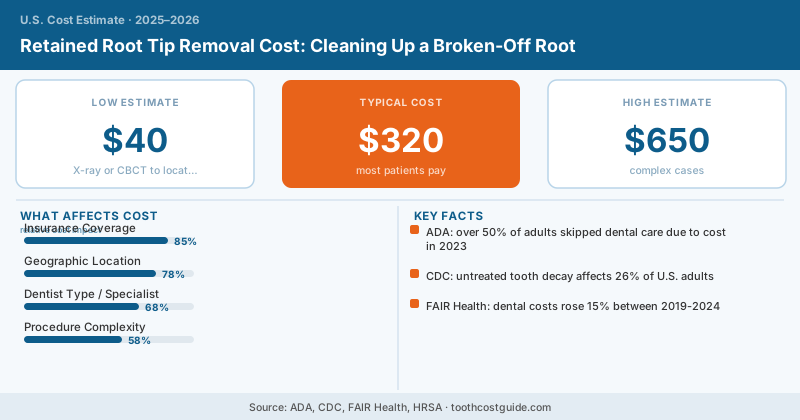
Sometimes a tooth comes out but a piece of root stays behind. That leftover fragment is a retained root tip, and removing it costs $150–$650 without insurance, depending on how deep it’s buried and how it’s accessed. It’s a smaller procedure than a full extraction — but ignoring it can cause real trouble.
Root tips break off for a few reasons. Brittle roots, curved anatomy, or a tooth that fractured during removal can all leave a fragment lodged in the bone. Sometimes the dentist intentionally monitors a tiny, deeply seated tip; other times it needs to come out.
What Removal Costs
| Scenario | Detail | Cost (No Insurance) |
|---|---|---|
| Simple root tip removal | Near surface, easy access | $150–$350 |
| Surgical root tip removal | Requires gum/bone work | $350–$650 |
| X-ray or CBCT to locate | Imaging | $40–$600 |
| IV sedation (if needed) | Add-on | $250–$600 |
The American Association of Oral and Maxillofacial Surgeons notes that root fragments are a recognized occurrence during extractions, and managing them is part of routine oral surgery. The ADA’s procedure codes distinguish a simple residual root removal from a surgical one — which is exactly why your quote depends on depth and access.
When It Needs to Come Out
A retained root tip isn’t always an emergency. A small, sterile fragment deep in the bone may be left alone and watched. But if it’s causing infection, pain, swelling, or sits where you’re planning a dental implant, removal is the right move. Imaging tells the surgeon which situation you’re in.
A shallow root tip is often removed under local anesthetic in minutes, no sedation required. IV sedation ($250–$600) is usually reserved for deep, surgical fragments or anxious patients. If your tip is near the surface, ask whether local alone will do — it can cut your bill nearly in half.
Why Not Just Leave It?
Sometimes leaving it is fine. But a fragment connected to old infection can flare up into pain or an abscess, and it can interfere with future restorations. If you’ve had a tooth extraction and a follow-up X-ray shows a tip, ask your dentist directly whether to remove or monitor it — and get the reasoning.
A retained root tip near a nerve or sinus needs careful imaging before removal. Blindly digging for a deep fragment risks nerve damage or a sinus opening. Insist on an X-ray or CBCT to map it first — that small imaging cost prevents a much bigger problem.
Insurance Coverage
Most plans treat residual root removal as a basic surgical service at 50% to 80% after the deductible. Because it’s a low-cost procedure, your out-of-pocket share is usually modest. Still, confirming coverage in advance is smart — a quick look at how dental insurance works clears up what applies.
Cutting the Cost
No insurance? This is one of the cheaper oral surgery procedures to begin with. Dental schools handle root tip removals at a discount, a dental savings plan trims 15% to 25%, and for anything pricier, CareCredit spreads payments interest-free.
Bottom Line
A retained root tip is usually a minor, manageable issue — but only when you address it deliberately. Get it imaged, ask whether removal or monitoring is right, and avoid paying for sedation you don’t need. Handled early, it’s a couple hundred dollars; ignored until it abscesses, it becomes the start of a much larger bill.
Frequently Asked Questions
Retained root tip removal typically costs between $150 and $650 without insurance, depending on the depth of the fragment and the removal technique used. Simpler extractions of shallow tips fall toward the lower end of the range, while surgical removal of deeply embedded fragments costs more. Your dentist can provide an exact quote after examining X-rays.
Most dental insurance plans cover retained root tip removal as an oral surgery procedure, often at 50–80% after your deductible is met. However, some plans classify it as a surgical extraction with different coverage rates, so you should contact your insurer to confirm your out-of-pocket cost before the procedure. Without insurance, you can expect to pay the full $150–$650.
Recovery from retained root tip removal typically takes 3–7 days, with most swelling and discomfort subsiding within a week. You may experience minor bleeding, swelling, or sensitivity during the first few days, and your dentist will provide specific aftercare instructions such as avoiding hot foods and using saltwater rinses. If the fragment was deeply embedded or required surgical access, recovery may extend closer to two weeks.