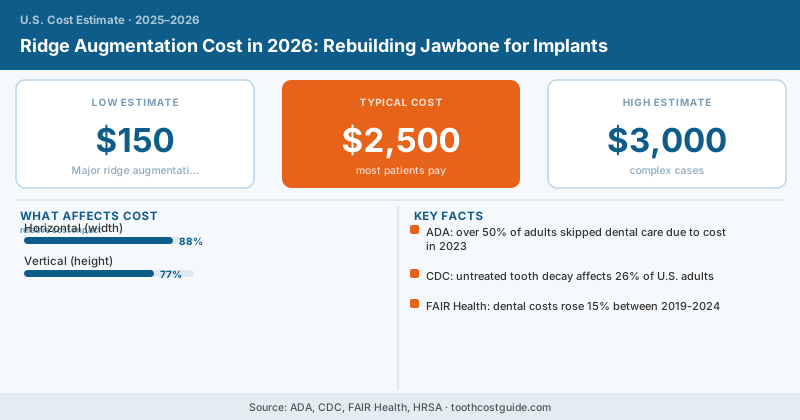
You lost a tooth a few years ago, never replaced it, and now you want an implant — but your dentist says the ridge is “too narrow” to hold one. That’s where ridge augmentation comes in, and it’ll add $500 to $3,000 to your implant project. Here’s exactly what you’re paying for.
Ridge augmentation rebuilds the width or height of the alveolar ridge — the bony arch that holds your teeth — when it’s resorbed too far to anchor an implant. It’s a specific kind of bone reconstruction, and it’s more involved than a simple socket graft.
Ridge Augmentation Pricing
| Procedure | Typical Cost |
|---|---|
| Minor ridge augmentation (one site) | $500–$1,200 |
| Moderate horizontal augmentation | $1,200–$2,500 |
| Major ridge augmentation (block graft) | $2,000–$3,000+ |
| Membrane / barrier (guided regeneration) | $250–$1,200 |
| CBCT scan to plan it | $150–$650 |
That’s on top of the dental implant cost itself. The wide range reflects how much bone needs rebuilding and what material is used.
How It Differs From a Standard Bone Graft
People lump all bone work together, but there’s a meaningful difference. A routine socket-preservation bone graft is done right after an extraction to keep the socket from collapsing — it’s preventive and cheaper. Ridge augmentation is reconstructive: you’ve already lost the ridge dimension, and now the surgeon has to rebuild lost width or height before an implant can fit.
The longer a tooth has been missing, the more the ridge resorbs. Bone melts away without a tooth root stimulating it — a well-documented process — which is why a 10-year-old gap often needs full augmentation while a fresh extraction may only need socket preservation.
Ridge augmentation is what you pay for waiting. A socket graft at extraction time runs a few hundred dollars; rebuilding a collapsed ridge years later can run thousands. If you know you’ll eventually want an implant, grafting the socket at extraction is the cheaper long-game move.
Horizontal vs Vertical Augmentation
Not all ridge defects are equal:
Horizontal (width). The ridge is too thin side-to-side. This is the more common and more predictable repair, often done with particulate bone and a membrane.
Vertical (height). The ridge is too short top-to-bottom — often after long denture wear or major bone loss. This is harder, less predictable, and more expensive, sometimes requiring block grafts harvested from elsewhere in the jaw.
Materials and Why They Affect Price
Surgeons use different graft sources, and the choice shifts the cost:
- Your own bone (autograft): Best integration, but requires a second surgical site, raising the fee.
- Donor or bovine bone (allograft/xenograft): Common, reliable, moderate cost.
- Synthetic materials: Sometimes cheaper, used in select cases.
A barrier membrane is usually layered over the graft (guided bone regeneration) to keep gum tissue from invading the space, adding $250–$1,200.
Ridge augmentation adds months to your timeline. The graft typically needs 4 to 9 months to mature before the implant can be placed, depending on size. If a clinic promises a major ridge rebuild and an implant in one quick visit, get a second opinion — rushing graft healing is a recipe for an expensive implant failure.
When You Can Skip It
If your ridge is only slightly narrow, a surgeon may place a narrow-diameter or mini implant instead of augmenting, saving the graft entirely. And if augmentation would be extensive and costly, weigh it against a dental bridge cost, which doesn’t need bone volume at all.
Insurance Coverage
Most dental plans treat bone grafting and ridge augmentation as adjunctive to implants — and since implants are often poorly covered, so is the bone work. Understanding how dental insurance works helps: occasionally medical insurance contributes when bone loss stems from trauma or pathology, so document the cause.
Bottom Line
Ridge augmentation costs $500–$3,000 depending on how much bone you’ve lost and whether the defect is width or height. It’s the price of rebuilding a ridge that resorbed after a tooth was missing too long. If you’re planning extractions and want implants later, grafting the socket early is the cheapest way to avoid this bigger bill down the road.
Frequently Asked Questions
Ridge augmentation typically costs between $500 and $3,000, depending on the extent of bone loss and the size of the area being rebuilt. Patients with severe ridge resorption or those needing grafts from a bone bank may pay toward the higher end of this range, while minor augmentation procedures may cost closer to $500–$1,000.
Most dental insurance plans classify ridge augmentation as an oral surgery procedure and cover 50% of the cost after your deductible, though some plans only cover 0%. You should verify your specific plan's coverage before the procedure, as many insurers require pre-authorization and may exclude bone grafting if they consider it cosmetic rather than medically necessary for implant placement.
Ridge augmentation typically requires 4–9 months of healing before your bone graft is stable enough for implant placement, depending on the size of the graft and your body's healing rate. During this time, the grafted bone integrates with your existing jawbone; your dentist will order imaging to confirm readiness before scheduling your implant surgery.