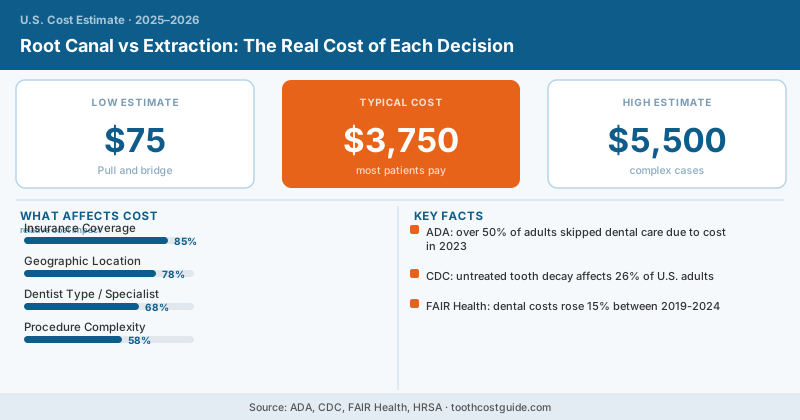
42% of adults say they’d choose the cheaper dental option if they understood the long-term math — yet most people only see the price of the first step, not the whole road. So here it is laid out: saving a tooth with a root canal and crown costs $1,700–$3,300 all-in, while pulling it and replacing it runs $3,000–$5,000 or more. The “cheaper” extraction usually isn’t.
The trap is that an extraction looks cheap on day one — a few hundred dollars to pull the tooth. But an empty space rarely stays empty. Neighboring teeth drift, the bite changes, and most people end up paying to fill the gap. That’s where the real money goes.
The Two Paths, Side by Side
| Path | What’s Included | Total Cost |
|---|---|---|
| Save the tooth | Root canal + post + crown | $1,700–$3,300 |
| Pull and implant | Extraction + bone graft + implant + crown | $3,000–$5,500 |
| Pull and bridge | Extraction + 3-unit bridge | $2,500–$5,000 |
| Pull and leave gap | Extraction only | $75–$650 |
The American Association of Endodontists estimates more than 15 million root canals are performed in the US yearly, and the organization consistently argues that retaining a natural tooth is the preferred outcome where it’s clinically possible. Natural teeth tend to function better and longer than replacements when properly restored.
Why “Just Pull It” Costs More
Pulling and leaving a gap is genuinely cheapest — until your other teeth shift into the space and your bite collapses, which can lead to more dental work down the line. To avoid that, most patients fill the gap with a dental implant or a fixed bridge, and either of those usually costs more than the root canal and dental crown that would have saved the tooth.
If the tooth is restorable — enough healthy structure remains and the surrounding bone is sound — saving it with a root canal is almost always the lower lifetime cost. If the tooth is cracked below the gumline, severely decayed, or has failed previous treatment, tooth extraction and replacement may be the only realistic option. Get an honest assessment of restorability first.
When Extraction Actually Wins
Sometimes pulling really is the right call. A vertically fractured root, a tooth with too little structure left to crown, or a failed retreatment can make a root canal a waste of money. In those cases, going straight to extraction and a planned implant saves you from paying for treatment that won’t last.
Beware the false economy of an extraction followed by years of doing nothing. Leaving a gap can shift teeth and cause bite problems that cost far more to fix later. If you extract, have a replacement plan — or know the risks of leaving the space open.
How Insurance Shapes the Choice
Annual maximums matter here. A root canal plus crown can use up a $1,500 yearly benefit in one visit, but so can part of an implant. Understanding your plan’s annual cap and what’s covered at what percentage often tips the financial scales between the two paths.
Making Either Path Affordable
Whichever you choose, the cost is real. A dental savings plan trims 15% to 25% off both routes with no waiting period. Dental schools handle root canals and extractions at steep discounts. And interest-free financing can spread either bill over several months.
Bottom Line
Don’t let the sticker price of step one drive the decision. When a tooth can be saved, the root canal route almost always costs less over time than pulling and replacing it. When it can’t be saved, extraction is the honest answer. Ask your dentist one direct question — is this tooth restorable? — and let that, not the day-one price tag, guide your choice.
Frequently Asked Questions
A root canal plus crown runs $1,700–$3,300 total, while extracting a tooth and replacing it with an implant or bridge costs $3,000–$5,000 or more. The extraction appears cheaper upfront, but the replacement costs typically make the root canal the more economical long-term choice.
Most dental insurance plans cover 50–80% of root canal and extraction costs after you meet your deductible, leaving you responsible for 20–50% out-of-pocket. Coverage for tooth replacement like implants is often limited or excluded entirely, which is why the total extraction-and-replace bill hits $3,000–$5,000 even with insurance.
A root canal procedure takes 1–2 hours in a single visit, but you'll need a temporary filling for 2–3 weeks before returning for the permanent crown, which adds another 1–2 weeks for fabrication. The total timeline from start to finished crown is typically 3–4 weeks, during which you should avoid chewing on that tooth.