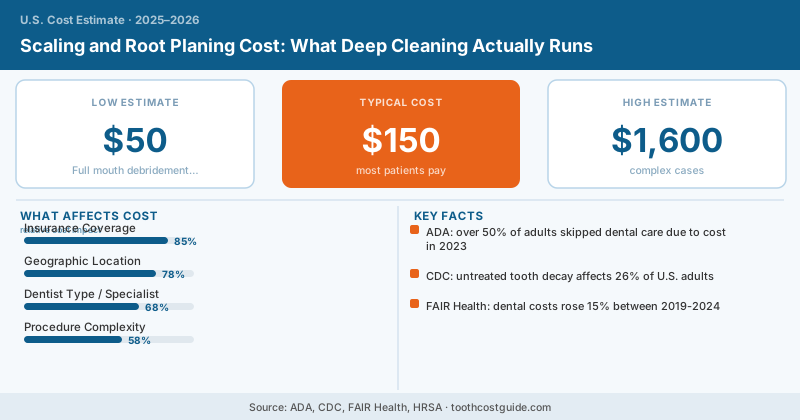
Most patients hear “deep cleaning” and picture a more thorough version of their regular checkup. It’s not. Scaling and root planing (SRP) is a surgical-level procedure performed below the gumline — and the price reflects that.
| Treatment Scope | Typical Cost |
|---|---|
| SRP per quadrant (1/4 of mouth) | $200–$400 |
| SRP two quadrants (half mouth) | $400–$750 |
| Full mouth SRP (4 quadrants) | $800–$1,600 |
| Full mouth debridement (prerequisite visit) | $100–$200 |
| Periodontal maintenance (every 3–4 months after) | $115–$200 per visit |
| Local anesthesia (included or separate) | $50–$100 if billed separately |
What Scaling and Root Planing Actually Is
Your regular cleaning removes plaque and tartar from the visible surfaces of teeth and just below the gumline. SRP goes much deeper — clearing bacteria, calculus, and toxins from root surfaces that extend 4–10 mm or more below the gum tissue.
Root planing specifically smooths the root surface after scaling. That smooth surface makes it harder for bacteria to reattach and gives gum tissue a better chance to reattach to the tooth. The two procedures are almost always done together, which is why they’re billed under one code (D4341 for teeth with bone loss, D4342 for 1–3 teeth per quadrant).
It’s done under local anesthesia. You’ll feel pressure but not sharp pain. Most dentists treat one or two quadrants per visit so you’re not numb on both sides of your mouth at once.
Why It Costs More Than a Regular Cleaning
A standard prophylaxis (regular cleaning) typically takes 45–60 minutes for the whole mouth. SRP for a single quadrant can take 45–60 minutes on its own. The hygienist or periodontist is working in a narrow, deep space, using specialized ultrasonic scalers and hand instruments, often repositioning multiple times per tooth.
Add the anesthetic, the complexity of treating active periodontal disease versus healthy gums, and the clinical judgment involved in assessing each pocket depth — the cost difference is justified.
Watch for “unnecessary deep cleaning” upselling. A legitimate SRP recommendation should be backed by periodontal probing measurements. Ask your dentist to show you the pocket depth chart. Pockets of 4mm or less typically need a standard cleaning, not SRP. Pockets of 5mm or more with bone loss and bleeding are the clinical threshold for SRP. If you’re unsure, get a second opinion from a periodontist before authorizing treatment.
Insurance Coverage for SRP
Most dental PPO plans cover SRP at 50–80% after deductible. It’s classified as a “basic” or “major” service depending on the plan. That matters: major services usually have a 12-month waiting period before coverage kicks in.
The CDC’s 2022 data on periodontal disease prevalence estimates that 47.2% of U.S. adults aged 30 and older have some form of periodontal disease. Despite that, many insurance plans cap their SRP coverage at two quadrants per year — meaning a full-mouth case could require two benefit years to complete.
Common codes insurers use:
- D4341 — SRP per quadrant, 4+ teeth (most common billing)
- D4342 — SRP per quadrant, 1–3 teeth
- D4355 — Full mouth debridement (a preliminary visit to remove gross buildup before SRP can be done properly)
Always pre-authorize before treatment. The office submits a pre-treatment estimate and the insurer responds with what they’ll cover.
What Comes After SRP?
SRP is not a one-time fix. After treatment, you transition to periodontal maintenance visits (code D4910) every 3–4 months instead of the standard 6-month cleanings. These visits cost $115–$200 each and are critical to preventing re-infection.
The American Academy of Periodontology (AAP) 2018 staging and grading system classifies periodontal disease into Stages I–IV and Grades A–C. Most patients who need SRP have Stage II or III disease. The AAP’s position is that periodontal maintenance after SRP significantly reduces tooth loss risk over a 10-year horizon.
Reducing Your Out-of-Pocket Cost
- Use your benefit year fully: If your plan covers two quadrants per year, schedule half now, half after January 1st
- Dental schools: Periodontology programs offer SRP for $50–$150 per quadrant — treated by supervised residents
- Negotiate cash pay: Some practices discount 10–20% for upfront cash payment
- FSA/HSA: SRP qualifies as a medical expense — use pre-tax dollars
- Split treatment over two insureds: If you and a spouse are on separate plans, some practices can split billing
Gum disease doesn’t resolve on its own. Once pocket depths reach the SRP threshold, waiting typically means deeper bone loss and more expensive treatment — or eventual tooth loss.
The Real Cost of Skipping Treatment
A tooth lost to untreated periodontal disease typically requires an implant ($3,000–$5,000) or bridge ($1,500–$3,000) to replace. That’s 5–10x the cost of the SRP that might have saved it. SRP isn’t cheap, but it’s a fraction of the cost of the tooth replacement that becomes necessary when gum disease goes untreated.
Frequently Asked Questions
Full mouth scaling and root planing typically costs $800–$1,600, which covers all four quadrants of your mouth. If you only need treatment on half your mouth, expect to pay $400–$750 for two quadrants.
Most dental insurance plans cover scaling and root planing at 50–80% after you meet your deductible, since it's considered a necessary periodontal treatment rather than cosmetic. However, some plans limit coverage to once per year or require a periodontal diagnosis, so check your specific policy for out-of-pocket costs.
Most patients experience mild gum tenderness and sensitivity for 3–7 days after the procedure, with full healing typically occurring within 1–2 weeks. Your dentist may prescribe an antimicrobial rinse or recommend avoiding hard foods during the initial recovery period.