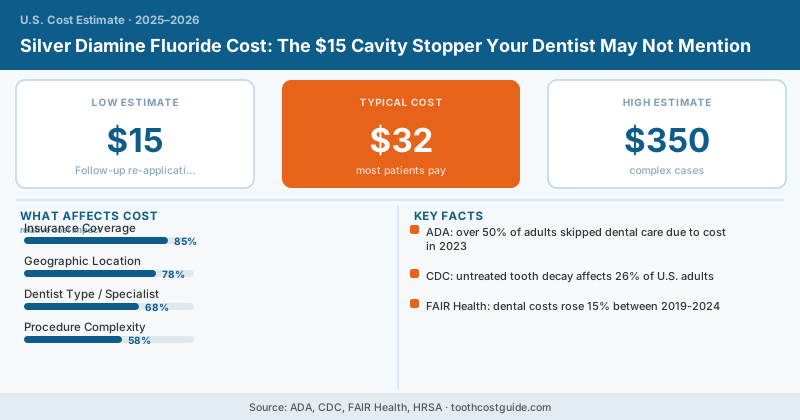
A $40 treatment that stops a cavity cold — without a drill, without anesthesia, without a crown. That’s silver diamine fluoride, and it’s one of the most underused tools in American dentistry.
SDF is a liquid solution of silver, fluoride, and ammonia that’s brushed directly onto a decayed tooth in under two minutes. The silver kills the bacteria driving the decay. The fluoride hardens the remaining tooth structure. The cavity stops progressing. For children who can’t hold still in a dental chair, or for elderly patients where drilling carries real risk, this matters enormously.
So why doesn’t every dentist lead with it? One honest answer: SDF permanently stains arrested decay dark brown or black. That’s not a flaw — it’s how you know it worked — but it limits use on visible front teeth for appearance-conscious adults. It also doesn’t restore tooth structure that’s already lost, so a tooth with a large hole still needs a filling at some point. But for arresting early-stage cavities across a range of patients, SDF is increasingly the right first move.
What SDF Treatment Costs
| Service | Typical Cost (No Insurance) |
|---|---|
| SDF application, 1 tooth | $25–$75 |
| SDF application, 2–3 teeth (same visit) | $50–$150 |
| SDF full-mouth application (multiple teeth) | $100–$300 |
| Annual re-application per tooth | $25–$75 |
| SDF plus follow-up glass ionomer filling | $75–$250 total |
Cost is low because the procedure is fast. No drilling, no anesthesia, no lab. A dentist or hygienist applies the solution with a small brush, waits a minute or two, and you’re done. A full-mouth application on a child with several early cavities typically runs $100–$200 and finishes in one short visit — often less time than a standard adult cleaning.
Some practices bundle SDF into a “caries management” appointment that also includes fluoride varnish and dietary counseling. In those cases you’ll see a higher line item — often $150–$350 — covering several services. Ask upfront how it’s billed.
Who Uses SDF and Why
The FDA cleared silver diamine fluoride in 2014 for treating dentinal hypersensitivity. Dentists quickly recognized its off-label value for arresting decay, and the American Dental Association and American Academy of Pediatric Dentistry now both publish clinical guidance supporting its use.
Children under 6 are the most common SDF patients. Young kids often can’t cooperate with drilling, and their baby teeth don’t need to last more than a few years anyway. According to AAPD data, SDF is particularly effective in preschool-aged children, where conventional restorative treatment failure rates are high. SDF buys time — and often means the tooth falls out naturally without ever needing a filling.
Adults with dental anxiety are a growing use case. If you’ve been putting off a cavity because you can’t face the drill, SDF treats the decay now and gives you runway to tackle the full restoration when you’re ready.
Elderly patients and nursing home residents receive SDF at increasing rates. The CDC reports that nearly 96% of adults 65 and older have had at least one cavity — and for many, medical complexity, medications, or mobility make traditional drilling genuinely impractical. SDF is the most realistic path to managing active decay in this population.
Patients with special needs — autism, cerebral palsy, severe dental phobia — routinely receive SDF as the primary caries management approach when chair-side cooperation is difficult.
SDF permanently stains arrested decay dark brown or black. Healthy enamel around it stays normal color. On back molars that nobody sees, this is a complete non-issue. On visible front teeth, it’s a real cosmetic drawback worth discussing before treatment. Some dentists apply potassium iodide immediately after SDF to reduce staining — ask your provider if that’s an option. For children’s baby teeth, the stain almost never matters; the tooth will be gone in a year or two anyway.
Does Insurance Cover SDF?
Coverage is improving but inconsistent. Here’s the honest picture.
Most major dental insurers — Delta Dental, Cigna, Aetna, Guardian — have added SDF coverage in recent years, particularly for pediatric patients. Typical terms: covered at 80–100% for children under 18, one or two applications per tooth per year, filed under CDT code D1354 (interim caries arresting medicament application). Adult coverage is patchier; some plans cover it at 50–80%, others exclude it entirely.
Ask your dentist’s billing coordinator to verify your benefits before the appointment. It’s one phone call and eliminates the guesswork.
If your insurer classifies SDF as “experimental” and denies it, that label is outdated. The ADA published a systematic review in the Journal of the American Dental Association confirming SDF’s efficacy, and the AAPD has included it in best-practice guidelines since 2017. A written appeal citing current clinical guidance often reverses a denial.
Medicaid covers SDF for children in most states — in many cases with zero patient cost — because it qualifies as preventive care. If your child is on Medicaid and has cavities, ask about SDF specifically before accepting a referral for treatment under general anesthesia.
SDF vs. Traditional Cavity Treatment
SDF doesn’t replace fillings in every situation. It arrests decay — prevents it from worsening — but doesn’t rebuild what’s already lost. Here’s how to think about when each option fits.
SDF makes sense when:
- The cavity is early-stage with minimal structural loss
- The patient is a young child whose tooth will fall out within 1–4 years
- The patient can’t tolerate drilling (anxiety, age, medical condition)
- You’re buying time before more definitive treatment
- The tooth is a back molar where black staining won’t be visible
A filling or crown is still the right call when:
- The cavity has created significant structural damage
- The tooth is a visible front tooth where aesthetics matter
- The patient wants full functional restoration now
For many patients, SDF is step one: arrest the decay, restore the tooth properly later when circumstances allow. That staged approach is both cost-effective and clinically sound.
| Treatment | Cost Comparison |
|---|---|
| SDF application (per tooth) | $25–$75 |
| Composite filling (per tooth) | $150–$300 |
| Nitrous oxide sedation (if needed for filling) | $75–$150 |
| General anesthesia (for young child) | $500–$2,000+ |
| Stainless steel crown (after SDF, if needed) | $300–$600 |
The savings get particularly stark for young children. A 3-year-old with four early cavities might need general anesthesia to have fillings placed — a $1,500–$3,000 proposition. SDF for all four teeth costs $100–$200 and requires no sedation at all.
Cost-Saving Options
Community health centers (FQHCs) use SDF routinely and bill on a sliding scale. Per-tooth cost can fall well under $20 for qualifying patients. Search “federally qualified health center dental” plus your city name.
Dental school clinics apply SDF at $10–$30 per tooth in most markets. Appointments take longer and may require more scheduling lead time, but the savings are real.
Ask about per-visit flat pricing. Some practices charge a single fee for an SDF session regardless of tooth count. If you or your child has multiple teeth to treat, per-visit pricing can cut the effective per-tooth cost significantly.
FSA and HSA funds cover SDF. It’s a qualified dental expense, so pre-tax dollars apply and give you an effective 22–37% discount depending on your tax bracket.
SDF isn’t a one-and-done treatment. Arrested cavities need monitoring — typically at 6–12 month intervals — and may need re-application if new bacterial activity is detected. Budget for follow-up visits when comparing total SDF cost to a one-time filling. The ongoing maintenance cost is usually still lower, but factor it in.
Bottom Line
Silver diamine fluoride costs $25–$75 per tooth and is one of the lowest-cost, least invasive options in dentistry. It’s best for children with early cavities, elderly or medically complex patients, and anyone who needs decay arrested without committing to drilling right now. The permanent dark staining on treated decay is the main limitation — irrelevant on back teeth, a real consideration on visible front ones.
If your dentist hasn’t brought up SDF and you have early cavities — especially in a child or a patient with dental anxiety — ask whether it’s appropriate. The conversation costs nothing, and the treatment costs less than a pizza dinner per tooth.
Frequently Asked Questions
SDF treatment typically costs $25–$75 per tooth, making it one of the most affordable cavity-stopping options available. The exact price depends on your dentist's location, experience level, and whether you're treating a single tooth or multiple teeth at once.
Most major dental insurance plans cover SDF as a preventive or restorative treatment, often at 50–80% coverage depending on your plan. However, some insurers may classify it differently or exclude it, so you should verify coverage with your specific plan before treatment to understand your out-of-pocket cost.
SDF treatment is painless and requires no anesthesia or drilling—the solution is simply brushed onto the decayed tooth in under two minutes. The main drawback is that it permanently stains the cavity area dark brown or black, so it's best suited for back teeth or areas less visible when smiling.