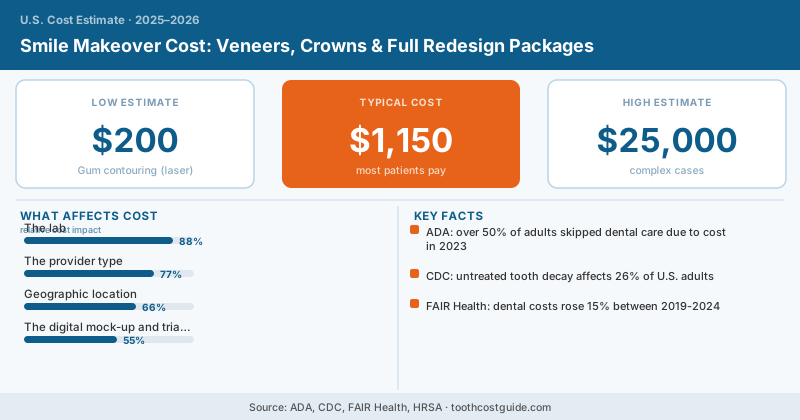
The $25,000 quote is sitting on the counter. Veneers. Crowns. Gum contouring. Photography. A mock-up. Maybe some whitening thrown in. It’s a lot of numbers for a lot of procedures, and if you’ve never gone through one before, it’s nearly impossible to tell whether it’s reasonable or wildly inflated.
Here’s the breakdown.
A smile makeover isn’t a single procedure — it’s a custom combination of procedures designed to transform the appearance of your smile. The cost depends entirely on which procedures you need, how many teeth are involved, who’s doing the work, and where you live. The range is wide: $5,000 for a conservative case with whitening and 4–6 composite veneers to $30,000 or more for a full-arch porcelain veneer case with crown replacements and gum work at a top cosmetic practice in a major city.
Cost by Component
| Component | Cost Range | Notes |
|---|---|---|
| Teeth whitening (professional in-office) | $300–$800 | Often first step before veneers |
| Porcelain veneer — per tooth | $1,000–$2,500 | Front 6–10 teeth most common |
| Composite veneer — per tooth | $300–$800 | Less durable; no lab required |
| Dental crown (full porcelain) — per tooth | $1,200–$3,000 | For damaged/heavily restored teeth |
| Gum contouring (laser) | $300–$2,000 | Per arch; more for surgical |
| Orthodontics (Invisalign) | $3,000–$8,000 | If alignment needs correction first |
| Digital smile design mock-up | $200–$500 | Preview before committing |
| Temporary veneers (trial smile) | $500–$1,500 | Test drive the result |
| Full upper-arch porcelain veneers (8–10 teeth) | $8,000–$25,000 | Most common full makeover scope |
What a Realistic Smile Makeover Actually Involves
Most smile makeovers focus on the upper front 6–10 teeth — the ones visible when you smile. The typical case starts with a consultation where the dentist evaluates your existing teeth, gum line, bite, and what you want to change.
A conservative, straightforward case might look like this:
- Professional whitening: $600
- 6 porcelain veneers on upper front teeth: $9,000 ($1,500 each)
- Total: ~$9,600
A more involved case might include:
- Whitening: $600
- 8 veneers on upper arch: $16,000 ($2,000 each)
- 2 crowns to replace failing restorations: $4,000
- Gum contouring to even the gum line: $1,500
- Total: ~$22,100
And a full redesign at a high-end cosmetic practice:
- Digital mock-up and photography: $500
- Temporary veneers (trial smile): $1,200
- 10 porcelain veneers upper arch: $22,500 ($2,250 each)
- 4 veneers lower arch: $8,000
- Gum contouring: $2,000
- Total: ~$34,200
The AACD (American Academy of Cosmetic Dentistry) reports that nearly 99% of Americans believe a smile is an important social asset, and roughly 74% say an unattractive smile can hurt professional success. That’s the market driving this industry — and explaining why cosmetic dentistry pricing varies so dramatically based on the practice’s positioning and the city’s cost of living.
Why Prices Vary So Much
The lab. Porcelain veneers and crowns are fabricated by a dental ceramist — an artisan who builds each tooth by hand, layer by layer, in a dental laboratory. The best ceramists charge more and are worth it: they create restorations that look like natural teeth, with variations in translucency, texture, and color across the arch. Budget cosmetic practices use high-volume labs that produce uniform, bright-white results that often look artificial. Ask your dentist what lab they use and request photos of cases made by that lab.
The provider type. A general dentist with cosmetic training is competent for simpler cases. A prosthodontist — a specialist with an additional 3-year residency in the restoration and replacement of teeth — is the gold standard for complex full-arch work. A prosthodontist’s fees are typically 20–30% higher than a general dentist’s, but for a $20,000+ case, that premium buys expertise in occlusion, bite mechanics, and long-term function that matters.
Geographic location. A 10-veneer case in Manhattan or Beverly Hills runs $20,000–$35,000. The same scope in Tulsa, Oklahoma or Baton Rouge might cost $10,000–$16,000. Geography accounts for 30–50% of cost variation in cosmetic dentistry.
The digital mock-up and trial smile. High-end cosmetic practices include digital smile design photography and a set of temporary veneers — a “trial smile” — so you can live with the proposed result before anything permanent is done. This adds $700–$2,000 to the fee but is absolutely worth it for full-arch work. Never commit to permanent veneers without wearing temporaries first.
You don’t have to do everything at once. A common strategy: start with whitening and 2–4 veneers on the most visible teeth this year, add the remaining veneers next year, and address any gum or crown work in year three. This spreads cost across multiple tax years, allows you to maximize FSA/HSA contributions annually, and gives you a chance to evaluate the result before committing to the full scope. Your dentist should be willing to design a phased plan — if they’re pushing you to do everything immediately, that’s a flag.
Red Flags in Smile Makeover Marketing
Smile makeover marketing is sometimes aggressive, and certain practices prey on patients who don’t know what to look for.
“Full smile makeover for $3,999” — almost always composite, not porcelain. Composite resin veneers can be done chairside without a lab, which is why they’re cheaper. They stain, chip, and don’t last as long as porcelain. Nothing wrong with them for the right patient — but know what you’re buying.
No trial smile for a full-arch case — if a provider wants to prep 10 teeth and immediately place permanent veneers without a temporary phase, walk out. You should always preview the result in temporaries before final cementation.
“We can do the prep and final crowns same-day” — same-day CAD/CAM crowns (CEREC) can be excellent for single-tooth restorations. For full-arch cosmetic work, they don’t match the quality of a skilled lab ceramist. Same-day veneers for a full smile makeover is a compromise you likely don’t want to make at $15,000+.
Before photos from other patients, not theirs — stock before-and-after photos are common in dental marketing. Ask specifically: “Can I see before-and-after photos of patients you personally treated, with cases similar to mine?”
Financing Options
At $5,000–$30,000, almost everyone finances a smile makeover.
CareCredit: 0% promotional periods of 18–24 months on qualifying amounts. Watch the deferred interest trap — if any balance remains at the promotional period end, interest accrues retroactively from day one at 26–29% APR.
Alphaeon Credit: Similar to CareCredit but sometimes preferred by cosmetic dental practices. Compare the specific offer terms before choosing.
In-house payment plans: Many cosmetic practices offer their own installment plans, sometimes at 0% for established patients. Ask explicitly — it’s often not advertised.
Medical credit via HSA/FSA: Cosmetic dental work generally doesn’t qualify for HSA/FSA reimbursement unless there’s a functional component. Ask your HSA administrator if the procedure can be documented with any functional necessity.
Personal loans: For large-scope cases, a personal loan from a credit union or online lender (LightStream, SoFi) at a fixed 7–12% APR may be more cost-effective than dental financing products if you need more than 24 months.
Get itemized written quotes from at least two practices before committing to any full-arch cosmetic case. The quote should break down every procedure separately — veneer prep, temporary fabrication, final veneer placement, crown prep, lab fees (yes, sometimes these are listed separately), and any gum or orthodontic components. A provider who won’t give you an itemized quote is a provider to be skeptical of. Comparing quotes from two practices also helps you understand what the market actually charges for the same scope of work.
Frequently Asked Questions
A smile makeover is a customized combination of procedures — there's no fixed package. Common components include teeth whitening ($300–$800), porcelain veneers on the front 6–10 teeth ($1,000–$2,500 each), dental crowns on damaged or heavily restored teeth ($1,200–$3,000 each), gum contouring if the gum line is uneven ($300–$3,000), and sometimes orthodontics to correct alignment before veneers are placed. Some plans also include dental photography, a digital smile design mock-up ($200–$500), or temporary veneers to preview the result. The scope depends entirely on your starting point and your goals — a consultation is the only way to know which components apply to your case.
Rarely. Cosmetic dental procedures are categorically excluded by most dental insurance plans — veneers placed purely for aesthetics, elective whitening, and cosmetic gum contouring are not covered. However, some components of a smile makeover may be partially covered when there's a functional indication: a crown that replaces a cracked or failing tooth is a covered restorative procedure. Gum contouring that treats periodontal disease is a covered periodontal procedure. If your treatment plan includes a mix of cosmetic and functional work, ask your dentist to submit a predetermination for the functional portions — you may recover some costs you'd otherwise write off as uncovered.
Ask to see a portfolio of at least 10–15 before-and-after cases from patients with similar starting points to yours. Look for natural-looking results — teeth that don't look like uniform plastic tiles, gum lines that follow a natural arc, and shading that varies across the arch the way real teeth do. Ask what lab they use and whether they work with a ceramist they have a long-term relationship with — the ceramist's skill is as important as the dentist's. Verify AACD membership and fellowship status at aacd.com. Get a second opinion from another AACD-accredited dentist before committing to a full-mouth case. For a $15,000–$30,000 investment, the cost of a second consultation is trivial.