42% of adults over 65 have lost six or more teeth, according to CDC data. Many of them end up with conventional dentures that slip, click, and make eating corn-on-the-cob an exercise in embarrassment. Snap-in dentures — formally called implant-supported overdentures — solve that problem by locking the denture onto 2–4 dental implants. They stay put. They don’t require adhesive. And they’re dramatically cheaper than a full fixed implant bridge.
The tradeoff? You’re still removing them for cleaning. But for stability and quality of life improvement over traditional dentures, they’re hard to beat.
What Do Snap-In Dentures Cost?
The total price depends on how many implants anchor the denture and whether you’re doing one or both arches.
| Option | Average Cost |
|---|---|
| 2-implant lower overdenture | $3,500–$7,000 |
| 4-implant lower overdenture | $7,000–$15,000 |
| 2-implant upper overdenture | $4,500–$9,000 |
| 4-implant upper overdenture | $9,000–$18,000 |
| Full mouth (both arches, 4 implants each) | $20,000–$35,000 |
| Locator attachment replacement (per implant) | $100–$400 |
Those ranges are all-in — implant surgery, abutments/locator attachments, and the denture itself. If a provider quotes you separately for each component, add them up before comparing.
2 Implants vs. 4 Implants: Which Is Right?
The lower jaw is the more common starting point because traditional lower dentures have almost no natural suction — they float around the most. Two implants in the lower jaw dramatically improve retention at a lower cost.
The upper jaw has natural palatal suction helping conventional dentures stay put, so you typically need 4 implants there for the same level of stability improvement.
2-implant option pros: Cheaper, less surgery, faster healing. Works well for most lower-arch cases.
4-implant option pros: More stable, better load distribution, better long-term implant survival, can support ball or bar attachment systems.
The American College of Prosthodontists considers 2-implant lower overdentures the minimum standard for edentulous lower jaws — it’s not just a budget option, it’s genuinely clinically appropriate for many patients.
Always confirm what’s in the price. A complete quote should include: implant placement surgery, any bone grafting needed, the attachment system (locator or bar), the denture fabrication, and follow-up adjustments. Some offices quote implants and dentures separately — adding those lines together often reveals the true cost is 20–30% higher than the headline number.
Insurance and Financing
Traditional dental insurance is frustrating here. Most plans have annual maximums of $1,000–$2,000 — enough to cover part of the denture but barely a dent in the implant costs. Some plans do cover implants at 50% as a major restorative procedure, but with a $1,500 annual max, that’s $750 toward a $5,000 implant — not life-changing.
Your best financial levers:
- Medical insurance: If you had teeth extracted due to disease or injury, some medical plans cover implants as reconstructive treatment
- Dental financing (CareCredit, Scratchpay): 0% promotional periods for 12–24 months are common
- FSA/HSA: Implant costs are fully eligible
- Dental schools: Supervised resident dentists perform implant cases at 30–50% of private practice fees
Snap-in dentures require ongoing maintenance. The plastic locator attachments (the “snaps”) wear out and need replacement every 1–2 years at $100–$400 per attachment. The denture itself needs relining every 3–5 years as your jawbone changes shape. Factor these costs into your long-term budget — plan for $200–$800/year in upkeep.
Snap-In vs. Fixed Implant Bridge (All-on-4)
This is the big comparison question. An All-on-4 fixed bridge costs $15,000–$30,000 per arch and is permanently cemented — you don’t remove it. Snap-in overdentures are $3,500–$15,000 per arch and come out for cleaning.
Fixed is more comfortable and feels more like natural teeth. But snap-in dentures are easier to clean under (no special flossing tools needed), less expensive to repair if something breaks, and more accessible to patients with lower bone density who can’t support a full fixed bridge.
For most patients over 65 on a fixed income, snap-in dentures hit the right balance of stability, affordability, and ease of maintenance. That’s why they’ve become one of the most commonly placed implant prosthetics in the U.S.
Frequently Asked Questions
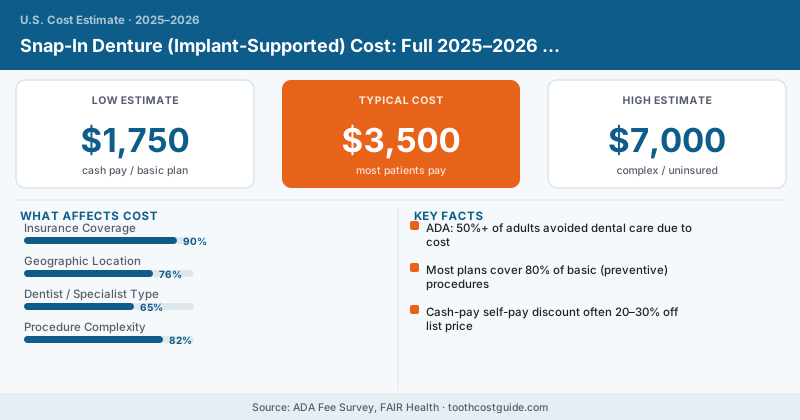
Snap-in dentures (implant-supported overdentures) typically cost $3,500–$30,000 total, depending on whether you need a full or partial arch and how many implants are placed (usually 2–4). The wide range reflects variation in implant quality, surgeon experience, geographic location, and whether bone grafting or extractions are needed first.
Most traditional dental insurance plans cover 50% of denture costs (capped at $1,000–$2,000 annually) but exclude or severely limit coverage for implants themselves, leaving you to pay $2,500–$25,000 out-of-pocket. Medicare does not cover implant-supported dentures, though some Medicare Advantage plans may offer limited dental benefits.
The complete process typically takes 6–12 months: implants require 3–6 months of bone integration after placement, followed by 1–2 months for denture fabrication and fitting. If tooth extractions or bone grafting are needed first, the timeline can extend to 12–18 months total.