That new-in-the-box fit rarely lasts. Within a few months of regular wear, most snap-on veneer users notice the edges don’t quite seal the way they did on day one — a small gap here, a slight warp there. It’s a known limitation of the material, not a sign you did something wrong.
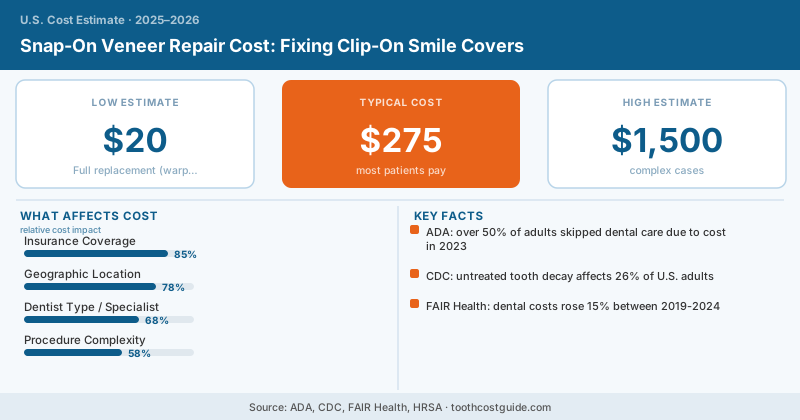
Fixing or replacing a snap-on veneer runs $50-$400 depending on the issue, a fraction of what permanent veneer repair or replacement would cost — but with real limits on how long any fix actually lasts.
| Issue | Typical Fix Cost |
|---|---|
| Small crack (DIY repair kit) | $20–$50 |
| Professional adjustment/refit | $100–$250 |
| Full replacement (warped/damaged) | $150–$400 |
| New custom set (starting over) | $300–$1,500 |
Why Snap-On Veneers Warp and Crack
Snap-on veneers are manufactured from a thin, flexible plastic or dental resin material molded to fit over your existing teeth, designed to be removable for eating and cleaning. That flexibility is what makes them affordable and non-invasive, but it’s also their biggest vulnerability: the material is sensitive to heat. Hot coffee, tea, running them through a dishwasher, or leaving them in a hot car on a summer day can all cause subtle warping that throws off the precise fit needed for them to look natural and stay securely in place.
Regular wear also introduces gradual material fatigue — the repeated flexing as you put them on and take them off, combined with normal chewing forces, wears down the fit over months of use, even without any single dramatic incident causing the damage.
DIY Repair vs. Professional Fix
Many snap-on veneer manufacturers sell small repair kits for minor cracks, letting you apply a bonding resin to a small chip or crack at home for $20-$50. This works reasonably well for cosmetic surface damage that doesn’t affect the overall fit.
For a veneer that’s warped enough to affect fit, or damage that’s more than surface-level, a dentist can sometimes make small adjustments to improve the fit for $100-$250 — though this doesn’t reverse significant warping, just compensates for it somewhat.
Never expose snap-on veneers to hot liquids or leave them somewhere that gets hot, like a car dashboard or a sunny windowsill. Clean them only with cool water and a soft brush — never in the dishwasher or with boiling water — and store them in their provided case, not loose in a pocket or bag where they can get bent or scratched.
When Replacement Makes More Sense Than Repair
Once a snap-on veneer has warped enough to feel loose, look visibly ill-fitting, or crack in a spot that repair kits can’t reasonably address, replacement — rather than continued repair attempts — is usually the more sensible choice. A full replacement from the same manufacturer, using your existing mold or impression if it’s still on file, runs $150-$400, while starting over with an entirely new custom-fitted set costs $300-$1,500 depending on the brand and material quality.
Setting Realistic Expectations From the Start
Snap-on veneers are explicitly marketed as a temporary or occasional cosmetic solution — for job interviews, weddings, photos, or someone testing out whether they like the look of a straighter, whiter smile before committing to a permanent option. They are not designed, and shouldn’t be relied upon, as a permanent daily-wear substitute for bonded veneers, crowns, or orthodontic treatment. Most manufacturers and dentists estimate a realistic lifespan of several months to about a year with regular use before significant wear sets in.
Comparing the Real Cost Over Time
A single set of snap-on veneers at $300-$1,500 that needs a $150-$400 replacement roughly every year works out to real ongoing cost if you’re wearing them as a long-term daily solution — at which point permanent options like composite veneers ($250-$1,500 per tooth, lasting 5-7 years) may actually represent better long-term value, despite the higher individual-tooth pricing.
Snap-on veneers can trap food particles and bacteria against your natural teeth and gums if worn for extended periods without proper daily cleaning, potentially contributing to gum irritation or decay underneath over time. They’re not a substitute for regular brushing and flossing of your natural teeth, even when you’re wearing the cover regularly.
The Bottom Line
Snap-on veneer repair and replacement costs $50-$400, a low price reflecting their status as a temporary cosmetic tool rather than a permanent dental solution. Protect them from heat, clean them gently, and if you find yourself replacing them every few months as a long-term daily habit, it’s worth pricing out a permanent veneer option instead.
Frequently Asked Questions
Minor repairs to a snap-on veneer, like fixing a small crack with the manufacturer's repair kit, can cost as little as $20-$50 in DIY kits, while a professional adjustment or refit at a dentist's office runs $100-$250. A full replacement of a warped or badly damaged snap-on veneer typically costs $150-$400.
Snap-on veneers are made from thin, flexible plastic or resin material that can warp with exposure to heat — including hot beverages, dishwashers, or being left in a hot car — and gradually loses precise fit as your gum line changes or the material simply degrades from daily wear over months of use.
No. Snap-on veneers are marketed and designed as a temporary or occasional-use cosmetic cover, typically lasting several months to about a year with regular use, not a long-term substitute for permanent porcelain, zirconia, or composite veneers bonded to your teeth.