Most patients assume cosmetic dentistry means spending $10,000 or more. So when a $395 full-arch snap-on veneer shows up in a targeted Facebook ad, it’s easy to understand the appeal. But there’s a significant gap between what these products are marketed to do and what they actually deliver.
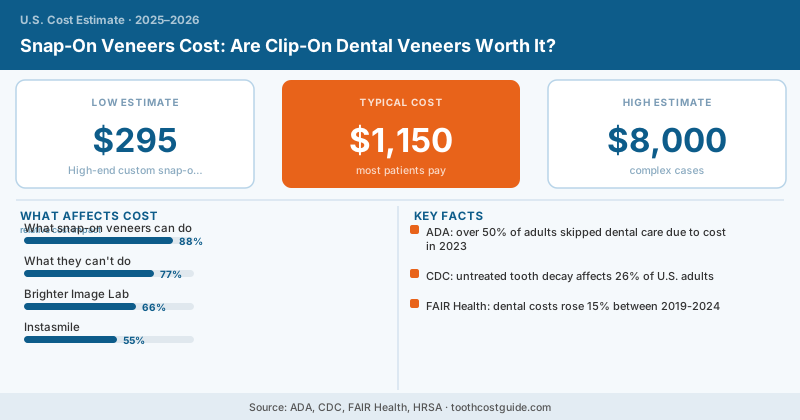
Snap-on veneers — also called clip-on veneers, removable veneers, or dental veneers at home — cost $300–$1,500 for a full arch. That’s not per tooth. That’s for a complete plastic shell that fits over your top or bottom teeth and snaps into place. No dentist required, no drilling, no anesthesia. Mail in impressions, wait 3–6 weeks, put them in.
| Product / Option | Cost |
|---|---|
| Brighter Image Lab (single arch) | $295–$695 |
| Instasmile (single arch) | $299–$699 |
| Top + bottom set (major brands) | $500–$1,200 |
| High-end custom snap-on (dental lab) | $800–$1,500 per arch |
| Composite bonding (per tooth, permanent) | $300–$600 |
| Porcelain veneers (per tooth, permanent) | $1,000–$2,500 |
| Dental bonding full-mouth smile makeover | $3,000–$8,000 |
How Snap-On Veneers Actually Work
The process is straightforward. You receive an impression kit by mail, make molds of your upper and lower teeth at home, send them back to the company, and receive a custom-fit plastic shell in a few weeks. Better brands use more flexible, thinner acetate or acrylic resin. Budget versions are noticeably thick and sometimes visibly opaque.
The device snaps over your existing teeth. No adhesive. No permanent alteration. You pop it in when you want the cosmetic effect, take it out when you’re done.
What snap-on veneers can do:
- Mask significant staining or discoloration cosmetically
- Cover chipped or broken edges temporarily
- Visually close gaps between front teeth
- Give a more uniform appearance to uneven teeth
What they can’t do:
- Fix bite problems or functional issues
- Replace missing teeth structurally
- Pass close scrutiny — they’re detectable by dentists and often visible to others at close range
- Work while eating (you’re supposed to remove them before meals)
- Substitute for actual dental treatment
The Brands Worth Knowing
Brighter Image Lab is one of the original snap-on veneer companies. Their BILabs product line is widely reviewed online. Single arch pricing starts around $295. They use a mail-in impression system and produce veneers in a dental lab. Customer reviews are mixed — fit quality is variable, and some report a noticeably plastic appearance.
Instasmile operates similarly with a similar price point ($299–$699 per arch). They advertise a more natural look but face the same fundamental limitations as all products in this category.
Neither company is FDA-regulated as a medical device (they’re classified as cosmetic), and the ADA has not endorsed removable veneer products as dental treatment.
Who’s a Realistic Candidate
Snap-on veneers genuinely work for a specific, narrow use case: someone who wants a temporary cosmetic solution for occasional events — a photo shoot, a wedding, a situation where they’re self-conscious about visible staining — and who has otherwise healthy teeth underneath.
They’re not appropriate if you have:
- Active tooth decay or gum disease (the shell traps bacteria)
- Missing teeth that need functional replacement
- Severe crowding or bite misalignment
- Expectations that the result will be undetectable
The honest limitation is that snap-on veneers solve a confidence issue cosmetically but don’t address the underlying dental reality.
If you’re considering snap-on veneers because you have multiple stained, chipped, or uneven front teeth, composite bonding is worth a serious look. A cosmetic dentist can recontour, repair, and improve 6–8 front teeth with composite bonding for $2,000–$5,000 total — a permanent result, done in one or two visits, that survives eating. Porcelain veneers at $1,000–$2,500 per tooth are higher cost but deliver exceptional aesthetics that last 10–20 years. If budget is the barrier, ask your dentist about phasing treatment over time rather than turning to a removable product.
Durability and Lifespan
Snap-on veneers from major brands typically last 1–3 years with careful use. Some heavy wearers report breakage within months. Replacement is at full cost — there’s generally no warranty.
The plastic material scratches over time, accumulates staining, and loses its fit if your dental situation changes (extractions, new restorations, natural wear). Proper care requires removing them before eating, drinking anything other than water, and sleeping. Overnight wear traps saliva, bacteria, and debris against enamel — not good for the teeth underneath.
The Verdict
Snap-on veneers occupy a real but very specific niche. For a low-cost, no-commitment cosmetic overlay for occasional use, they deliver what they promise. For anyone expecting to wear them daily, eat with them in, or replace professional cosmetic dentistry with them, they’ll disappoint.
The comparison to porcelain veneers isn’t really fair — they’re solving different problems. What’s worth knowing is that composite bonding at $300–$600 per tooth offers a permanent, professional alternative that’s far less expensive than porcelain veneers and more durable than any removable product.
Snap-on veneers are cosmetic products, not dental treatments. They should not be used in place of professional dental care, and they’re not appropriate for people with active tooth decay, gum disease, or missing teeth. If you’re considering them, consult a dentist first to rule out underlying issues that need treatment. Cost estimates reflect 2025 U.S. pricing and vary by brand and supplier.
Frequently Asked Questions
Snap-on veneers from major brands like Brighter Image Lab or Instasmile cost $295–$699 per arch. A top-and-bottom set runs $500–$1,200. Higher-end custom options from dental labs can reach $1,500 per arch. These are significantly less expensive than traditional porcelain veneers at $1,000–$2,500 per tooth.
When used as directed — as a short-term cosmetic overlay, not worn while eating, sleeping, or drinking anything other than water — snap-on veneers are generally safe for most adults. The ADA cautions against prolonged wear, as plastic shells can trap bacteria against teeth, potentially increasing decay risk. They should not substitute for dental care.
Porcelain veneers are permanently bonded to the tooth surface by a cosmetic dentist, cost $1,000–$2,500 per tooth, and look indistinguishable from natural teeth. Snap-on veneers are removable, cost far less, require no dental visit to apply, and are detectable on close inspection. Porcelain veneers fix cosmetic issues; snap-on veneers temporarily mask them.