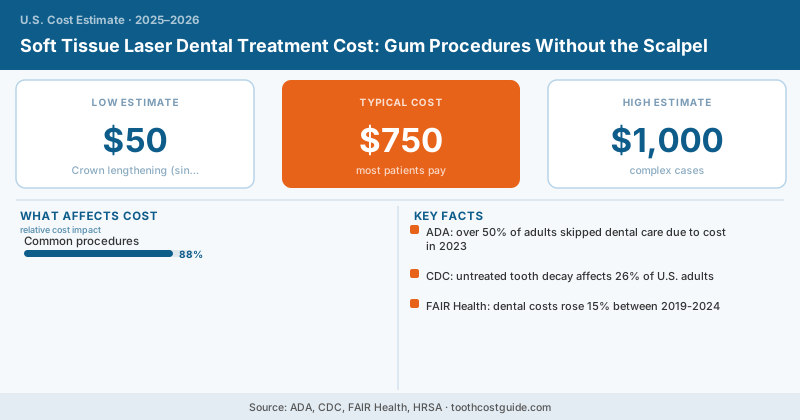
Most patients assume gum surgery means scalpels, sutures, and a week of soft-food recovery. Soft tissue laser dentistry is proving that assumption wrong — and in many practices, it costs about the same as traditional surgery.
Dental diode lasers have transformed how dentists handle gum reshaping, frenectomies, pocket sterilization, and lesion removal. The technology isn’t new — dental lasers have been in clinical use since the 1990s — but they’ve become dramatically more affordable and widespread. Today, nearly 10% of US dental practices own at least one laser system, according to the Academy of Laser Dentistry.
Here’s what soft tissue laser treatment costs, what it’s used for, and how to know if your dentist’s laser recommendation is appropriate.
What Soft Tissue Laser Dentistry Actually Treats
A soft tissue (diode) laser operates at wavelengths that are absorbed by pigmented tissue, making it ideal for procedures on gums, cheeks, tongue, and other oral soft tissues.
Common procedures:
- Gingival recontouring — reshaping an uneven or “gummy” gumline
- Crown lengthening — exposing more tooth structure before a crown
- Frenectomy — releasing a lip tie or tongue tie (lingual frenectomy)
- Sulcular debridement — using laser energy to decontaminate gum pockets
- Gingivectomy — removing excess gum tissue (from gum overgrowth or for aesthetics)
- Operculectomy — removing flap of tissue over a partially erupted wisdom tooth
- Biopsy and lesion removal — excising aphthous ulcers, fibromas, papillomas
- Depigmentation — removing dark patches from gum tissue
The FDA has cleared diode lasers for all of these uses. What matters clinically is whether your dentist has appropriate training — the Academy of Laser Dentistry (ALD) offers certification levels from competency to mastership.
Soft Tissue Laser Cost Breakdown
| Procedure | Traditional Surgery Cost | Laser Treatment Cost |
|---|---|---|
| Frenectomy (lip/tongue tie) | $250–$600 | $300–$700 |
| Gingival recontouring (per tooth) | $50–$350/tooth | $75–$350/tooth |
| Crown lengthening (single tooth) | $500–$1,000 | $400–$900 |
| Gingivectomy (per quadrant) | $200–$400 | $200–$450 |
| Laser sulcular debridement (per quadrant) | N/A — laser-specific | $75–$250 |
| LANAP (full mouth laser periodontal) | N/A — laser protocol | $2,000–$8,000 |
| Lesion/fibroma removal | $150–$400 | $200–$500 |
Laser treatment is rarely significantly more expensive than scalpel surgery for the same procedure. In some cases it’s slightly less — fewer post-op complications mean fewer follow-up visits.
LANAP (Laser-Assisted New Attachment Procedure) is a specialized full-mouth laser periodontal therapy that targets gum disease with an Nd:YAG laser. It’s a distinct protocol with its own CDT code (D4267) and significantly higher cost — $2,000–$8,000 for full-mouth treatment. Only LANAP-certified dentists can perform it. Some insurance plans cover it; others don’t recognize it as distinct from traditional SRP.
What Insurance Covers
Here’s the key thing to understand: insurance doesn’t pay for tools, it pays for procedures. Your plan won’t reimburse you extra for laser delivery — but it will (usually) pay for the procedure at the standard rate.
Examples:
- A laser frenectomy is billed as CDT code D7960 (frenulectomy) — same as the scalpel version
- Laser crown lengthening is D4249 — same code whether done with a scalpel or laser
- Laser sulcular debridement (D4227) is a separate code that some plans cover, others don’t
The practical implication: if your plan covers gingival recontouring at 50% after deductible, it covers it the same way regardless of whether a scalpel or laser was used. Ask your dentist’s billing coordinator to verify your benefits for the specific CDT codes before treatment.
Benefits That Justify the Procedure
The clinical case for soft tissue lasers is genuinely solid. Research published in peer-reviewed journals consistently shows:
- Less bleeding during and after procedures — laser energy cauterizes blood vessels as it cuts
- Reduced need for sutures — laser wounds often heal without stitches
- Faster healing — patients typically recover 30–50% faster than after scalpel surgery
- Lower infection risk — laser energy simultaneously sterilizes the treatment site
- Less post-operative pain — multiple studies show significantly reduced analgesic use after laser procedures versus conventional surgery
A 2019 systematic review in the Journal of Clinical Periodontology found that laser-assisted frenectomy produced significantly less post-operative pain and faster wound healing compared to conventional techniques, with no significant difference in clinical outcomes.
For frenectomy in particular — especially infant tongue tie release where parental anxiety and post-procedure exercises are a major factor — the laser approach has become increasingly preferred.
Who Should NOT Get Laser Treatment
Soft tissue lasers are not appropriate for all patients. People with pacemakers should alert their dentist before any laser procedure — some older laser models can interfere with pacemaker function. Patients on anticoagulants (blood thinners) should discuss treatment with their prescribing physician. Laser treatment also can’t substitute for surgical correction of advanced bone loss from periodontitis — it’s a tool, not a cure-all.
Also be skeptical of practices that market “laser treatment” as a premium add-on without explaining the specific procedure or its benefit for your condition. The laser is a delivery tool — the clinical indication and your diagnosis should drive the treatment decision, not the technology.
Finding a Practice With Soft Tissue Laser Capability
Not every dental office has invested in laser technology. When looking for a laser-capable dentist:
- Ask specifically whether they have a diode laser (for soft tissue) — some offices have hard-tissue lasers (Waterlase, etc.) for cavities but not soft tissue lasers
- Look for Academy of Laser Dentistry (ALD) credentials or certification
- Ask how frequently they use it — a dentist who uses their laser regularly has better technique than one who uses it twice a year
The equipment investment for a basic diode laser system runs $3,000–$8,000. This is why some dentists pass a modest surcharge to laser procedures — though in competitive markets, many absorb the equipment cost and charge the same as conventional treatment.
Is Laser Treatment Worth the Cost?
For most soft tissue procedures, yes — especially frenectomy, gum recontouring, and lesion removal. The faster recovery, reduced discomfort, and lower infection risk translate to real value. The cost is typically comparable to traditional surgery, and in some cases you’ll spend less on post-op care.
For laser periodontal therapy (sulcular debridement as an adjunct to SRP), the evidence is more mixed. It shows modest benefits — better pocket depth reduction in some studies — but it’s not a substitute for traditional scaling and root planing. The $75–$250 per quadrant add-on may be worthwhile in moderate-to-severe cases; ask your periodontist for the specific research supporting their recommendation.
LANAP, at $2,000–$8,000, is the highest-cost option and genuinely effective for moderate-to-advanced periodontitis in patients who want to avoid traditional flap surgery. Verify insurance coverage before committing.
Frequently Asked Questions
Soft tissue laser procedures range from $200–$500 for simple treatments like frenectomy or gingival recontouring, up to $800–$1,500 per quadrant for laser-assisted periodontal therapy. Cost depends on the procedure, the laser system used, and your location.
Insurance covers the underlying procedure, not the laser itself. A laser frenectomy is billed the same CDT code as a scalpel frenectomy. Some insurers will not pay a premium for laser delivery, so your coverage depends on what the procedure code is, not the tool used.
Most soft tissue laser procedures cause minimal discomfort. Many can be done without anesthetic or with only topical numbing. Recovery is typically faster than scalpel surgery — less bleeding, swelling, and post-op pain.
Diode lasers (810–980 nm wavelength) are the most common for soft tissue work. Nd:YAG lasers are also used for deeper tissue penetration. Both are different from the Er:YAG or Er,Cr:YSGG lasers used for hard tissue (tooth and bone) procedures.