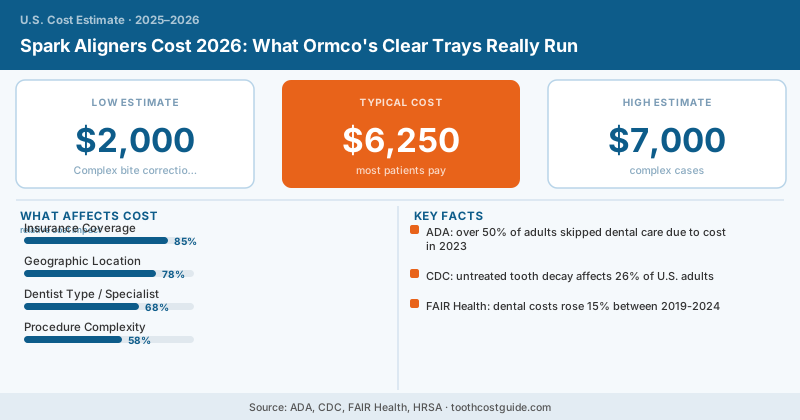
A $5,200 quote for Spark aligners landed in my inbox last month, and the patient was convinced she’d been overcharged. She hadn’t. That’s right in the fairway for Ormco’s clear aligner system when you go through a board-certified orthodontist.
Spark is the newer kid on the block compared to its giant competitor, but it’s backing by Ormco — a company that’s been making orthodontic hardware since 1960. The pitch is a clearer, less stain-prone material called TruGEN, and that material story is part of why your dentist might steer you toward it.
| Treatment Scope | Typical Spark Cost | Treatment Length |
|---|---|---|
| Minor crowding / relapse | $2,500–$4,000 | 4–8 months |
| Moderate alignment | $4,000–$5,500 | 8–14 months |
| Complex bite correction | $5,500–$7,000+ | 14–24 months |
| Single-arch (one jaw) | $2,000–$3,500 | 4–10 months |
Why Spark Lands Where It Does
The price hinges on three things: how crowded your teeth are, how many trays you’ll burn through, and your orthodontist’s chair time. Spark is a doctor-only product. You can’t order it off a website and skip the office, which is exactly why it sits in a different price tier than mail-order brands. Every set of trays gets designed and monitored by a licensed provider.
The American Association of Orthodontists noted in 2023 that roughly 80% of orthodontic patients are now treated with some form of clear aligner or esthetic option, up sharply from a decade ago. That demand is part of why brands like Spark exist at all — there’s a real market for trays that don’t yellow halfway through treatment.
Compared head-to-head, Spark and the market leader land in nearly identical price territory. If you’ve priced Invisalign, a Spark quote will look familiar. The real difference is the tray material and your orthodontist’s preference, not a dramatic cost gap.
Spark runs the same $4,000–$7,000 range as Invisalign because both are doctor-supervised systems. If you want a cheaper path and have a simple case, mail-order brands cost less but skip in-person oversight. See the full breakdown in our clear aligners comparison.
What’s Bundled Into That Number
A Spark quote usually folds in more than the trays. Most orthodontists package the diagnostic scans, the treatment-plan design, every adjustment visit, and at least one set of retainers at the end. That last piece matters — a dental retainer can run $150–$500 per set, and you’ll need one for life if you want your results to hold.
Mid-treatment add-ons can nudge the total up. If you need attachments (small tooth-colored bumps that help trays grip), those are typically included. But refinements — extra tray sets when teeth don’t track as planned — sometimes carry a small fee depending on your provider’s contract.
Insurance and Payment Angles
Here’s the good news: insurance doesn’t care that it’s “Spark” versus any other aligner. Orthodontic coverage treats them the same. If your plan has an orthodontic benefit, it usually caps out at a lifetime max of $1,000–$2,500, and that applies whether you’re in metal braces or clear trays.
The CDC has reported that only about half of working-age adults carry private dental coverage, and orthodontic riders are even rarer. So plenty of Spark patients pay out of pocket. That’s where financing tools earn their keep — a CareCredit plan for dental can stretch a $5,000 case across 24 months interest-free if you qualify. You can also tap an FSA for dental expenses, since orthodontics is an eligible category and you’re paying with pre-tax dollars.
If you’re still deciding between clear trays and brackets, our braces cost guide lays out the metal route, which often comes in $1,000–$2,000 cheaper for complex cases.
Watch for quotes that exclude retainers. Some practices advertise a low Spark price, then charge separately for the retainers you’ll need the day treatment ends. Always ask what happens after the last tray — that’s where surprise costs hide.
Is Spark Worth the Premium?
If your case is straightforward and budget is everything, a doctor-supervised system like Spark may cost more than you need to spend. But for moderate-to-complex bites, the in-person monitoring is the whole point. An orthodontist catches a tooth that’s not tracking before it derails your timeline.
The honest answer: Spark isn’t cheaper or pricier than its main rival — it’s a near-tie. Pick your provider first, then take whichever quality aligner brand they trust. The orthodontist’s skill moves the needle far more than the logo on the tray.
Frequently Asked Questions
Spark clear aligners typically cost $4,000–$7,000 through a board-certified orthodontist, with most patients paying around $5,200. The final price depends on treatment complexity, your location, and whether your orthodontist offers payment plans or discounts for upfront payment.
Most dental insurance plans cover Spark aligners similarly to traditional braces, typically paying 50% of the cost after your deductible, though annual maximums usually cap coverage at $1,000–$1,500. You'll want to check your specific plan, as some insurers exclude clear aligners or classify them as cosmetic and cover nothing.
Spark treatment typically takes 6–24 months depending on the complexity of your case, with most patients finishing in 12–18 months. You'll wear each set of trays for 1–2 weeks before moving to the next set, and you must wear them 20–22 hours per day for optimal results.