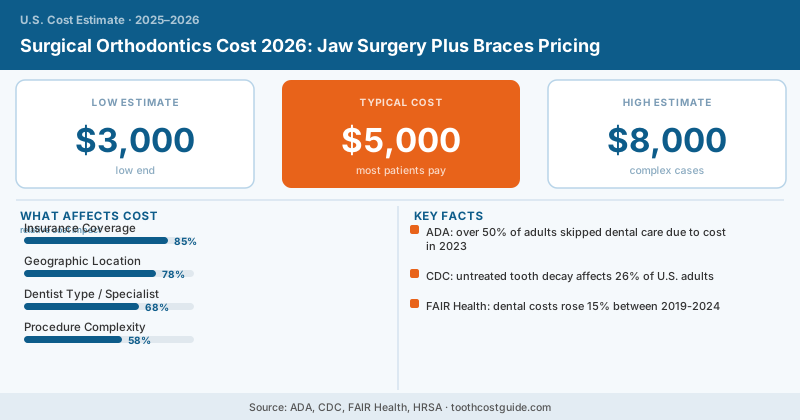
In 2010, correcting a severe jaw misalignment with surgery and braces might have run a family $25,000. Today the same case commonly lands between $20,000 and $60,000 — and unlike a lot of orthodontics, a big chunk of this one can actually be covered by medical insurance.
Surgical orthodontics, or orthognathic surgery, isn’t about crooked teeth. It’s for skeletal problems — jaws that don’t line up, severe overbites or underbites that braces alone can’t fix, and bite issues that cause real functional trouble with chewing, breathing, or speaking.
| Cost Component | Typical Range | Notes |
|---|---|---|
| Pre-surgical braces (12–18 mo) | $5,000–$8,000 | Aligns teeth before surgery |
| Orthognathic surgery (surgeon’s fee) | $20,000–$40,000 | One or both jaws |
| Hospital / anesthesia / facility | $4,000–$10,000 | Often billed separately |
| Post-surgical braces / refinement | $2,000–$4,000 | Finishes the bite |
| Total (single jaw) | $20,000–$40,000 | — |
| Total (double jaw) | $40,000–$60,000+ | — |
Why It Costs So Much
Three separate professionals usually touch a surgical case: an orthodontist who handles the braces, an oral and maxillofacial surgeon who repositions the jaw, and the hospital or surgical center that provides the operating room and anesthesia. Each one bills you.
The braces aren’t optional or cosmetic here — they’re a required setup. Your orthodontist spends roughly a year moving teeth into the positions they’ll need to be in after the jaw is moved. Then comes surgery. Then a finishing phase of braces to dial in the final bite. It’s a marathon, often 24 to 36 months end to end.
Because severe jaw discrepancies affect function — chewing, breathing, sleep — orthognathic surgery is often deemed medically necessary, not cosmetic. That means your medical plan (not dental) may cover a large share of the surgery. Understanding how dental insurance works versus medical coverage is critical here.
The Insurance Wrinkle That Saves Thousands
This is the most important thing to understand about surgical orthodontics: the surgery is frequently billed to medical insurance, while the braces go through dental. That split can dramatically lower your out-of-pocket cost compared to a standard ortho case.
The catch is documentation. Insurers demand proof of medical necessity — sleep studies, cephalometric X-rays, records showing functional impairment. The American Association of Orthodontists has emphasized that thorough pre-treatment records are essential for these claims to succeed. Skimp on the paperwork and you risk a denial that costs you tens of thousands.
Even with coverage, expect meaningful out-of-pocket exposure. Deductibles, coinsurance, and the dental-side braces (where your ortho benefit might cap at $1,000–$2,500) all add up.
How It Differs From Regular Braces
Standard cases — even tough ones — get handled with brackets or aligners alone. Our braces cost guide covers those, which top out far below surgical pricing. The line gets crossed when the problem is in the bone, not the teeth. A severe underbite caused by a jaw that’s grown too far forward simply can’t be fixed by tipping teeth; the jaw itself has to move.
If you’ve been told braces alone won’t solve your bite, that’s the signal a surgical workup may be ahead. For milder skeletal issues caught early in childhood, a growth appliance might sidestep surgery entirely — see our palate expander cost guide for one such approach.
Managing the Bill
Even with insurance, surgical orthodontics demands a financial plan. After medical coverage kicks in, patients often still face $5,000–$20,000 out of pocket.
A CareCredit dental plan can finance the orthodontic portion, and an FSA for dental expenses (or a broader HSA) lets you pay deductibles with pre-tax dollars. Many surgeons’ offices also offer in-house payment plans for the surgical fee.
Never start the braces phase without first confirming your surgical coverage in writing. Patients sometimes spend a year (and thousands) in pre-surgical braces only to have the surgery denied. Get pre-authorization from your medical insurer before the orthodontist places a single bracket.
Final Thought
Surgical orthodontics is the most expensive path in this niche — but it’s also the only fix for true skeletal misalignment, and the one most likely to draw real medical-insurance support. If a provider has recommended it, get a full records workup and lock down your coverage before committing. The planning is worth as much as the surgery.
Frequently Asked Questions
Total cost for surgical orthodontics typically ranges from $20,000 to $60,000 in 2026. This includes the orthognathic (jaw) surgery itself ($15,000–$30,000), pre-surgical and post-surgical braces ($3,000–$8,000), and associated imaging and consultations ($2,000–$5,000).
Medical insurance often covers a significant portion of orthognathic surgery when it's deemed medically necessary for skeletal jaw misalignment, typically covering 50–80% after you meet your deductible. However, traditional dental insurance rarely covers the surgical component, and braces may fall under dental benefits with separate limits ($1,200–$2,500 lifetime).
The complete process typically takes 18–36 months: 12–24 months of pre-surgical braces to align teeth, followed by 2–4 hours for the surgery itself, then 6–12 months of post-surgical braces for final alignment and bite correction. Recovery from the surgery itself usually takes 2–3 weeks before returning to normal activities.