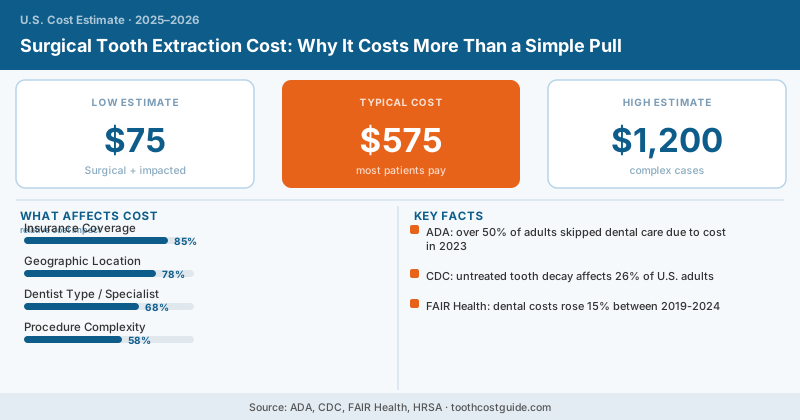
In 2010, pulling a stubborn tooth meant a single flat fee. Today the bill splits in two — and a surgical extraction lands at $250–$650 per tooth without insurance, noticeably more than the $75–$300 you’d pay for a simple one. The difference comes down to what’s actually involved.
A simple extraction grabs a tooth that’s fully erupted and loosens it out with forceps. A surgical extraction is for teeth that won’t come out that way: broken at the gumline, impacted, curved-rooted, or stuck under bone. Your dentist has to cut the gum, sometimes remove a bit of bone, and may section the tooth into pieces. More work, more cost.
Simple vs. Surgical Pricing
| Type | What’s Involved | Cost (No Insurance) |
|---|---|---|
| Simple extraction | Forceps, erupted tooth | $75–$300 |
| Surgical extraction | Gum incision, bone removal | $250–$650 |
| Surgical + impacted | Tooth under gum/bone | $350–$800 |
| Sedation add-on | IV or oral sedation | $250–$600 |
| Bone graft after | Preserve socket | $250–$1,200 |
The American Association of Oral and Maxillofacial Surgeons notes that surgical extractions are among the most common procedures their members perform, and the ADA’s fee surveys consistently show surgical codes priced well above simple ones. That gap isn’t your dentist padding the bill — it reflects genuine added time and skill.
What Makes an Extraction “Surgical”
A few things push you into the surgical category. The tooth may have snapped off at the gum, leaving no crown to grip. The roots may curve or splay. Or the tooth never fully erupted. In each case, accessing the tooth requires cutting tissue rather than just pulling.
The extraction fee is only part of it. If you’re planning a dental implant later, you’ll likely need a bone graft at the time of removal ($250–$1,200) to preserve the socket. Skipping it can mean a pricier graft down the road. Factor the full treatment plan, not just the pull.
Surgical extractions carry a higher risk of dry socket — a painful complication where the healing clot dislodges. Follow your aftercare instructions closely. Smoking and using straws in the first 72 hours are the two biggest triggers.
Sedation Adds Up
Many surgical extractions are done under local anesthetic alone, but anxious patients or complex cases may want IV sedation. That’s a separate $250–$600 charge. It’s optional for most single-tooth surgical extractions, so ask whether you really need it before agreeing.
Insurance Coverage
Most dental plans treat surgical extractions as a basic or major service, covering 50% to 80% after the deductible. Medical insurance occasionally helps when the extraction is tied to an injury or disease. If you’re unsure what applies, brushing up on how dental insurance works will save you surprises at checkout.
Cutting the Cost
No insurance? A dental savings plan trims 15% to 25% off oral surgery fees. Dental schools and oral surgery residency programs handle surgical extractions at a fraction of private-practice rates. And interest-free financing spreads the bill across several months if you can’t pay all at once.
Compared to Other Removals
A surgical extraction sits between a routine pull and a full wisdom tooth removal, which is itself a surgical extraction of an impacted molar. If your tooth might be saveable, it’s worth weighing a root canal first — keeping the natural tooth often costs less over time than removing and replacing it.
Frequently Asked Questions
A surgical tooth extraction typically costs $250–$650 per tooth without insurance, which is significantly higher than a simple extraction at $75–$300 per tooth. The final cost depends on the tooth's location, complexity, and whether bone removal or sectioning is required.
Most dental insurance plans cover 50–80% of surgical extraction costs after you meet your deductible, though some plans classify it as a major procedure with lower coverage (50%) compared to basic procedures. You'll want to check your specific plan, as waiting periods of 6–12 months may apply for major dental work.
A surgical extraction is necessary when a tooth is broken below the gumline, impacted, or hasn't fully erupted—situations where forceps alone won't work and the dentist must cut gum tissue or remove bone to access the tooth. A simple extraction is used only for fully erupted teeth that can be loosened and removed with forceps in one piece.