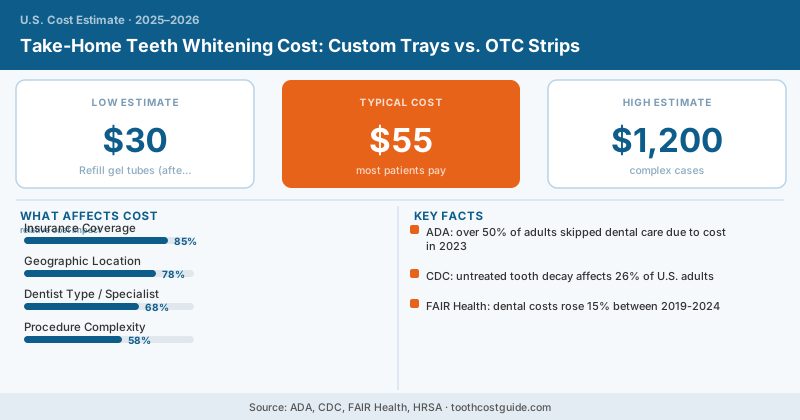
Crest Whitestrips: $45. Drugstore whitening trays: $30. Professional custom trays from your dentist: $300–$600. The price gap is real. Whether the gap is worth it depends on what you’re starting with and what results you want.
| Whitening Method | Cost | Shades of Improvement |
|---|---|---|
| OTC whitening strips (14-day kit) | $30–$55 | 2–4 shades |
| OTC custom-fit trays (Colgate, etc.) | $30–$50 | 2–3 shades |
| Dentist take-home custom tray kit | $300–$600 | 4–8 shades |
| Refill gel tubes (after initial kit) | $30–$80 per set | Same as initial |
| In-office Zoom or laser whitening | $500–$1,000 | 6–10 shades |
| Combo: in-office + take-home trays | $700–$1,200 | 8–12 shades |
What You Actually Get With a Professional Kit
When your dentist provides a take-home whitening kit, here’s what’s included:
Custom-fitted trays: Impressions or digital scans of your teeth create trays that fit exactly. No whitening gel slips onto your gums. No generic tray that’s slightly too big or too small.
Higher concentration gel: Professional kits use 10%–22% carbamide peroxide, or 6%–10% hydrogen peroxide. OTC products max out at 10% hydrogen peroxide in the U.S. (often lower).
Dentist supervision: Your starting shade is documented, sensitivity is assessed, and any restorations (crowns, veneers, fillings) are noted — because whitening gel doesn’t change their color.
Refillable system: Once you have the trays, refill gel tubes cost $30–$80, making maintenance cheap.
The first whitening course typically takes 2–4 weeks of nightly or twice-daily wear. Results last 1–3 years depending on your diet and habits.
Why OTC Strips Have Limits
Whitening strips work. The ADA Seal of Acceptance has been granted to products like Crest 3D Whitestrips Professional Effects. But strips have structural limitations:
- Uneven contact: Strips don’t conform perfectly to teeth, leading to lighter spots near the gum and darker spots farther away
- Lower concentration cap: FDA limits OTC hydrogen peroxide to concentrations that produce slower, more gradual results
- No coverage for crooked teeth: If you have significant crowding, strips can’t reach into the overlapping areas
- Sensitivity without guidance: If you have gum recession or enamel erosion, you’re applying a bleaching agent without anyone assessing your individual risk
For someone with mild staining from coffee or tea and relatively straight teeth, strips can produce a perfectly satisfactory result for $50. For someone with significant discoloration, old restorations, or complex dental anatomy, professional trays are worth the premium.
Whitening gel does NOT change the color of dental crowns, veneers, bonding, or tooth-colored fillings. If you have visible restorations on front teeth and whiten your natural teeth, those restorations will look noticeably darker by comparison. Before starting any whitening treatment, tell your dentist about any front-tooth restorations. The plan may involve replacing or adjusting those restorations to match the new shade.
Sensitivity: The #1 Complaint
A 2021 review in the Journal of Dentistry found that tooth sensitivity affects 18–78% of patients undergoing bleaching, depending on concentration and duration. The wide range reflects real variability: some patients feel nothing; others stop treatment.
Dentist-dispensed kits let you titrate: use a lower concentration, shorten the wear time, or add a desensitizing gel (potassium nitrate or fluoride) to the tray. That flexibility is valuable if you have naturally sensitive teeth.
OTC strips give you fewer options — you can stop wearing them, but you can’t reduce the concentration.
Do your whitening after your cleaning, not before. A freshly cleaned tooth surface absorbs whitening gel more evenly. Avoid red wine, coffee, tea, and tomato sauce for 48 hours after each treatment — that’s when enamel is most porous. Rinse with a fluoride mouthwash after each session to help seal the enamel surface. Retreatment once a year with $50–$80 worth of refill gel maintains your results indefinitely.
Insurance and FSA Coverage
Teeth whitening is cosmetic. No dental insurance covers it. FSA and HSA funds generally cannot be used for cosmetic procedures either — whitening doesn’t qualify as medically necessary.
The exception: if whitening is prescribed as part of treating a medical condition (rare), some FSA administrators have approved it. But for standard cosmetic whitening, plan to pay out of pocket.
The Real Comparison Question
Don’t compare $300 to $45 in isolation. Compare them over time:
- OTC strips: $45 per kit × 2 per year = $90/year, with variable results
- Professional trays: $350 initial + $60/year in refill gel = $350 upfront, then $60/year indefinitely
After four years, professional trays become cheaper than regular strip purchases — and produce better results throughout. For a one-time event (wedding, reunion, job interview), strips may be the smarter short-term spend.
For long-term teeth maintenance, the dentist kit wins on both cost-per-year and result quality.
Frequently Asked Questions
Professional custom tray whitening kits from your dentist typically cost $300–$600, which is significantly more than over-the-counter options but delivers stronger results of 4–8 shades of improvement. This price usually includes the custom-fitted trays and professional-grade whitening gel, with some dentists offering refills at a lower cost.
Most dental insurance plans do not cover cosmetic whitening treatments, including professional take-home kits, as they are considered elective procedures rather than medically necessary. You can expect to pay the full $300–$600 out-of-pocket for dentist-prescribed custom trays, though some offices offer payment plans or discounts for bundled services.
Professional custom trays from your dentist typically show noticeable results within 3–7 days of use and can lighten teeth 4–8 shades over 1–2 weeks, while OTC strips take the full 14-day kit to achieve 2–4 shades of improvement. Custom trays are more effective because they deliver higher concentrations of whitening gel in better contact with your tooth surfaces.