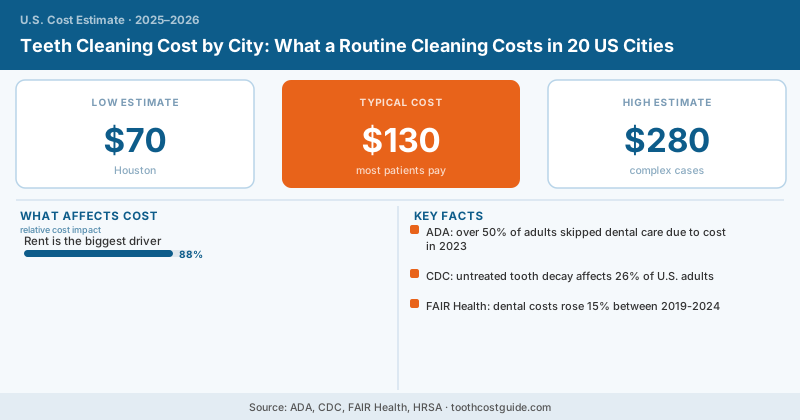
Somewhere in America, someone is paying $280 for a teeth cleaning that their neighbor paid $99 for in a different state — and both practices are staffed by licensed hygienists doing equivalent work. The $181 difference isn’t quality, and it isn’t fraud. It’s rent, wages, and the economics of running a dental practice in Manhattan versus Phoenix.
The CDC reports that roughly 65% of American adults visit a dentist each year — which means 35% don’t, and cost is consistently among the top three cited barriers. If you understand what a fair price for your city actually is, you can stop overpaying or avoiding care based on sticker shock from an unusually expensive first quote.
New Patient Cleaning + X-Rays: 20-City Comparison
The table below shows realistic total cost for a new patient appointment: comprehensive oral exam, full-mouth X-rays (FMX or bitewings), and prophylaxis (routine cleaning for adults with no gum disease). This is what most people mean when they say “a teeth cleaning.”
| City | New Patient Exam + X-Rays + Cleaning | Cleaning Only (Established Patient) |
|---|---|---|
| New York City (Manhattan) | $220–$380 | $140–$280 |
| Los Angeles | $180–$320 | $120–$240 |
| San Francisco | $220–$380 | $140–$270 |
| Boston | $200–$340 | $130–$260 |
| Washington DC | $190–$330 | $120–$250 |
| Seattle | $180–$310 | $120–$230 |
| Chicago | $160–$290 | $105–$220 |
| Denver | $150–$270 | $100–$210 |
| Miami | $140–$260 | $95–$195 |
| Dallas | $120–$240 | $85–$180 |
| Houston | $120–$230 | $85–$175 |
| Atlanta | $120–$240 | $85–$185 |
| Minneapolis | $130–$250 | $90–$190 |
| Phoenix | $110–$220 | $80–$165 |
| Portland (OR) | $160–$280 | $105–$210 |
| Nashville | $110–$220 | $80–$165 |
| Tampa | $120–$235 | $85–$180 |
| Charlotte | $110–$220 | $80–$165 |
| Kansas City | $100–$200 | $75–$155 |
| Memphis | $95–$190 | $70–$145 |
These ranges reflect private-pay (no insurance) prices at general dental practices with licensed hygienists. Corporate dental chains (Aspen Dental, Bright Now! Dental, Western Dental) sometimes run lower on the exam and cleaning but may upsell additional services aggressively at the first appointment.
Why a $99 Cleaning in Phoenix and a $280 Cleaning in Manhattan Are Both Real
This is the question most patients have — and it deserves a direct answer.
Rent is the biggest driver. A Manhattan dental practice in a Class A building pays $18,000–$45,000 per month for its space. A Phoenix practice in a suburban strip mall pays $3,500–$7,000. That’s $170,000–$460,000 per year in rent difference — a cost that must be recovered through patient fees. If a practice sees 400 patients per month, that’s $425–$1,150 more per patient per visit just to cover the rent gap.
Dental hygienist wages vary significantly by city. The Bureau of Labor Statistics Occupational Employment Survey shows dental hygienists in San Francisco earn a median of $67/hour; in Memphis, the median is $37/hour. That $30/hour gap is roughly $60,000 per year per hygienist — a direct overhead difference that flows to fees.
The American Dental Association’s 2023 Health Policy Institute survey found that dental practices in major metro areas carry overhead rates 25–35% above practices in smaller markets, with commercial rent and labor as the two primary drivers.
What doesn’t change much between cities: the clinical procedure itself. A prophylaxis (D1110) is the same procedure performed with the same instruments — scaling and polishing — whether it’s done in a Manhattan office or a Nashville one. You’re not getting a better cleaning in a more expensive city; you’re paying for the cost structure of that city.
A $79 cleaning in Houston is legitimate — overhead there supports that price. A $79 cleaning in Manhattan is suspicious — it may mean the practice is cutting hygienist hours, rushing appointments, or using the low fee to upsell more lucrative procedures (periodontal disease treatment, night guards, fluoride). If a practice’s initial quoted price is dramatically below the local range in its own market, ask specifically what’s included and whether any additional services will be recommended at the appointment.
What’s Included — and What Costs Extra
The new patient appointment bundle (exam + X-rays + cleaning) bundles three separate procedure codes:
- D0150 — Comprehensive oral evaluation
- D0210 or D0274 — Full-mouth or bitewing X-rays
- D1110 — Adult prophylaxis (routine cleaning)
If you have gum disease (periodontitis), the cleaning you need isn’t a prophylaxis — it’s scaling and root planing (SRP), also called a “deep cleaning.” SRP runs $150–$350 per quadrant ($600–$1,400 for a full mouth) and is not a routine cleaning. Be aware that some practices have a financial incentive to recommend SRP, so if you’re told you need one at your first appointment, it’s reasonable to ask for the specific pocket depth measurements that indicate gum disease.
Fluoride treatment (D1208) — an add-on often recommended for adults — costs $25–$75 and isn’t mandatory for most healthy adults. You can decline without affecting the quality of your cleaning.
X-rays at the first appointment are standard and clinically justified — new patient panoramic X-rays or bitewings let the dentist identify decay, bone loss, and other issues not visible during examination. But if you’ve had X-rays within the past 12–18 months at another practice, ask whether your records can be transferred instead of repeating them.
Insurance and What It Actually Covers
Most PPO dental plans cover routine cleanings at 100% — no deductible, no copay, for two per year. This is the most universally covered dental benefit and the most reliably used.
What varies by plan: whether the plan uses a fee schedule that matches what practices in your city actually charge. If your plan’s contracted rate for D1110 is $120 and your Manhattan practice charges $180, you pay the $60 difference even though the plan “covers 100%.” This is the “balance billing” dynamic, and it’s common in high-cost metros.
How to avoid this: When you book a new patient appointment, call your insurance first and ask: “Is [practice name] in-network for my plan? And what is your contracted rate for a prophylaxis (D1110) and a comprehensive exam (D0150)?” In-network practices have agreed to the contracted rate; out-of-network practices haven’t.
Finding Fair Prices in Your City
Call three practices in different parts of your city. You’ll almost certainly find meaningful price variation within the same metro — $40–$80 for the same cleaning — and this is all legitimate. Neighborhoods with lower commercial rents translate to lower fees.
Dental school clinics. Every city with a dental school has a student clinic where supervised students provide cleanings at dramatically reduced rates. Expect to pay $30–$75 for a cleaning at most programs. The tradeoff: longer appointments, less predictable scheduling, and the student supervision dynamic. For patients without insurance or with high cost sensitivity, this is a genuinely good option. See our dental school clinics guide.
Federally Qualified Health Centers (FQHCs). Most major cities have FQHC dental clinics that provide care on a sliding fee scale based on income. These include Community Health Centers, county health department dental clinics, and nonprofit community clinics. Quality varies — some are excellent; some are understaffed and inconsistent. Search “federally qualified health center dental [your city]” to find local options.
Dental discount plans (not insurance — no claims, just member fees). Programs like Careington, DentalPlans.com, and in-house practice membership plans offer 20–40% reductions on cleaning fees in exchange for a $100–$200 annual membership fee. Worth considering if you’re uninsured and paying cash for routine cleanings. Compare the discounted cleaning fee against the cost of just calling practices that offer new-patient promotions.
“New patient specials” — “$1 cleaning,” “$59 new patient exam” — are widely advertised by corporate dental chains. These promotions are legitimate as a marketing tool, but understand what you’re getting into: the first appointment establishes your baseline, and subsequent recommendations (X-rays, fillings, periodontal treatment) are where profitability lives. Don’t feel obligated to proceed with any recommended treatment at the same visit. You have the right to get a second opinion, and you should if anything feels aggressive.
The Real Cost of Skipping Cleanings
Routine cleanings aren’t just teeth polishing — they’re the primary way tartar (calcified plaque) is removed, and they’re when dentists detect early decay, gum disease, and oral cancer at a stage where treatment is far less expensive.
FAIR Health, a nonprofit that analyzes claims data, has documented that patients who lapse on preventive dental visits see higher treatment costs in subsequent years — the predictable result of catching conditions later, when they’re more advanced. A cavity detected at a cleaning costs $150–$300 to fill. The same cavity left another year and reaching the nerve costs $1,000–$3,000 (root canal + crown) or more.
The $140–$200 annual investment in two cleanings — even at NYC prices — is one of the most cost-effective things in dental care. The city-by-city comparison above gives you the context to find fair pricing where you live.
Frequently Asked Questions
A routine cleaning with x-rays ranges from $99 to $280 depending on your city and dental practice location. According to our 20-city analysis, rural and mid-size markets like Phoenix average around $99–$150, while major metropolitan areas like Manhattan typically charge $250–$280 for the same service performed by licensed hygienists.
Most dental insurance plans cover routine cleanings at 80–100% after you meet your annual deductible, which is typically $50–$100. However, you'll usually need to pay the full out-of-pocket cost ($99–$280) upfront and then file for reimbursement, or your dentist's office can bill your insurance directly if they're in-network.
A standard routine cleaning with x-rays takes 45–60 minutes at most dental practices. This timeframe includes the cleaning performed by a hygienist, any x-rays taken, and a brief exam by the dentist, though new patients may need an additional 15–20 minutes for paperwork and initial assessment.