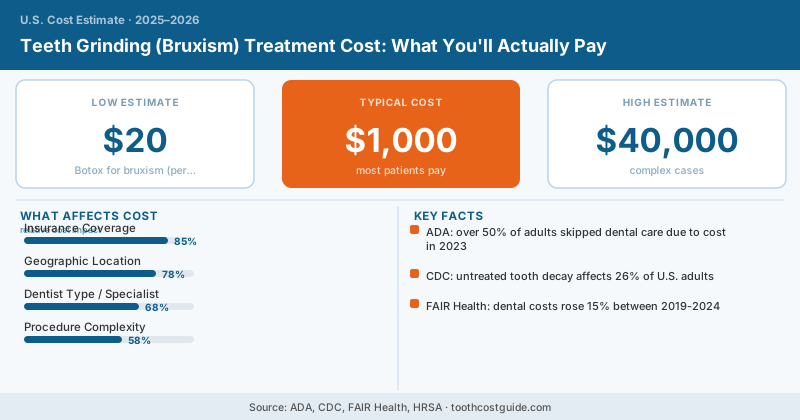
You wake up with a sore jaw, a headache behind your temples, and teeth that feel weirdly sensitive. Sound familiar? About 10% of adults grind their teeth during sleep, according to the American Academy of Oral Medicine — and many of them don’t even know it until their dentist points out worn enamel. The good news: treatment is manageable. The costs, though, vary widely depending on what you actually need.
What Bruxism Treatment Involves
Bruxism isn’t cured — it’s managed. Your dentist will typically start by assessing the damage and recommending one or more of the following:
- Custom occlusal night guard — the most common first-line treatment
- Bite adjustment (equilibration) — reshaping teeth so they meet evenly
- Botox injections — relaxes the masseter muscles that drive grinding
- Biofeedback therapy — retrains your grinding habit
- Restorations — crowns, fillings, or veneers to fix worn-down teeth
Most people start with a custom night guard and don’t need to go further.
| Treatment | Average Cost |
|---|---|
| OTC night guard (pharmacy) | $20–$100 |
| Custom occlusal night guard (dentist) | $300–$900 |
| Bite adjustment / equilibration | $650–$1,500 |
| Botox for bruxism (per session) | $500–$1,500 |
| Biofeedback device | $200–$500 |
| Full-mouth restoration (severe cases) | $15,000–$40,000+ |
Why the Range Is So Wide
A custom night guard can cost $300 at a small-town general dentist or $900 at a specialty clinic in a major city. Materials matter too — hard acrylic guards generally last longer than soft ones and cost more to fabricate. Lab fees, impression materials, and the number of adjustments all factor in.
Botox is priced per unit used, and the masseter muscle takes 25–50 units per side. That adds up fast, and it wears off every 4–6 months.
If years of untreated grinding have cracked or flattened your teeth, you could be looking at a full-mouth reconstruction. That’s a different conversation entirely — we’re talking $15,000 to $40,000+ in restorations.
Does Insurance Cover Bruxism Treatment?
Sometimes, but don’t count on it.
Most dental plans classify a night guard as a “preventive” or “basic” appliance and cover 50–80% after your deductible. The catch: many plans require documented evidence of bruxism (your dentist’s diagnosis notes, radiographs, or photos of wear) before approving coverage.
Botox for bruxism? Almost always excluded as cosmetic. Bite adjustment is hit or miss — some plans cover it under restorative benefits, others don’t.
A custom night guard is an FSA- and HSA-eligible expense. If you have funds in either account, use them — it’s effectively a 20–35% discount depending on your tax bracket.
DIY Night Guards: Are They Worth It?
You’ve seen the boil-and-bite guards at CVS for $20–$40. They’re better than nothing but aren’t a great long-term solution. They’re bulky, wear down faster, and can shift your bite if they don’t fit well. The American Dental Association recommends professionally fabricated occlusal splints for moderate-to-severe grinders precisely because fit and balance matter.
If you’re clenching lightly and just want temporary protection, a pharmacy guard is fine. If you’ve got noticeable wear facets or wake up with regular jaw pain, invest in a custom one.
Untreated severe bruxism can crack teeth, destroy enamel, and damage the TMJ joint. Restorative costs down the road can easily exceed $20,000. A $400 night guard is cheap insurance.
What Drives Total Out-of-Pocket Cost
- Severity — minor wear vs. flat, cracked teeth changes everything
- Your location — big-city dental offices charge 20–30% more on average
- Insurance plan — coverage varies from 0% to 80% for night guards
- Material — hard vs. soft, single-arch vs. dual-arch appliances
How to Get the Best Price
- Ask for hard acrylic — it lasts 3–5 years vs. 1–2 for soft, so it’s cheaper long-term
- Use your FSA/HSA — free pre-tax dollars for an eligible expense
- Check dental school clinics — custom guards are 30–50% cheaper there
- Confirm insurance coverage before treatment — get pre-authorization in writing
The bottom line: most bruxism patients pay $300–$600 out-of-pocket for a quality night guard with partial insurance coverage. That’s the realistic number for the majority of people reading this.
Frequently Asked Questions
A custom night guard from your dentist typically costs $300 to $900, depending on the material quality and customization. Over-the-counter boil-and-bite guards are much cheaper at $20 to $100 but are less durable and effective than custom options.
Many dental insurance plans cover 50% of night guard costs after you meet your deductible, though some plans cover up to 80% for preventive care. However, coverage varies significantly by plan, and you should verify with your insurer whether night guards are classified as preventive or restorative to understand your out-of-pocket costs.
Getting a custom night guard typically requires two dental visits: one for impressions and one for fitting, usually completed within 1 to 2 weeks. Most patients adjust to wearing the guard within a few nights, though some experience minor jaw soreness initially that resolves within days.