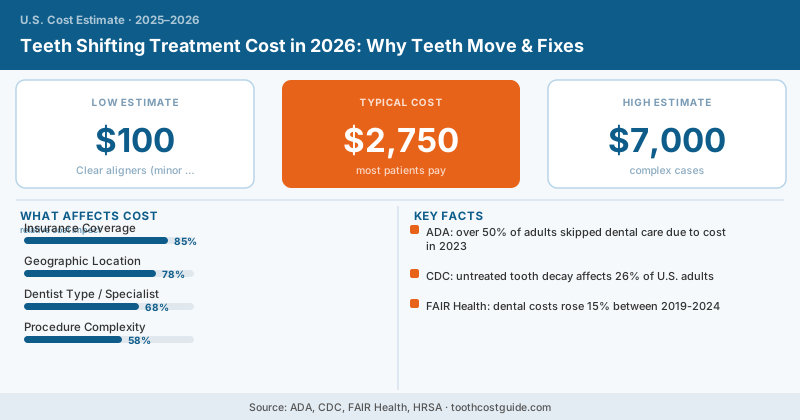
In 2010, your teeth were straight — you had braces as a teen, remember? Today there’s a gap up front and your bottom teeth are crowding. What happened? Teeth shift throughout your entire life, braces or not, and what it costs to deal with depends on whether you want to stop the movement, reverse it, or fix what caused it.
Cost by Approach
| Treatment | Typical Cost (No Insurance) |
|---|---|
| Exam + records/x-rays | $100–$350 |
| Replacement retainer | $150–$600 |
| Permanent bonded retainer | $250–$600 |
| Clear aligners (minor re-correction) | $1,500–$4,000 |
| Full braces / aligners | $3,000–$7,000 |
| Deep cleaning (gum-disease cause) | $200–$1,200 |
| Replacing a missing tooth (stops drift) | $1,500–$5,500 |
Why Teeth Shift in the First Place
Teeth aren’t bolted into your jaw — they sit in bone, held by ligaments, and they respond to pressure for life. Several things push them around:
- Lifelong forward drift. Teeth naturally migrate toward the front of the mouth as you age. This is why even people who never had orthodontic issues develop lower-front crowding in their 30s and 40s.
- Not wearing your retainer. The single biggest cause of “my braces results disappeared.” Without retention, teeth relapse toward their old positions.
- A missing tooth. When a tooth is pulled and not replaced, neighbors tip into the gap and the opposing tooth drifts down. See our tooth extraction cost guide for why replacement matters.
- Gum disease. As bone support erodes, teeth loosen and migrate. The CDC reports nearly half of adults over 30 have some periodontal disease — a leading hidden driver of adult tooth movement.
- Grinding and clenching that constantly load the teeth.
If your teeth shifted because you stopped wearing your retainer, the lesson is brutal but simple: a $150–$600 retainer would’ve prevented thousands in re-treatment. If your teeth are still close to ideal, getting a fresh retainer now — before they drift further — is the smartest money you can spend. A permanent bonded retainer ($250–$600) glued behind your front teeth means never relying on memory again.
Stop It vs. Reverse It
The cost gap between these two is enormous:
- Stopping further movement with a retainer: $150–$600. Cheap.
- Reversing movement that’s already happened with clear aligners or braces: $1,500–$7,000. Not cheap.
That’s why catching shift early — when a retainer can still hold the line — saves the most money. Once teeth have visibly crowded or gapped, you’re in orthodontic re-treatment territory.
Here’s a detail people miss: even after you pay for aligners or braces to re-correct shifted teeth, you’ll need a retainer again afterward to hold the new position — for life. Skip it the second time and you’ll be right back where you started. So the retainer isn’t just the cheap prevention option; it’s also the thing that protects whatever you spend on re-treatment. Budgeting for ongoing retention is part of the real cost, not an optional add-on.
Treating the Cause, Not Just the Crowding
Straightening shifted teeth without fixing why they moved is a waste. If gum disease loosened them, you need scaling and root planing first, or they’ll just shift again. If a missing tooth let neighbors drift, replacing it stops the cascade. If grinding’s the culprit, a night guard protects your investment.
Insurance and Saving Money
Adult orthodontics is often excluded or capped at a lifetime maximum (commonly $1,000–$2,000) — far less than the full cost. Retainers may be partly covered. Gum treatment to address the cause is usually covered like other periodontal care. Our how dental insurance works guide explains lifetime ortho maximums, which catch a lot of adults off guard.
Uninsured? A dental savings plan can discount aligners and retainers, and many orthodontists offer in-house financing.
Teeth that suddenly become loose or shift rapidly — over weeks, not years — can signal advanced gum disease or a bite problem that needs prompt attention. Slow lifelong drift is normal; fast movement is a red flag worth getting checked soon.
Bottom Line
Stopping shifting teeth costs a few hundred dollars; reversing it costs thousands. The dividing line is how soon you act and whether you treat the cause. If you’ve still got a retainer that fits, wear it — it’s the bargain of the dental world.
Frequently Asked Questions
A replacement retainer typically costs $150–$600 depending on the type and your orthodontist. Fixed retainers (bonded to your teeth) generally run $150–$300, while removable retainers like Essix or Hawley styles cost $200–$600 each. If you need multiple retainers or want backups, costs can add up quickly.
Most dental insurance plans do not cover replacement retainers or shifting tooth treatment, since these are considered maintenance or cosmetic rather than necessary care. However, some plans may partially cover orthodontic retreatment (like clear aligners at 25–50% coverage) if shifting is severe; you should contact your insurer for your specific policy details.
Teeth naturally shift throughout your life due to jaw growth, gum disease, grinding, and the loss of bone density around tooth roots. Wearing a retainer consistently—ideally nightly for life, or at minimum several times per week—is the most effective and affordable way to prevent shifting, costing just $150–$600 for a replacement when needed.