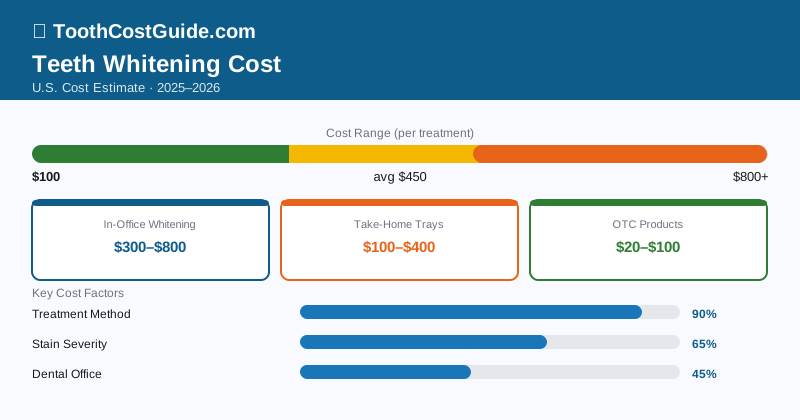
The whitening industry wants you confused. There are $5 toothpastes, $40 strip kits, $400 dentist tray systems, and $800 in-office sessions — and every single one claims to deliver a dramatically whiter smile. Some of them actually do. Others are a waste of money based on your specific type of staining.
Start here: dental insurance never covers whitening. It’s cosmetic. Every dollar comes out of your pocket.
| Whitening Method | Cost | Shades Lighter |
|---|---|---|
| Over-the-counter strips (e.g., Crest 3D Whitestrips) | $20–$60 | 2–5 shades |
| OTC whitening toothpaste | $5–$15 | 1–2 shades |
| Dentist take-home trays + gel | $100–$400 | 4–8 shades |
| In-office professional whitening (Zoom, Opalescence Boost) | $300–$800 | 6–10 shades |
| In-office + take-home combo | $400–$900 | 8–12 shades |
| Laser whitening | $500–$1,000 | 6–10 shades |
Before You Spend Anything, Ask This One Question
Is your staining extrinsic or intrinsic?
Extrinsic staining sits on the outer surface of your enamel — the yellowing and browning from years of coffee, tea, red wine, and tobacco. It responds well to peroxide whitening. This is what most people have, and what most whitening products are designed to treat.
Intrinsic staining is inside the tooth structure. Tetracycline antibiotics taken in childhood. Dental fluorosis. Gray or blue tones from an old root canal or trauma. Peroxide cannot reach it. No whitening system — not strips, not professional Zoom, not lasers — will touch intrinsic staining. People spend $500–$800 on in-office whitening for intrinsic stains and see almost no change.
Your dentist can tell you in 30 seconds which type you have. Ask before spending a dollar.
Breaking Down Each Option
OTC strips and gels ($20–$60). Products like Crest 3D Whitestrips Professional Effects use hydrogen peroxide concentrations around 10–14%. They work — the American Dental Association says OTC whitening products with the ADA Seal are safe and effective for surface stains. Best for mild to moderate extrinsic staining. Requires 2–4 weeks of daily use. Uneven contact on irregular tooth surfaces is the main limitation.
Dentist take-home trays ($100–$400). Your dentist takes an impression and fabricates trays that fit every contour of your teeth precisely. The gel is 10–22% carbamide peroxide or up to 15% hydrogen peroxide — higher concentrations than OTC products. You wear them 30–60 minutes daily for 1–3 weeks. Results are consistently better than strips because the gel has complete, uniform contact. Custom trays also let you do periodic touch-ups by buying gel refills ($30–$80) rather than buying a whole new kit.
In-office professional whitening ($300–$800). A single 60–90 minute appointment. The dentist applies high-concentration peroxide gel — often activated with a specialized light (Philips Zoom) or used without light (Opalescence Boost). Results are immediate and impressive: typically 6–10 shades lighter in one visit. The premium is for speed and the hands-on professional application, not necessarily for results that are dramatically better than take-home trays over time.
KöR Whitening ($600–$1,200). A multi-appointment protocol combining in-office treatment with take-home trays that seal precisely to minimize saliva contamination. Considered the most effective system for difficult staining — the only protocol with clinical evidence for partial improvement in tetracycline discoloration. The price reflects multiple visits and specialized gel that requires refrigeration.
Over-the-counter whitening strips are not ineffective — they just use a fraction of the peroxide concentration allowed in professional products. Crest 3D Whitestrips Supreme at 14% hydrogen peroxide can deliver 4–6 shades of whitening over 3–4 weeks. Professional whitening delivers similar or better results faster. For budget-conscious whitening, OTC strips are a legitimate option.
The Geographic Price Problem
In-office Zoom whitening runs $300–$400 in most mid-size cities. At upscale cosmetic dental practices in New York, LA, or Miami, that same 45-minute procedure costs $600–$800. Same product, same light, same protocol. The location markup is real. If you live in a major metro and want in-office whitening, asking about take-home trays as an alternative is worth the conversation — results comparable, price often $200–$400 less.
What Actually Gets Results
A practical sequence for extrinsic staining, starting with lowest cost:
- Try a reputable OTC strip system for 3–4 weeks. Budget: $40–$55. If you’re happy with the improvement, you’re done.
- If you want more, ask your dentist for custom take-home trays. Budget: $100–$400. Use for 2–3 weeks. Results typically exceed what strips can achieve.
- Add an in-office session to jump-start dramatic improvement before a wedding, reunion, or other event where speed matters. Budget: $300–$600 more.
Most people stop at step 2 and are satisfied.
Ask your dentist whether your staining is extrinsic (on the surface — responds well to whitening) or intrinsic (from within the tooth — does not respond to peroxide whitening). Tetracycline staining, fluorosis, or gray/blue hues from trauma are intrinsic and will not whiten with any peroxide system. Knowing this before spending $500 on whitening saves significant disappointment.
Saving Money Without Cutting Corners
Take-home trays over in-office. For patients without a deadline, custom trays produce results as good as or better than a single in-office session — just more slowly. The price difference is $200–$600. Gel refills later are $30–$80 per syringe, so the custom tray system keeps paying off for years.
New patient promotions. “Free whitening for new patients” is one of the most common dental marketing offers. An in-house whitening kit worth $200–$300 bundled into a new-patient exam and cleaning isn’t rare. Ask when you call.
Seasonal timing. Many practices discount whitening packages in January and May–June. If you’re not in a hurry, waiting for a promotion is a legitimate strategy for a purely cosmetic, non-urgent procedure.
Financing Options
Whitening is affordable enough that financing is rarely needed. For comprehensive smile makeover cases combining whitening with bonding or veneers:
CareCredit: Available for whitening when done as part of a larger treatment plan. Most offices require a minimum charge of $200–$300 to apply for CareCredit financing.
Bundled treatment discounts: If you’re getting whitening alongside other cosmetic work, ask whether the dentist offers a package price. Combining whitening ($300) with bonding ($600) into a $800 package price is a common cosmetic practice promotion.
Always get a written treatment plan before agreeing to any dental work. Before whitening, have your dentist examine your teeth for decay, cracks, or exposed roots — whitening products cause significant sensitivity in these conditions and can worsen existing problems. Veneers, crowns, and bonding do not whiten with peroxide systems.
Frequently Asked Questions
In-office whitening (Zoom, KöR) costs $500–$1,000 per session at a dental office. Take-home trays from a dentist run $300–$600. OTC strips like Crest Whitestrips Professional Effects cost $40–$65 per box. ADA studies show professional treatments achieve 8–12 shades of improvement vs. 2–4 shades with OTC products.
No. Teeth whitening is cosmetic and not covered by any dental insurance plan. It's also not eligible for FSA/HSA reimbursement unless whitening is prescribed for a specific medical condition (rare).
Professional whitening results typically last 1–3 years with proper care. Coffee, tea, red wine, and tobacco accelerate re-staining. Touch-up treatments every 6–12 months with take-home trays (which cost less than initial treatment) are common.