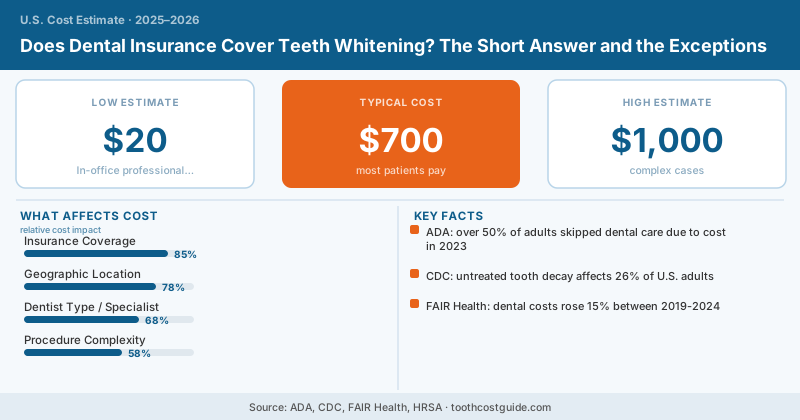
Why doesn’t dental insurance cover something as common as teeth whitening? Because insurers draw a hard line between medically necessary care and elective cosmetic enhancement — and whitening sits firmly, almost without exception, on the cosmetic side of that line.
This surprises a lot of people, especially those paying substantial monthly premiums for what feels like comprehensive dental coverage. Here’s why whitening gets excluded, the rare situations where it doesn’t, and how to get a bright smile without paying full retail price.
| Whitening Method | Typical Cost | Insurance Coverage |
|---|---|---|
| Over-the-counter strips/trays | $20–$60 | None (not billed through dental office) |
| Dentist take-home trays (professional gel) | $150–$400 | None (cosmetic exclusion) |
| In-office professional whitening | $400–$1,000 | None (cosmetic exclusion) |
| Internal bleaching (post-root canal staining) | $150–$400 | Sometimes, if tied to a covered procedure |
Why Insurers Draw This Line So Consistently
Dental insurance plans are built around a benefit hierarchy: preventive care (cleanings, exams) covered most generously, basic restorative (fillings) covered well, major restorative (crowns, root canals) covered partially, and cosmetic procedures excluded almost entirely regardless of plan tier. Whitening falls squarely in that last category because it doesn’t treat disease, prevent future problems, or restore function — it changes appearance only. This classification is remarkably consistent across insurers, plan types, and price points; even premium PPO plans with generous benefits elsewhere typically exclude whitening completely.
The One Real Exception: Internal Bleaching
If a tooth has undergone a root canal and later darkens from the inside — a known side effect in some cases — some insurers will consider “internal bleaching” (whitening from inside the tooth structure, done by the dentist, distinct from surface whitening) as connected to the original covered root canal procedure. This is inconsistently applied and worth a specific pre-treatment estimate call to your insurer if it applies to your situation, but don’t expect it to apply to routine yellowing from coffee, wine, or aging — only tooth discoloration directly tied to a prior covered procedure.
If you’re getting whitening done alongside other treatment — say, whitening plus veneer placement — make sure your dentist’s office itemizes the bill clearly, showing whitening as a distinct, separately billed cosmetic line item. This keeps your claim for the covered portion clean and avoids the entire claim being flagged or denied due to a cosmetic procedure bundled in with it.
Getting Whiter Teeth Without the Full In-Office Price
Over-the-counter strips offer legitimate, dentist-recognized results for mild-to-moderate discoloration at a fraction of professional pricing — a reasonable starting point before spending more.
Dentist-dispensed take-home trays use professional-strength gel in custom-fitted trays made from an impression of your teeth, offering more even, controlled results than store-bought strips, without the full cost of in-office treatment.
In-office professional whitening remains the fastest and most dramatic option, using higher-concentration gel often activated by a special light, completing in a single 60-90 minute visit — worth the premium price mainly for those wanting maximum results before a specific event or timeline.
Dental Savings Plans Can Still Help
Even though insurance won’t cover whitening, a dental discount/savings plan (a membership program offering negotiated rates at participating dentists, distinct from insurance) commonly includes a modest whitening discount — typically 10-20% off the practice’s standard cash price. It’s not insurance coverage, but it’s a legitimate way to reduce the out-of-pocket cost.
Be cautious of mall kiosks or unlicensed providers offering deeply discounted in-office whitening outside a licensed dental practice. Whitening gel concentrations used professionally can cause gum irritation or chemical burns if applied incorrectly, and only a licensed provider can properly assess whether whitening is even appropriate for your specific teeth (it doesn’t work on veneers, crowns, or certain types of internal staining).
The Bottom Line
Teeth whitening sits outside virtually every dental insurance plan’s coverage, no matter how comprehensive the plan appears otherwise, because insurers classify it as purely cosmetic. The one narrow exception — internal bleaching tied to a prior root canal — is worth a specific call to your insurer if it applies. For everyone else, over-the-counter strips or a dentist’s take-home tray option deliver strong results without the full in-office price tag.
Frequently Asked Questions
Almost never. Teeth whitening is classified as a cosmetic procedure by virtually all dental insurance plans, meaning it's excluded from coverage regardless of the plan tier or premium level. The rare exception is when discoloration results directly from a covered dental treatment, such as internal staining after a root canal, where 'internal bleaching' may sometimes be considered under restorative benefits.
No, in almost all cases. The IRS explicitly classifies teeth whitening as a cosmetic procedure not eligible for FSA or HSA reimbursement, similar to how it treats other purely aesthetic dental procedures. Attempting to submit a whitening claim to an FSA/HSA administrator will typically be denied or flagged for correction.
Over-the-counter whitening strips ($20–$60) offer the best value for mild discoloration, while dentist-dispensed take-home trays with professional-grade gel ($150–$400) offer stronger, more even results for a moderate price. In-office professional whitening ($400–$1,000) delivers the fastest, most dramatic results but at the highest cost, entirely out of pocket.