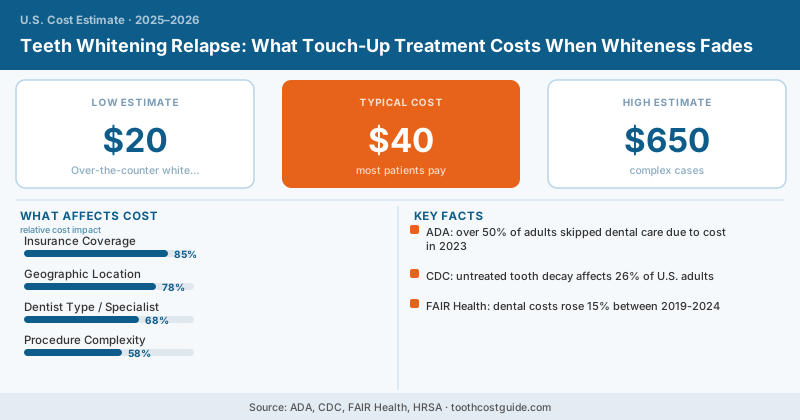
Six months after a $500 in-office whitening session, that same coffee habit is quietly working its way back into your smile. This isn’t a failed treatment — it’s simply how whitening works. The result fades gradually, and everyone who whitens their teeth eventually faces the same question: how much does it cost to get that whiteness back?
Touch-up treatment runs $100-$650 depending on method, generally far less than the cost of your original whitening treatment.
| Touch-Up Method | Typical Cost |
|---|---|
| Take-home tray refill gel (if trays kept) | $50–$150 |
| Professional in-office touch-up session | $200–$650 |
| Over-the-counter whitening strips (maintenance) | $20–$60 |
| New custom trays (if original lost/worn out) | $300–$500 |
Why Whitening Fades in the First Place
Whitening treatments — whether professional or over-the-counter — work by using peroxide-based compounds to break down stain molecules embedded in the porous outer layer of your tooth enamel. That process doesn’t permanently seal your teeth against future staining; it simply resets the current stain level. From the moment you finish treatment, new stain compounds from coffee, tea, red wine, dark sauces, and tobacco begin gradually re-accumulating, the same way they did before you ever whitened.
Most patients notice some visible relapse within 6-24 months, with the exact timeline depending heavily on diet, smoking status, and how porous their particular enamel is — some people’s teeth simply stain faster than others due to natural enamel characteristics.
The Cheapest Path: Keep Your Trays
If you had custom-fitted take-home trays made during your original professional whitening treatment, hold onto them — they’re reusable indefinitely as long as they still fit properly. A touch-up using your existing trays with a fresh tube of whitening gel costs $50-$150, by far the most economical way to maintain results over the years, since you’re only paying for gel refills rather than a new fabrication process or an in-office appointment.
If you no longer have your trays or they no longer fit well, most dental offices can make a new set for $300-$500 — still less than the cost of the original full whitening treatment, since the initial exam and treatment planning aren’t being repeated.
Rather than waiting until relapse becomes very noticeable, many dentists recommend a brief touch-up with take-home trays every 4-6 months — often just a single overnight or few-hour treatment rather than the full original course. This incremental approach tends to cost less in total gel used and keeps results more consistently maintained than waiting for a dramatic fade and doing a bigger touch-up.
When an In-Office Touch-Up Makes Sense
If you don’t have take-home trays, want faster and more dramatic results before a specific event, or your teeth have relapsed significantly, an in-office professional touch-up session uses a stronger peroxide concentration under controlled conditions, typically completing in 60-90 minutes. This costs more than a take-home tray refill but delivers faster, often more even results, particularly useful if you’re preparing for a wedding, photos, or another time-sensitive occasion.
Reducing How Often You Need to Pay for a Touch-Up
Simple habits meaningfully extend the time between touch-ups: using a straw for coffee, tea, and dark sodas so the liquid has less direct contact with your front teeth, rinsing with water immediately after consuming staining foods or drinks, and avoiding tobacco products, which cause some of the fastest and most stubborn staining of any common habit. None of these guarantee zero relapse, but they can meaningfully stretch the interval between paid touch-up sessions.
Insurance Doesn’t Cover Any of This
Teeth whitening, initial treatment or touch-up, is considered a purely cosmetic procedure and is not covered by dental insurance under virtually any plan. It is, however, an eligible expense under most HSA and FSA plans, since the IRS classifies it as a dental care expense even though it’s cosmetic — worth confirming with your specific plan administrator before assuming otherwise.
Overusing whitening products in an attempt to fix relapse faster than intended can cause tooth sensitivity or gum irritation. Stick to the recommended frequency and duration on your specific product or your dentist’s instructions — more frequent whitening doesn’t produce proportionally faster or better results, just more risk of sensitivity.
The Bottom Line
Whitening relapse is normal, expected, and far cheaper to address than starting over from scratch — $50-$150 for a tray refill versus $200-$650 for an in-office redo, or $300-$500 if you need new trays made. Keep your original trays, adopt a few staining-reduction habits, and consider a light maintenance schedule rather than waiting for a dramatic fade before addressing it.
Frequently Asked Questions
A professional in-office touch-up session typically costs $200-$650, while a touch-up using custom take-home trays (if you kept your original trays) costs $50-$150 for additional whitening gel refills — significantly cheaper than starting over with a completely new whitening treatment.
Whitening results gradually fade as new stain compounds from food, drinks, and daily oral exposure re-accumulate on the tooth surface, and the whitening effect itself isn't permanent at a molecular level. Most patients notice some relapse within 6-24 months depending on their diet and habits.
Using a straw for staining beverages like coffee, tea, and red wine, rinsing your mouth with water after consuming them, avoiding tobacco products, and doing brief maintenance touch-ups every few months with leftover take-home trays all help extend whitening results and reduce how often a full touch-up is needed.