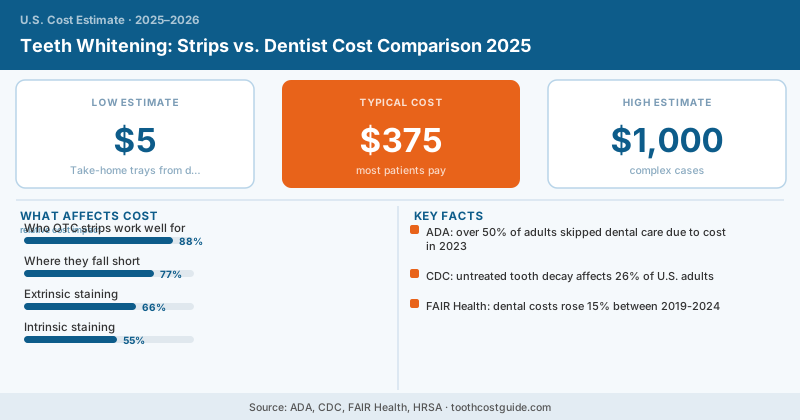
Crest Whitestrips: $35 at CVS. Professional in-office whitening: $500–$1,000 at your dentist’s office. Is the 15x price difference justified — or are you paying for the office ambiance?
The answer depends on what you’re trying to achieve, how fast you need results, and whether you have tooth sensitivity. Here’s the honest comparison.
Cost Overview
| Whitening Method | Typical Cost | Treatment Time |
|---|---|---|
| OTC whitening strips (Crest, Colgate) | $30–$65 | 2–4 weeks |
| OTC whitening toothpaste | $5–$20 | Ongoing, minimal effect |
| Whitening trays (online/OTC) | $25–$80 | 2–4 weeks |
| Take-home trays from dentist | $250–$500 | 2–4 weeks |
| In-office whitening (Zoom, BriteSmile) | $300–$700 | 1–2 hours |
| In-office + take-home combo | $500–$1,000 | 1 day + 1–2 weeks |
OTC Strips: What $35–$65 Buys You
Crest 3D Whitestrips Professional Effects (the gold standard for OTC) use a 10% hydrogen peroxide formula. They’re applied 30 minutes per day for 20 days. ADA-accepted (the ADA Seal of Acceptance means the product has been independently tested for safety and efficacy).
In clinical testing, Crest Whitestrips can whiten teeth 3–4 shades over a 20-day treatment. That’s meaningful — most people are aiming for 2–4 shades of improvement.
Who OTC strips work well for:
- Surface staining from coffee, tea, red wine, or tobacco
- People with 2–4 weeks before an event
- Maintenance whitening after a professional treatment
- Anyone without significant sensitivity issues
Where they fall short:
- Intrinsic staining (discoloration inside the tooth from trauma, tetracycline antibiotics, fluorosis) doesn’t respond to peroxide
- Results typically take longer than professional whitening
- Custom fit isn’t possible — strips may not reach all tooth surfaces, especially molars
- Sensitivity can be a significant issue for some people
Dentist Take-Home Trays: The Middle Ground
Custom take-home whitening trays from your dentist use 10–20% carbamide peroxide (or up to 35% hydrogen peroxide in some formulas) with custom-fitted clear trays made from impressions of your teeth.
Cost: $250–$500. That includes two office visits — one for impressions, one to pick up the trays and gel — plus 2–4 weeks of gel refills.
The custom fit makes a real difference. Gel stays in contact with the tooth surface consistently, including around tight contact points where strips miss. You’ll typically see 4–6 shades of improvement over the treatment period.
This is the dentist’s most cost-effective whitening offering, and many dental professionals consider it the best value in professional whitening — better long-term results than a single in-office session, at half the cost.
In-Office Whitening: What You’re Paying For
In-office whitening (Zoom, Opalescence Boost, BriteSmile) uses high-concentration peroxide gel (up to 35–45%) applied directly to the teeth by a dental hygienist or dentist. Some systems use an activating light. The session takes 60–90 minutes, and results are visible immediately.
Cost: $300–$700 for the in-office session alone; $500–$1,000 for a combo treatment (in-office session + take-home trays for maintenance).
You can typically achieve 5–8 shades of whitening in a single appointment. That’s a significant one-day result that strips can’t match.
A 2021 clinical review published in the Journal of Esthetic and Restorative Dentistry compared OTC and professional whitening products and found that in-office systems produced faster, more dramatic results — but after 6 months, patients using dentist-provided take-home trays maintained comparable whitening levels to those who had in-office treatment.
Sensitivity is the main side effect of all peroxide-based whitening. Professional treatments use desensitizing agents (fluoride, potassium nitrate) to reduce this. If you’ve had significant sensitivity with OTC strips, ask your dentist about lower-concentration take-home gel (10% carbamide peroxide) used every other day. It takes longer but causes far less discomfort.
Insurance Coverage for Whitening
Cosmetic whitening is not covered by dental insurance — period. This includes in-office whitening, take-home trays from your dentist, and OTC products.
The exception: if tooth discoloration is caused by a medical condition or medication and documented as such, some medical insurance plans may provide partial coverage, but this is rare.
Plan to pay out of pocket for all whitening procedures.
What Actually Determines Your Results
The number one factor isn’t which product you use — it’s the type of staining you have.
Extrinsic staining (surface, from food/drink/tobacco): responds well to all peroxide methods. Even OTC strips will work.
Intrinsic staining (inside the tooth): doesn’t respond to peroxide whitening. Causes include:
- Tetracycline antibiotics during tooth development (produces gray/brown banding)
- Dental fluorosis (white spots or brown patches from excess fluoride)
- Trauma or nerve damage (single dark tooth)
- Natural aging and thin enamel
If you have intrinsic staining, no amount of whitening gel will fix it. Veneers or bonding are the options your dentist will recommend.
Don’t whiten teeth with untreated cavities or cracked enamel. The peroxide can penetrate into the pulp and cause significant pain or nerve damage. Your dentist should screen for these issues before any professional whitening. If you’re using OTC strips and have known cavities, hold off until those are treated.
How to Get the Most Value
For most people: Start with OTC strips. Crest 3D Whitestrips Professional Effects or Oral-B 3D Whitestrips are both ADA-accepted and genuinely effective for surface staining. At $35–$50, the risk is low.
Before a big event: Book in-office whitening 2–3 weeks out. The combo approach (in-office + take-home trays) gives you the immediate pop from the office visit plus the maintenance benefit from custom trays.
For long-term maintenance: Dentist-made custom trays with whitening gel are the best value. The initial $300–$500 investment pays off over years of use — gel refills typically run $30–$60 per syringe and a syringe lasts months.
For sensitivity: Ask your dentist for low-concentration carbamide peroxide (10%) with KNO3 (potassium nitrate) desensitizing agent. It works — it just takes longer.
The Real Bottom Line
The $35 OTC strips work for most people with surface staining and patience. The $500 in-office treatment delivers faster, more dramatic results in one session. The $300 custom take-home trays are the best long-term value if you want professional-grade whitening without the one-day rush.
There’s no reason to spend $1,000 on whitening if a $50 OTC product will get you the result you need — but there are real scenarios where professional treatment is worth every dollar of the price difference.
Frequently Asked Questions
Over-the-counter whitening strips like Crest or Colgate typically cost $30–$65 per kit at drugstores like CVS or Walgreens. Professional in-office whitening at a dentist's office costs $500–$1,000, making professional treatments 8–15 times more expensive than at-home strips.
Most dental insurance plans do not cover cosmetic whitening treatments, whether at-home or professional, since they're considered elective procedures rather than medically necessary. You'll typically pay the full out-of-pocket cost ($30–$1,000 depending on the method you choose) unless your plan specifically includes cosmetic dentistry.
Whitening strips usually show noticeable results within 3–7 days of daily use and take about 30 minutes per application. Professional in-office whitening delivers visible results in a single 30–60 minute appointment, making it the faster option if you need results quickly for an event.