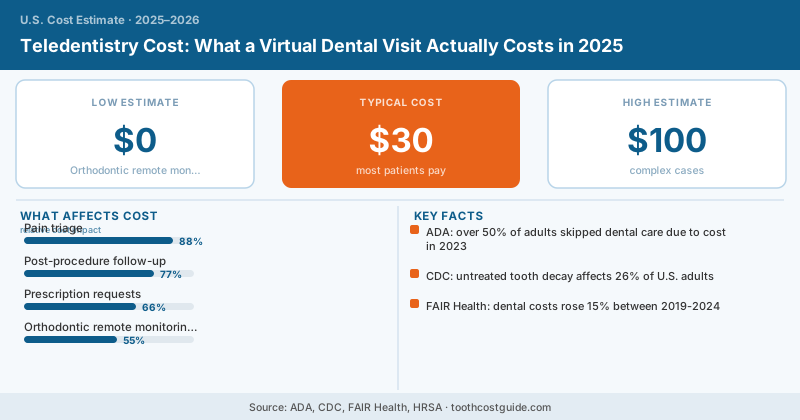
42% of American adults skipped a needed dental appointment in 2023 because of cost or access barriers — that’s according to the American Dental Association’s Health Policy Institute. Teledentistry emerged partly to address that gap. But what does a virtual dental visit actually cost, and what can it realistically do for you?
| Teledentistry Service | Typical Cost |
|---|---|
| Asynchronous consult (photo review, no live call) | $0–$35 |
| Live video consultation (synchronous) | $35–$100 |
| Emergency triage (pain assessment, triage only) | $25–$75 |
| Orthodontic remote monitoring (monthly) | $20–$40/month |
| Rx request for dental infection (antibiotics) | $35–$80 |
| Insurance-covered virtual visit (copay) | $0–$30 |
What Teledentistry Can Do
A virtual dental appointment isn’t a replacement for in-person care. But it’s genuinely useful for a narrow set of situations:
Pain triage: A dentist can assess your symptoms, look at photos or video of your mouth, and tell you whether you need an ER visit, an urgent dental appointment, or whether you can safely wait a few days. That call alone can save you a $200–$400 emergency room visit for a toothache.
Post-procedure follow-up: Did your extraction site look right at day 3? A photo consult can confirm healing is normal or flag early dry socket without a $50–$100 office visit.
Prescription requests: In some states, licensed dentists can prescribe antibiotics or pain management medications via teledentistry for confirmed dental infections. The availability depends on state regulations around prescribing via telehealth.
Orthodontic remote monitoring: Several aligner companies (including Invisalign’s monitoring programs) use app-based check-ins to reduce the frequency of in-person visits. The remote monitoring fee is often bundled into the treatment cost.
Second opinions: You got a treatment plan from your dentist. Before committing to $3,000 in work, a virtual second opinion from another licensed dentist reviewing your X-rays and photos can cost $35–$75 and might save you significantly more.
What Teledentistry Can’t Do
Be realistic about limitations. A virtual dentist cannot:
- Probe gum pockets
- Take or interpret fresh X-rays
- Physically examine a tooth for cracks
- Perform any procedure
Any diagnosis made remotely carries more uncertainty than an in-person exam. A teledentist who tells you definitively what’s wrong with your tooth based on a photo alone is overreaching. The legitimate use is triage and guidance — not definitive diagnosis.
Teledentistry laws differ significantly by state. Some states allow dentists to establish a valid patient-dentist relationship via telehealth and then prescribe. Others require an in-person exam before any prescription. The ADA’s 2024 teledentistry policy update supports expanding virtual care but leaves specific rules to state dental boards. Check your state dental board’s website if you’re planning to use teledentistry for anything beyond a consult.
Does Insurance Cover Teledentistry?
Coverage is improving but inconsistent. As of 2025:
- Medicaid: About 36 states have specific teledentistry coverage provisions in their Medicaid dental programs, though benefits and reimbursement rates vary.
- Private PPO: Many larger insurers — including Aetna, Cigna, and Delta Dental — have added teledentistry benefits, often with a $0–$30 copay for synchronous visits.
- Employer-sponsored plans: Coverage depends entirely on the plan design. Some include teledentistry as part of a broader telehealth benefit; others exclude it.
Always verify before your appointment. The cost of an uncovered virtual visit ($35–$100) is usually low enough that it’s worth paying out of pocket even without coverage.
Major Teledentistry Platforms
1-800-Dentist’s Teledentistry: Partners with licensed dentists in each state; focuses on triage and finding in-network providers.
Teledentix: A white-label platform used by many dental offices for virtual check-ins; costs vary by practice.
Aspen Dental’s virtual care: Part of their larger network; good for existing Aspen patients.
Smile Direct Club (before its 2023 closure): Was one of the largest users of asynchronous remote assessment; its closure illustrates the risks of remote-only dental models.
When Teledentistry Is Worth the Money
- You’re in pain at 10 PM and don’t know if it’s ER-level
- You’re traveling and need guidance on a dental issue
- You want a second opinion before agreeing to expensive treatment
- You can’t take time off work for a routine question
- You’re in a rural area with limited local access
When it’s not: as a replacement for an overdue cleaning, a substitute for X-rays to evaluate that suspicious tooth, or a way to get ongoing treatment without ever seeing a dentist in person.
The $35–$75 virtual visit pays for itself the moment it saves you a $300 unnecessary ER trip — or steers you toward an actual appointment you’d have otherwise delayed.
Frequently Asked Questions
Live video consultations typically range from $25 to $100, depending on the platform and provider. Some teledentistry companies offer introductory rates as low as $25, while established dental networks may charge closer to $75–$100 per visit.
Coverage varies by plan, but many major insurers now cover teledentistry at the same rate as in-person preventive visits, meaning your copay typically applies (usually $0–$50). However, some plans still exclude virtual visits entirely, so you should check your specific policy before scheduling.
Teledentistry works well for consultations, treatment planning, prescription refills, and follow-up questions, but cannot handle cleanings, fillings, extractions, or biopsies. If you need hands-on treatment or have severe pain, you'll need an in-person appointment, which typically costs $100–$300 for an exam and cleaning.