“I brush twice a day and still have bad breath.” It’s one of the most common complaints dentists hear — and it has a specific, well-documented cause that brushing alone doesn’t address: the dorsal surface of your tongue.
Here’s the biology: the tongue’s surface is covered in papillae — microscopic projections that create a large, textured surface area ideal for trapping food particles, dead epithelial cells, and bacteria. Anaerobic bacteria in that layer break down sulfur-containing amino acids and produce volatile sulfur compounds (VSCs): hydrogen sulfide and methyl mercaptan, both of which smell like rotting eggs and garbage respectively.
An estimated 80–90% of oral halitosis originates from tongue biofilm. Toothbrushing addresses teeth. It doesn’t systematically clear the tongue surface.
What the Evidence Actually Shows
A 2004 Cochrane systematic review examined tongue cleaning devices for halitosis and concluded that tongue scrapers reduce VSC levels significantly compared to no tongue cleaning. The review also found tongue scrapers are marginally more effective than tongue brushing for VSC reduction — roughly 75% VSC reduction with scrapers versus 45% with brushing the tongue.
That said, the authors noted the evidence base was small and effects are short-term (hours, not days). VSC producers repopulate quickly. The benefit of tongue scraping is real but requires daily practice to maintain.
A separate 2014 study in the Journal of Oral Rehabilitation confirmed that using a tongue scraper twice daily produced significant reductions in sulfide levels and patient-reported breath improvement at 2 weeks — with effects maintained at 4-week follow-up.
Metal vs. Plastic: Which Should You Buy?
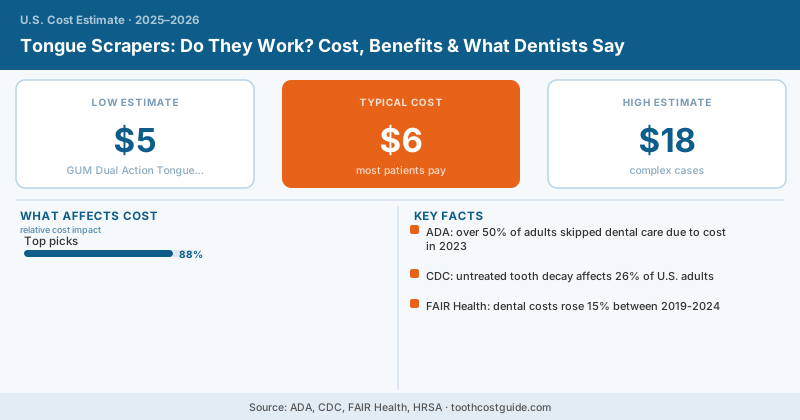
You’ve got two real choices: stainless steel scrapers ($8–$20) and plastic scrapers ($5–$10).
Stainless Steel Tongue Scrapers: $8–$20
The preferred option for most dental professionals. Stainless steel’s main advantage is durability and hygiene — it’s non-porous, doesn’t harbor bacteria, dishwasher-safe, and lasts years. It cleans more efficiently because the rigid U-shape maintains consistent contact with the tongue surface across its full width.
Top picks:
- Dr. Tung’s Tongue Cleaner ($10–$14): Wide stainless steel U-bar, the most commonly recommended model. Ships with a travel case. The wire handles allow you to adjust the tension.
- Boka Stainless Steel Tongue Scraper ($9–$12): Flat bar design, dishwasher-safe, minimal crevices.
Plastic Tongue Scrapers: $5–$10
Most drugstore tongue scrapers are plastic — Oral-B, GUM, Dentek brands. They work, but plastic is porous and develops microscopic scratches over time that harbor bacteria. Replace them monthly.
Plastic scrapers also tend to flex more, which can reduce the consistency of contact across the tongue width. For occasional use or travel backup, fine. For a daily device, stainless steel is a better long-term investment at only slightly higher cost.
| Product | Type | Price | Replace |
|---|---|---|---|
| Dr. Tung’s Tongue Cleaner | Stainless steel | $10–$14 | Every 2–3 years |
| Boka Stainless Steel Scraper | Stainless steel | $9–$12 | Every 2–3 years |
| GUM Dual Action Tongue Cleaner | Plastic | $5–$7 | Monthly |
| Oral-B Tongue Cleaner | Plastic with brush | $6–$9 | Monthly |
| ToiletTree Stainless Steel | Stainless steel | $12–$18 | Every 2–3 years |
How to Use a Tongue Scraper Correctly
Technique matters. Used wrong, scraping can trigger a gag reflex or be ineffective.
- Extend your tongue fully. Reach as far back as you comfortably can without gagging.
- Place the scraper at the back of the extended tongue surface. Position the U-bar (or flat edge) at the posterior tongue.
- Apply gentle pressure and draw forward in one smooth motion. Don’t scrub back and forth.
- Rinse the scraper after each pass. Removes the debris you’ve collected.
- Repeat 5–7 strokes. You’re done in about 30 seconds.
Do it in the morning when VSC levels are highest (overnight accumulation), and optionally after meals. The morning session gives you the biggest improvement in morning breath.
Does It Replace Brushing Your Tongue?
No — they complement each other. Tongue brushing with your toothbrush disrupts the biofilm; scraping removes it. Many dentists recommend brushing with toothpaste first, then scraping. Others prefer scraping first, then brushing.
The sequence that has the most evidence: scrape, then brush. Scraping loosens and collects the biofilm; brushing with fluoride toothpaste then sweeps away remaining debris and delivers fluoride to the tongue surface.
If you’ve been brushing your tongue but not scraping, adding a daily scrape typically produces noticeable breath improvement within a week.
If you scrape diligently and still have persistent bad breath, the source may not be your tongue. Other causes: gum disease (bacterial byproducts from periodontal pockets — professional treatment needed), dry mouth (reduced saliva allows VSC buildup — a dentist checkup can assess medication side effects), sinus drainage (postnasal drip feeds VSC-producing bacteria), or systemic causes (GERD, liver or kidney disease). Persistent halitosis unresponsive to oral hygiene changes warrants medical evaluation.
Integrating Into Your Routine
The easiest approach: put the tongue scraper next to your toothbrush. Make it the first step in your morning routine. Scrape → brush → (optional) mouthwash → floss or interdental cleaning.
Total added time: 30 seconds. You’ll notice a difference in morning breath within a few days. Most people who try it and actually use it consistently find it’s one of the higher-return-on-time investments in their oral hygiene routine.
The Cost Argument Is Simple
A Dr. Tung’s stainless steel scraper costs $10–$14 and lasts 2–3 years. That’s $4–$7 per year, or roughly $0.01–$0.02 per day.
Bad breath has real social and professional costs — not quantifiable in dental bills, but significant. And if your halitosis is gum-disease-related, the cost of ignoring it is a $600–$1,200 scaling and root planing procedure versus a daily 30-second habit that costs pennies.
Don’t scrape with excessive pressure. The tongue surface is delicate tissue. Overly aggressive scraping can cause micro-abrasions and soreness. You want enough pressure to collect the white/yellow biofilm layer, not to scrub the underlying tissue. If your tongue feels sore or looks raw after scraping, you’re pressing too hard.
The Bottom Line
Tongue scrapers work. The Cochrane evidence is clear: they reduce VSCs better than tongue brushing alone, and VSC reduction translates to measurable breath improvement in clinical settings. For a $10–$14 investment, it’s hard to find a better dental hygiene add-on.
If you’re already brushing and using interdental tools consistently and still bothered by breath issues — adding a tongue scraper is the next logical step. It addresses the largest single source of oral halitosis in under a minute a day.
Frequently Asked Questions
Tongue scrapers typically range from $5 to $20 depending on material and brand. Basic plastic models are usually $5–$10, while stainless steel or copper scrapers with ergonomic handles run $12–$20, and most are available without a prescription at drugstores or online retailers.
Dental insurance does not typically cover tongue scrapers, as they are considered over-the-counter hygiene tools rather than medical devices or professional treatments. You will pay the full $5–$20 out-of-pocket, making them one of the most affordable bad-breath solutions available.
Research shows tongue scraping removes more volatile sulfur compounds (VSCs) that cause bad breath than brushing alone, particularly from the back third of the tongue where anaerobic bacteria accumulate. For best results, dentists recommend using a scraper 1–2 times daily as part of your routine, taking 10–15 seconds per scraping motion.