42% of U.S. adults have tooth decay, and much of that damage starts with eroded enamel — the hardest substance in the human body, yet one that can’t regenerate on its own once it’s gone. That’s the frustrating reality of enamel loss: the window for cheap prevention is narrow, and the further it progresses, the more expensive your options become.
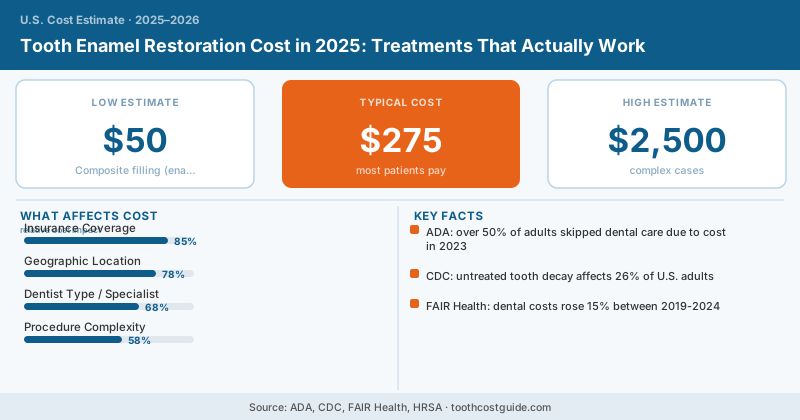
So what does it actually cost to restore enamel? Anywhere from $50 for remineralization products to $4,000+ for full coverage veneers. The right answer depends entirely on how much enamel you’ve lost and where.
Enamel Restoration Options and Costs
| Treatment | Cost Range | Best For |
|---|---|---|
| Remineralization (fluoride/MI paste) | $50–$200 per visit | Early-stage erosion, white spots |
| Silver diamine fluoride (SDF) | $75–$150 per tooth | Arresting decay on weakened enamel |
| Dental bonding | $150–$450 per tooth | Mild-to-moderate enamel loss, chips |
| Composite filling (enamel replacement) | $150–$400 per tooth | Localized erosion cavities |
| Porcelain/composite veneer | $800–$2,500 per tooth | Moderate-to-severe front tooth erosion |
| Dental crown | $900–$1,800 per tooth | Severe erosion compromising tooth structure |
What “Enamel Restoration” Actually Means
Here’s where patients get confused: enamel can’t truly regenerate. The body doesn’t make new enamel after teeth erupt. What dentists call “restoration” is either:
- Remineralization — using calcium, phosphate, and fluoride to harden and partially repair early demineralized enamel before actual material loss occurs. This works only in the earliest stages.
- Replacement — covering or rebuilding the eroded surface with composite resin, porcelain, or ceramic material. This is what most people need by the time they see a dentist.
The earlier you catch erosion, the cheaper the fix. Early-stage white spot lesions (visible chalky patches) can sometimes be reversed with fluoride varnish alone at $25–$75 per application. Wait until the enamel is physically thin or chipped, and you’re in bonding or veneer territory.
Early-Stage: Remineralization
Fluoride varnish applications in-office run $25–$75 and are often covered under preventive benefits. Prescription-strength fluoride toothpaste ($30–$60 per tube) and MI Paste (casein phosphopeptide-amorphous calcium phosphate) cost $20–$50 out of pocket at most dental offices or pharmacies.
The ADA’s guidelines support professional fluoride applications for patients at elevated caries risk — which includes anyone with acid reflux, dry mouth, or frequent consumption of acidic beverages. If your dentist hasn’t offered this yet, ask.
Gastroesophageal reflux disease (GERD) is one of the leading causes of enamel erosion in adults. Stomach acid hitting teeth during reflux episodes creates a characteristic erosion pattern on the lingual (tongue-side) surfaces of upper front teeth. If your dentist spots this pattern and you haven’t been diagnosed with GERD, it’s worth a conversation with your primary care doctor.
Mid-Stage: Bonding and Composite Restorations
Once enamel has visibly chipped, thinned, or developed sensitivity from exposed dentin, you’re looking at physical replacement material.
Dental bonding ($150–$450 per tooth) uses composite resin to rebuild edges and surfaces. It’s the most affordable option for mild-to-moderate erosion. The downside: composite is softer than enamel and typically needs replacement or touch-up every 5–10 years. It’s also more prone to staining.
Composite fillings in erosion-related cavities follow standard filling pricing — $150–$300 for a small posterior lesion, more for larger ones. If acid erosion has caused cavities rather than just surface thinning, this is usually the first line of treatment.
Advanced Stage: Veneers and Crowns
When erosion has removed significant enamel on front teeth — creating translucency at the edges, significant sensitivity, or aesthetic problems — veneers become the practical solution.
Porcelain veneers ($1,000–$2,500 per tooth) cover the entire front surface and edges. For a patient with generalized erosion across six to eight front teeth, total veneer treatment runs $6,000–$20,000+. That’s a significant investment, but for severe erosion affecting how you look and how the teeth function, veneers restore both.
Dental crowns ($900–$1,800 per tooth) become necessary when erosion has compromised so much structure that a crown is needed to protect what remains. Posterior teeth (molars, premolars) with heavy wear often end up needing crowns rather than veneers.
What Drives the Cost Up
- Number of teeth affected — Generalized erosion (all teeth, from acid reflux or diet) costs far more to treat than isolated chips
- Severity of enamel loss — Early-stage: remineralization ($0–$200). Late-stage: crowns across multiple teeth ($10,000+)
- Whether dentin is exposed — Exposed dentin means sensitivity and the need for more protective restorations
- Provider type — General dentist vs. prosthodontist; prosthodontists often charge more but specialize in complex full-mouth enamel cases
Insurance Coverage
Preventive treatments (fluoride varnish) are usually covered. Restorative treatments get trickier:
- Fillings for decay: typically covered at 70–80% after deductible
- Bonding for erosion without active decay: often covered partially, sometimes denied as “cosmetic”
- Veneers: almost universally excluded as cosmetic by insurance
- Crowns: covered (often 50%) when medically necessary — you’ll need your dentist to document structural necessity
If your erosion is caused by an ongoing issue — acid reflux, bulimia, or excessive citrus consumption — treating the cause is as important as treating the teeth. Spending $8,000 on veneers while continuing to expose them to acid will destroy the new restorations within a few years. Address the source first.
How to Reduce Costs
- Catch it early. Annual dental checkups exist partly to catch erosion before it becomes expensive.
- Use prescription fluoride. $50–$60 per tube vs. hundreds per bonding appointment.
- Ask about dental school treatment. Restorations at accredited dental schools cost 30–50% less with supervised students.
- Get multiple estimates for extensive treatment. For full-mouth erosion requiring veneers or crowns, a second opinion can save thousands.
- Ask about phased treatment. Dentists can often address the most critical teeth first, spreading costs over 12–24 months.
Bottom Line
Mild enamel erosion caught early? You’re looking at $50–$200 in remineralization products and possibly no restorations at all. Moderate erosion on a few front teeth? Expect $500–$2,000 in bonding. Significant erosion across multiple teeth requiring veneers or crowns? Budget $5,000–$20,000+, usually paid out of pocket since most of it won’t be covered.
The CDC’s 2023 oral health data shows that adults who see a dentist regularly have dramatically lower rates of severe decay and erosion. The arithmetic is simple: $200/year in cleanings and fluoride beats $15,000 in restorations every time.
Frequently Asked Questions
Tooth enamel restoration ranges from $150–$4,000+ depending on the treatment method and severity of damage. Remineralization treatments and fluoride applications cost $150–$300, while bonding or composite fillings run $200–$1,200 per tooth, and porcelain veneers or crowns can reach $1,500–$4,000+ per tooth.
Most dental insurance plans cover preventive remineralization treatments like fluoride applications at 100%, but cosmetic treatments such as veneers are typically not covered. Restorative options like crowns or bonding may be partially covered (50–80%) if deemed medically necessary rather than cosmetic, leaving you to pay 20–50% out-of-pocket.
Tooth enamel cannot regenerate once lost, so restoration is your only option to repair the damage. Early-stage enamel erosion can be slowed with fluoride remineralization treatments, but once significant enamel loss occurs, you'll need bonding, veneers, or crowns to restore function and appearance—so catching erosion early can save you thousands in treatment costs.