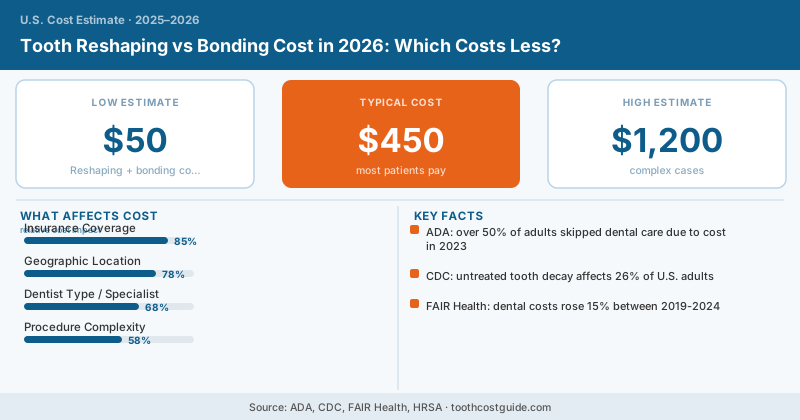
What’s the difference between tooth reshaping and bonding — and which one’s cheaper? Reshaping costs $50 to $300 per tooth. Bonding costs $300 to $600. So reshaping wins on price. But here’s the thing: they’re not really competitors. One removes a little enamel to smooth a tooth; the other adds material to build a tooth up. The cheaper option only saves you money if it’s the one your tooth actually needs. Let’s sort out which is which.
| Procedure | Cost Per Tooth | What It Does |
|---|---|---|
| Tooth reshaping (contouring) | $50–$300 | Removes enamel to smooth/shorten |
| Dental bonding | $300–$600 | Adds resin to build up/fill |
| Reshaping + bonding combined | $300–$600 | Both, same visit |
| Reshaping multiple teeth | $150–$900 | Even out an arch |
| Bonding (two front teeth) | $600–$1,200 | Close a gap or rebuild |
The Core Difference
Tooth reshaping (also called contouring or enameloplasty) is subtractive. Your dentist gently files away small amounts of enamel to smooth a rough edge, round a pointed tooth, shorten a slightly long one, or even out the tips of your front teeth. It’s quick, usually painless, and needs no anesthesia. It’s the cheapest cosmetic dental procedure there is.
Bonding is additive. Your dentist applies tooth-colored composite resin to add material — filling a chip, closing a gap, or building up a worn tooth. It costs more because it takes more time, skill, and materials. Our full dental bonding guide covers it in depth.
If your tooth has too much enamel (a pointed tip, a rough edge, an uneven length), reshaping fixes it for as little as $50. If your tooth is missing material (a chip, a gap, a worn edge), no amount of filing will help — you need bonding to add it back. Match the procedure to the problem and you’ll never overpay.
Why You Can’t Just Pick the Cheaper One
This is the mistake people make: they hear reshaping is cheaper and ask for it, when their actual problem needs bonding. You can’t file your way to filling a chip. And you can’t add resin to fix a tooth that’s simply too long. The American Dental Association generally favors the most conservative approach that solves the problem — and reshaping is more conservative when it fits the problem. When it doesn’t fit, it’s not a bargain, it’s the wrong tool.
The good news: the two combine beautifully. A dentist will often reshape a tooth’s edges and add bonding in the same visit to get the ideal shape, charging a combined fee in the $300–$600 range.
The Enamel Caution
Reshaping removes enamel, and enamel doesn’t grow back. A skilled dentist removes only a sliver — well within safe limits — and the tooth stays just as strong. But over-aggressive contouring can expose dentin, cause sensitivity, or weaken a tooth. This is why reshaping should be measured and minimal, not a heavy reshaping of healthy teeth. Get an X-ray or at least a careful exam first to confirm your enamel can spare what’s being removed.
What Each One Won’t Fix
Neither procedure handles deep stains, major shape changes, or structural damage. For those, you’re into dental veneers or a dental crown — bigger commitments at bigger prices. And neither changes tooth color, so if brightness is your goal, teeth whitening is the place to start.
Does Insurance Help?
Both are usually considered cosmetic and not covered. The exception: if bonding repairs a tooth chipped by trauma or worn by a bite issue, it may be billed as restorative and covered. Reshaping for a functional bite problem can occasionally qualify too. Ask how your dentist will code it, and if it’s restorative, an FSA can cover it pre-tax.
Saving Money
Diagnose before you choose. Paying $50 for reshaping that doesn’t fix the problem just delays the $400 bonding you actually needed.
Combine in one visit. Reshaping plus bonding together shares setup costs.
Reshape multiple teeth at once. Evening out an arch in a single session is cheaper per tooth than separate visits.
Skip the upsell. You don’t need a smile makeover to smooth one pointed tooth.
Ask your dentist to use a pencil or marker to show you exactly what they plan to file before they touch the tooth. Reshaping is irreversible — once enamel is gone, it’s gone. Seeing the plan first lets you confirm you both agree on the shape, and keeps a conservative procedure conservative.
Tooth reshaping permanently removes enamel, so over-aggressive contouring can cause lasting sensitivity or weaken a tooth. Make sure your dentist confirms you have enamel to spare, keeps the removal minimal, and matches the procedure to your actual problem. Get a written plan that specifies whether you’re reshaping, bonding, or both before any work begins.
Frequently Asked Questions
Tooth reshaping costs $50–$300 per tooth, while bonding runs $300–$600 per tooth. Reshaping is the cheaper option because it only involves smoothing existing enamel, whereas bonding requires adding composite material to build up the tooth structure.
Most dental insurance plans do not cover cosmetic reshaping or bonding since they're considered elective procedures. However, if bonding or reshaping is medically necessary to repair damage or improve function, some plans may cover 50–80% after you meet your deductible; you'll want to contact your insurer first to confirm.
No—reshaping and bonding solve different problems. Reshaping smooths small imperfections and uneven edges by removing enamel, while bonding adds composite material to fill gaps, lengthen short teeth, or repair chips. Your dentist will recommend whichever procedure your tooth actually needs, not necessarily the cheaper one.