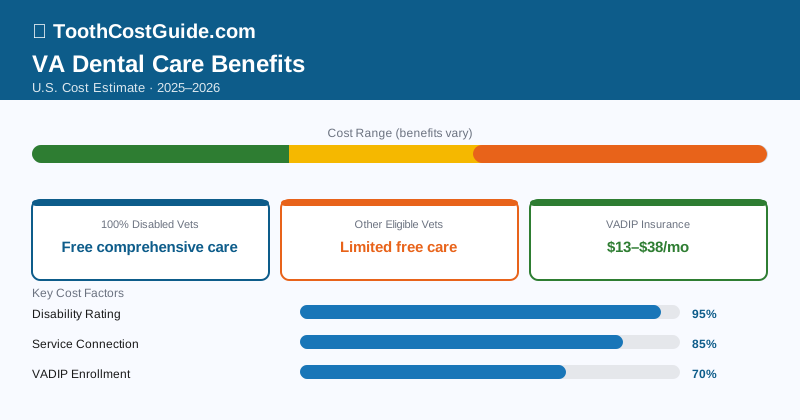
Many veterans assume that if they’re enrolled in VA health care, dental is included. It isn’t — not automatically, and not for most veterans. VA dental eligibility is a separate determination with its own criteria, and millions of veterans who use VA for primary care don’t qualify for VA dental. Understanding the specific classes of eligibility is the critical first step.
For those who do qualify? It’s among the best dental benefits in the country. Free comprehensive care — cleanings, fillings, root canals, crowns, dentures, extractions — worth $1,500–$5,000 or more per year. The question is whether you’re in the right category.
| VA Dental Eligibility Class | Who Qualifies | Cost |
|---|---|---|
| Class I | Former POWs | Free, comprehensive |
| Class II | 100% service-connected disability (individual unemployability or rating) | Free, comprehensive |
| Class IIA | Service-connected dental condition (any rating) | Free, for that condition only |
| Class IIB | 0% SC dental condition that’s aggravated | Free, for that condition |
| Class III | Receiving TDIU (total disability based on individual unemployability) | Free, comprehensive |
| Class IV | Active duty members within 180 days of discharge | One-time exam + treatment |
| Class V | Veterans in VA vocational rehab | Care necessary for program |
| Class VI | Low-income veterans enrolled in VA healthcare (Priority Group 8 or lower) | Reduced cost (copay-based) |
| Not enrolled | Veterans without qualifying category | No VA dental benefit |
Who Gets Free, Comprehensive Care
Three groups get the full benefit — no copays, no limits on what procedures are covered:
Former POWs (Class I). Comprehensive, free dental care for life.
100% service-connected disability or TDIU (Classes II and III). If your combined disability rating is 100% — permanent and total, or based on individual unemployability — you qualify for comprehensive VA dental at no cost. This is the category most veterans think of when they imagine “free VA dental.”
Active duty within 180 days of discharge (Class IV). One time-sensitive window: if you’re separating from active duty, you have a 180-day window to access a course of VA dental treatment. Use it. It’s use-it-or-lose-it, and it doesn’t come back.
The Limited-Coverage Categories
Class IIA: Service-connected dental condition. If you have any service-connected dental condition — regardless of the rating percentage — you receive free VA dental treatment for that specific condition. A service-connected jaw injury means treatment related to that injury is covered. A cavity on an unrelated molar isn’t.
Class IIB: 0% SC dental condition that’s aggravated. Similar to IIA, but specifically for conditions rated at 0% that the VA determines have been aggravated by service. Same limitation: treatment applies only to the connected condition.
The VADIP Option: Affordable Insurance for Everyone Else
For the majority of veterans who don’t meet the free-care criteria, the VA offers VADIP — the VA Dental Insurance Program. It’s dental insurance through Delta Dental or MetLife at heavily discounted group rates:
- Individual coverage: approximately $11–$47/month depending on plan tier
- Family coverage: approximately $30–$96/month
- Delta Dental VADIP Plan A: ~$11/month, covers 100% preventive, 80% basic, 50% major
- Plan B (premium): ~$47/month, higher coverage, lower copays, includes orthodontics
These rates are 50–70% below comparable civilian dental insurance. If you’re enrolled in VA health care but don’t qualify for free dental, VADIP is probably the most underutilized benefit available to you.
Pros and Cons
What works:
- Truly free comprehensive care for qualifying veterans — there’s nothing equivalent in civilian insurance
- VA employs its own dentists (not a network model), providing consistency of care
- VADIP is available to all VA-enrolled veterans, even those who don’t qualify for free care
- VA dental is available in all 50 states
- Quality of VA dental care is generally comparable to civilian practice
What doesn’t:
- Eligibility is more restrictive than VA health care — many veterans are surprised by what they don’t qualify for
- VA dental clinic availability varies significantly by region; rural areas often have limited access
- Wait times can be long — weeks to months for non-urgent care
- Class IIA only covers the service-connected condition, leaving other dental needs uncovered
- Not all VAMCs offer the full range of dental services; specialist care may require referral or Community Care
Do not assume you qualify for VA dental care just because you receive VA health care. Many veterans enrolled for primary care do not meet the dental eligibility criteria and are surprised when their dental appointments are denied. Confirm your dental eligibility class with your VA social worker or patient advocate before scheduling.
Step-by-Step: How to Access Your VA Dental Benefit
Step 1 — Determine your eligibility class. Log into va.gov with your verified account and review your benefits summary. Or call 1-800-827-1000 and specifically ask about dental eligibility. Have your service record and disability rating information on hand.
Step 2 — Contact the dental clinic at your nearest VAMC. Once you know your class, call the dental clinic directly. Tell them your eligibility class. They’ll schedule your initial comprehensive exam and begin treatment planning.
Step 3 — If you have a 100% rating, state it clearly at check-in. Qualifying veterans sometimes find that clerical staff default to standard processing. Stating your 100% rating (or TDIU status) at check-in ensures you’re correctly classified from the start.
Step 4 — If you’re within 180 days of discharge, move fast. Class IV benefits expire when that window closes. Contact your nearest VA dental clinic or the dental clinic at a military treatment facility immediately. Don’t wait.
Step 5 — If you don’t qualify for free VA dental, enroll in VADIP. Log into va.gov, navigate to the VADIP enrollment section, and compare Delta Dental and MetLife plan options. Plan A at ~$11/month is a genuine bargain for preventive coverage.
Step 6 — Find VA dental care near you. Visit va.gov/find-locations and filter for VA health locations — then call to confirm dental services are available. Not every VA outpatient clinic has a dental department.
Step 7 — Use Community Care if wait times are excessive. If your nearest VA dental clinic has a wait of more than 28 days for routine care, you may be eligible for VA Community Care — treatment by a civilian dentist in your area, paid by the VA. Ask your VA primary care team about Community Care dental referrals.
A Note on Service-Connected Condition Upgrades
Veterans with a 0% service-connected dental condition (Class IIB) have an avenue worth exploring: request a VA evaluation for whether that condition has worsened over time. If it has, a re-rating could increase your service-connected eligibility. Additionally, if you believe a dental condition resulted from your service but haven’t filed a claim for it, a claim for service connection is worth pursuing — it can open Class IIA benefits.
Veterans with a 0% service-connected dental condition (Class IIB) can request that the VA evaluate whether that condition has worsened — and if it has, pursue a re-rating that might increase your service-connected dental eligibility. Additionally, even if dental isn’t fully covered, VADIP rates are among the lowest dental insurance premiums available anywhere in the US. Any veteran enrolled in VA health care should seriously consider VADIP over civilian dental insurance.
The Bottom Line for Each Situation
100% disabled veterans or TDIU: You have comprehensive free dental care. Use it. The annual value — cleanings, X-rays, fillings, whatever you need — is $1,500–$5,000+. Call your nearest VAMC dental clinic and schedule.
Service-connected dental condition (any rating): You have free dental care for that condition only. Know what’s covered and what isn’t. Consider VADIP to cover remaining dental needs.
VA-enrolled but don’t qualify for free dental: Enroll in VADIP. At $11–$47/month, it’s some of the most affordable dental insurance in the country.
Within 180 days of discharge: Contact a VA dental clinic today. This benefit doesn’t renew.
Not yet enrolled in VA health care: Start with va.gov or call 1-800-827-1000. VA health care enrollment is the gateway to VADIP and potentially to dental eligibility depending on your service history and disability status.
Frequently Asked Questions
VA dental cleanings are completely free for Priority Group 1 veterans (service-connected 0% or higher disabled), while Priority Group 2 and 3 veterans pay $9.09 per cleaning visit. Veterans in Priority Groups 4-7 typically pay between $50-$150 per cleaning depending on their tier classification.
VA dental coverage for crowns and root canals varies by eligibility tier. Priority Group 1 veterans receive these services at no cost, while Priority Group 2-3 veterans pay copays ranging from $50-$300 depending on the procedure. Veterans in lower priority groups may not qualify for these services or face significantly higher out-of-pocket costs.
Wait times for VA dental appointments typically range from 2-8 weeks depending on your location and the complexity of needed treatment. Emergency dental care (pain or infection) is usually prioritized and can be scheduled within 1-2 weeks, while routine cleanings may take longer at busy facilities.