In 2023, Americans spent over $1.8 billion on tooth whitening products. A lot of that went to whitening toothpastes — which, according to the ADA, cannot change the intrinsic color of your teeth at all.
That’s not a minor distinction. It’s the entire difference between a product that does something versus one that polishes surface coffee stains.
Understanding what type of discoloration you have — and which product category actually addresses it — is the starting point. Without that, you’re guessing with $15 tubes and wondering why your teeth haven’t changed.
The Two Types of Tooth Discoloration
Extrinsic stains sit on the tooth surface. Coffee, tea, red wine, tobacco, and certain foods leave colored deposits on and in the surface pellicle (the thin protein layer coating enamel). These stains are removable with abrasion or enzymatic cleaning.
Intrinsic discoloration is the natural color of the dentin beneath the enamel. Dentin is naturally yellow-brown. As enamel thins with age, the dentin shows through more prominently. Some people have intrinsically darker teeth from genetics, old tetracycline exposure, or fluorosis. Intrinsic color cannot be changed by abrasion — only by bleaching with peroxide.
Most “yellow teeth” complaints involve intrinsic color. Whitening toothpaste doesn’t touch it.
Whitening Toothpastes: What They Actually Do
Whitening toothpastes work through two mechanisms:
- Mild abrasives (hydrated silica, calcium carbonate, sodium bicarbonate) physically polish extrinsic surface stains
- Chemical agents (sodium hexametaphosphate, blue covarine, low-concentration hydrogen peroxide in some formulations) either break up surface stain bonds or create an optical whitening illusion
What they don’t do: The peroxide concentration in whitening toothpastes is too low (typically 0.1–1%) and contact time too short (2 minutes) to penetrate enamel and bleach dentin. They can make teeth appear cleaner by removing surface film. They can’t make your dentin lighter.
The one caveat: some highly abrasive whitening toothpastes carry a real risk. The ADA recommends toothpastes with an RDA (Relative Dentin Abrasivity) value below 250. Several popular whitening toothpastes test above that threshold. Used daily over years, high-RDA toothpastes can thin enamel — making teeth more sensitive and, ironically, more yellow as dentin shows through more.
Best whitening toothpaste options (lower RDA, ADA Seal):
- Colgate Optic White Renewal: ~$8–$12
- Arm & Hammer Advance White: ~$5–$7
- Sensodyne Pronamel Gentle Whitening: ~$9–$13 (very low RDA, good for sensitive teeth)
| Product Type | Cost | What It Does | Duration of Effect |
|---|---|---|---|
| Whitening toothpaste | $6–$15 | Removes extrinsic stains | Ongoing (maintenance) |
| Whitening strips (Crest 3D) | $25–$60 | Bleaches enamel/dentin | 6–12 months |
| Take-home trays (dental office) | $300–$600 | Professional-grade bleaching | 1–3 years |
| In-office whitening (Zoom, GLO) | $500–$1,500 | Maximum bleaching in one visit | 1–3 years |
Whitening Strips: The Sweet Spot for Most People
Over-the-counter strips — Crest 3D Whitestrips being the most studied brand — contain 6–14% hydrogen peroxide or carbamide peroxide. That’s enough to penetrate enamel and actually bleach dentin.
Crest 3D Whitestrips Classic: ~$25–$35 (10% hydrogen peroxide, 14-day kit) Crest 3D Whitestrips Professional Effects: ~$45–$60 (14% hydrogen peroxide, 20-day kit)
Clinical studies show that over-the-counter strips using 10–14% hydrogen peroxide produce measurable whitening of 1–3 shades after a complete treatment cycle. That’s real color change. For most people who want noticeably whiter teeth without professional costs, this is the honest recommendation.
Limitations:
- Strips don’t conform well to crooked or crowded teeth — you’ll see uneven results
- Peroxide can cause temporary tooth sensitivity and gum irritation
- Results aren’t as dramatic or long-lasting as professional options
- Don’t use if you have veneers, bonding, or crowns — peroxide doesn’t whiten porcelain or composite resin, creating a mismatch
Take-Home Trays from Your Dentist: The Best Value for Serious Whitening
Custom-fitted trays from a dental office contain 10–22% carbamide peroxide (which breaks down to roughly 3–7% hydrogen peroxide). The custom tray fit means peroxide stays in contact with the tooth surface — including curved surfaces and tight contacts — rather than spreading onto gums.
Cost: $300–$600 for the impression, tray fabrication, and initial supply of whitening gel.
The higher peroxide concentration and extended contact time (30–60 minutes daily, or 6–8 hours with overnight trays) produces 4–8 shades of whitening over a 2–4 week treatment period. That’s roughly double the result of OTC strips.
The ongoing cost is also low. Once you have the custom trays, touch-up gel syringes cost $15–$40 per set. You whiten for a week once or twice a year to maintain results, using trays you already own.
For most adults who want professional-level whitening without a single large cost, take-home trays offer the best value-per-outcome.
Whitening products list either hydrogen peroxide (HP) or carbamide peroxide (CP) concentration. CP breaks down to approximately 1/3 HP by weight. So 10% CP ≈ 3.3% HP. A product with 35% CP is roughly equivalent to 11.5% HP. When comparing products, convert to the same peroxide type — a 35% CP gel is not dramatically stronger than a 10% HP strip.
In-Office Whitening: Fast but Expensive
In-office whitening — Zoom WhiteSpeed, GLO Science, KöR Whitening — uses 25–40% hydrogen peroxide activated by light or heat for 60–90 minutes in the dental chair. The result is dramatic whitening in a single appointment: typically 6–10 shades lighter.
Cost: $500–$1,500 depending on the system and location.
The light activation is largely a marketing claim — studies show light doesn’t significantly accelerate bleaching compared to peroxide alone. What in-office whitening actually provides: very high peroxide concentration, isolated application (protecting gums with a barrier), and your dentist managing sensitivity.
Who needs in-office whitening:
- Patients with a wedding, event, or specific deadline
- Patients with severe intrinsic staining needing maximum effect
- Patients who can’t maintain compliance with at-home routines
Who doesn’t: Most people. Take-home trays at $300–$600 total produce comparable results over 2–4 weeks and are far more cost-effective.
Whitening does not work on dental restorations — crowns, veneers, bonding, fillings. If you have prominent restorations on front teeth and whiten your natural teeth significantly, you’ll create a noticeable color mismatch. Discuss this with your dentist before starting whitening treatment.
Sensitivity: The Real Limiting Factor
Tooth sensitivity is the most common side effect of all peroxide-based whitening. It ranges from mild temperature sensitivity to sharp pain on breathing cold air. It’s temporary — typically resolves within 24–48 hours of stopping treatment — but it causes many people to stop whitening before completing the protocol.
Management strategies:
- Use Sensodyne or Potassium Nitrate toothpaste (Sensodyne Pronamel) for 2 weeks before starting whitening
- Apply Sensodyne toothpaste in whitening trays for 30 minutes after bleaching sessions
- Space out sessions (whiten every other day instead of daily)
- Switch to a lower peroxide concentration product
If sensitivity is severe enough to interfere with the treatment schedule, custom trays with lower carbamide peroxide (10% instead of 22%) used over a longer period often produce the same result with less discomfort.
The Maintenance Reality
All whitening fades. Coffee, tea, red wine, and tobacco restain teeth. Professional whitening typically lasts 1–3 years before requiring a touch-up. OTC strips last 6–12 months. The ongoing cost of maintenance is a real consideration, especially if you’re a heavy coffee or tea drinker.
A whitening toothpaste as daily maintenance (removing extrinsic stains) combined with occasional strip or tray touch-ups is the most cost-effective long-term approach for most people.
Frequently Asked Questions
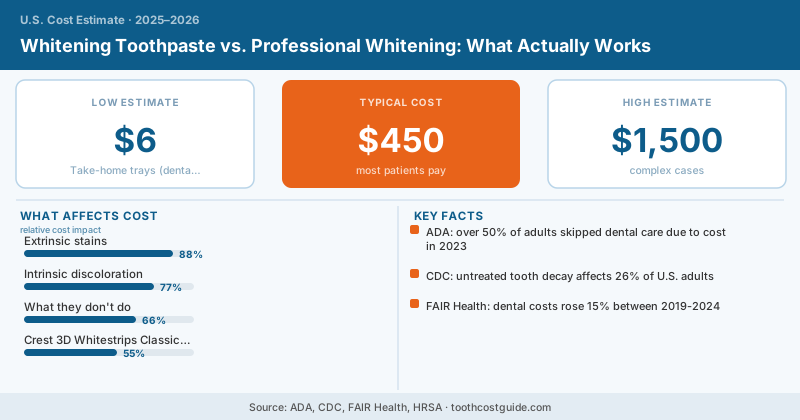
In-office professional whitening like Zoom typically costs $500–$1,500 per treatment, while take-home trays from a dentist range from $300–$600. Over-the-counter whitening strips are much cheaper at $25–$60, but whitening toothpastes ($6–$15) don't actually change tooth color, only remove surface stains.
Most dental insurance plans do not cover cosmetic whitening procedures, whether in-office or take-home, since they're considered elective rather than medically necessary. You'll typically pay the full out-of-pocket cost, though some plans may offer discounts through dental networks.
In-office whitening results typically last 6–12 months depending on your diet and habits, while take-home trays may require touch-ups every 3–6 months. Whitening toothpastes provide no lasting whitening effect since they only remove surface stains and must be used continuously to maintain that minimal benefit.