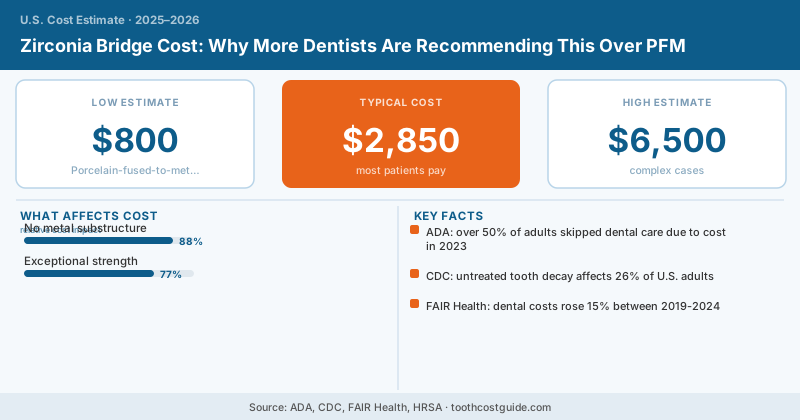
In 2010, porcelain-fused-to-metal (PFM) bridges were the industry standard. Today, a growing number of dentists and prosthodontists are recommending zirconia instead — and patients are paying a bit more upfront for something that tends to last longer and look better. Here’s what that upgrade actually costs.
| Bridge Type | 3-Unit Bridge Cost | Per Unit |
|---|---|---|
| Zirconia bridge (monolithic) | $1,500–$6,000 | $500–$2,000 |
| Zirconia bridge (layered/esthetic) | $2,000–$6,500 | $667–$2,167 |
| Porcelain-fused-to-metal (PFM) | $1,200–$4,500 | $400–$1,500 |
| All-porcelain (e.max) bridge | $1,800–$5,500 | $600–$1,833 |
| Traditional metal bridge | $800–$2,500 | $267–$833 |
Why Zirconia Has Taken Over
Zirconia (zirconium oxide) is a ceramic material originally developed for industrial applications. In dentistry, it has two big advantages over the older PFM standard:
No metal substructure: PFM bridges have a metal core covered by porcelain. Over time, that metal can show through at the gum line as a dark shadow — especially as gums naturally recede with age. Zirconia is solid ceramic throughout. There’s no metal to show.
Exceptional strength: Monolithic zirconia (a single block without a porcelain layer on top) has flexural strength of 900–1,200 MPa. Compare that to regular dental porcelain at 60–150 MPa. This makes zirconia particularly suitable for back-tooth bridges where bite forces are highest.
A 5-year clinical review published in the Journal of Prosthodontics in 2022 found survival rates for zirconia bridges exceeding 95% at 5 years — comparable to PFM bridges but with significantly fewer veneer chipping incidents.
Monolithic vs. Layered Zirconia
Not all zirconia bridges are the same. Two main types:
Monolithic zirconia: The entire bridge is milled from one block of zirconia. Extremely strong. Color is uniform. Looks slightly less translucent than natural teeth (though newer high-translucency zirconia has narrowed this gap significantly). Best for back teeth.
Layered zirconia: A zirconia core with a thin layer of porcelain on top for better esthetic translucency. Looks more like a natural tooth on front teeth. Slightly more susceptible to the top porcelain layer chipping — the same weak point as PFM bridges.
For front teeth where appearance is paramount, layered zirconia or e.max (lithium disilicate) often produces the best results. For back teeth, monolithic zirconia is usually the better choice on strength-to-cost ratio.
Some dental offices with in-house CAD/CAM milling equipment can fabricate a zirconia bridge in a single day — no temporary bridge, no second appointment. Same-day zirconia typically costs the same as traditional lab-fabricated work or slightly more. The tradeoff: in-house milling works best for single crowns; 3-unit bridges are technically more demanding and some dentists still prefer lab fabrication for longer spans. Ask specifically whether same-day zirconia is available for bridges at your practice.
Insurance Coverage for Zirconia Bridges
Most dental PPO plans cover bridges — but at the “least expensive alternative treatment” (LEAT) provision. That means if your plan covers a PFM bridge, they’ll pay the PFM rate. If you choose zirconia, you pay the difference.
Typical insurance contribution: 50% of the PFM allowable fee, after deductible. On a $1,200 PFM bridge allowable, that’s $600 from insurance. If your zirconia bridge costs $3,000, you’re paying $2,400 out of pocket.
The ADA’s 2023 dental expenditure data shows that fixed bridges remain the second most common major dental procedure (after crowns) with over 800,000 placed annually in the U.S.
The Full Cost Picture
A bridge requires at least two supporting teeth (abutments) on either side of the gap. Those teeth need crowns as part of the bridge. So a 3-unit bridge involves:
- 2 abutment crowns (the supporting teeth)
- 1 pontic (the artificial tooth in the middle)
- Temporary bridge while the permanent is being fabricated (usually included in the quoted price)
Some patients also need an extraction before the bridge, adding $150–$400. If bone grafting was needed at extraction, add $300–$800 for socket preservation.
When to Choose Zirconia vs. Implant
A 3-unit zirconia bridge and a dental implant to replace a single missing tooth both address the same problem — but differently.
The bridge: $1,500–$6,000 total, done in 2–3 weeks. Requires permanently altering the two adjacent teeth.
The implant: $3,000–$5,000 for a single tooth, done over 3–9 months. No alteration to adjacent teeth.
If the adjacent teeth are healthy and intact, many prosthodontists now recommend the implant — it preserves those teeth. If the adjacent teeth already have large fillings or crowns and need restorative work anyway, the bridge is often the more practical choice.
A bridge doesn’t replace the tooth root. Over decades, the bone under the pontic (missing tooth area) can resorb, creating a visible gap between the bridge and the gum. This is a cosmetic issue, not a functional failure, but it’s worth knowing. An implant, by contrast, maintains bone volume through osseointegration. For younger patients (under 50), this long-term bone consideration often tips the decision toward an implant.
Frequently Asked Questions
A 3-unit zirconia bridge typically costs between $1,500 and $6,000 total, or $500–$2,000 per unit, depending on whether you choose a monolithic (solid) or layered esthetic design. Layered zirconia bridges tend to cost more because they offer superior cosmetic results with hand-painted details.
Most dental insurance plans cover 50% of bridge costs after your deductible, but many classify zirconia as a premium material and may only cover it at the same rate as a porcelain-fused-to-metal (PFM) bridge, leaving you to pay the difference out-of-pocket. You should contact your insurance provider to confirm your specific coverage before treatment, as policies vary widely.
The bridge process typically takes 2–3 weeks from first appointment to placement, requiring at least two visits for tooth preparation and final fitting. Zirconia bridges generally last 10–15+ years with proper care, which is longer than traditional PFM bridges that often need replacement after 5–10 years.