In 2010, zirconia implants were fringe. Today they’re a real option — with clinical data behind them and enough practicing dentists who place them that price competition is starting to emerge. But they still cost more than titanium, and not every patient needs them.
Here’s the actual price breakdown for zirconia implants in 2025, plus an honest assessment of when the premium is worth it.
Zirconia Implant Costs vs. Titanium
| Component | Titanium Implant | Zirconia Implant |
|---|---|---|
| Implant body (surgical placement) | $1,500–$2,500 | $2,000–$3,500 |
| Abutment + crown | $1,200–$2,500 | $1,500–$3,000 |
| Total per tooth (complete) | $3,000–$5,000 | $3,500–$7,000 |
| Bone graft (if needed) | $300–$800 | $300–$800 |
| CBCT scan | $150–$650 | $150–$650 |
Why Zirconia Costs More
The premium comes from several factors:
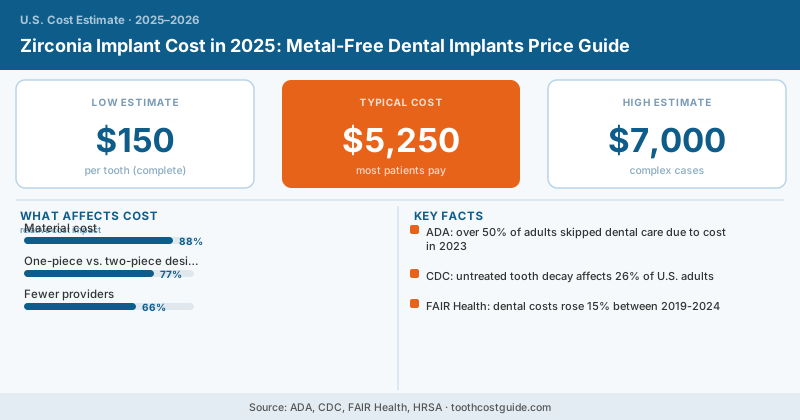
Material cost. Zirconia (zirconium dioxide, a ceramic) is more expensive to machine than titanium. The implant blanks cost more, and the precision tolerances for a one-piece ceramic implant are tighter.
One-piece vs. two-piece design. Most titanium implants are two-piece: a separate implant fixture and an abutment that connect. Most zirconia implants are one-piece (the fixture and abutment are monolithic), which simplifies the prosthetic but limits some adjustability. The one-piece design also requires precise angulation during placement, adding to the surgical difficulty premium.
Fewer providers. Zirconia implant placement requires training beyond standard implant surgery. Fewer dentists offer it, which means less price competition.
Who Actually Benefits from Zirconia Implants
The honest answer: a fairly small subset of patients. The main reasons to choose zirconia over titanium:
Metal sensitivity or allergy. Titanium allergy is rare (estimates suggest roughly 0.6% of the population based on patch testing studies), but it’s real. For patients with documented metal hypersensitivity, zirconia is the established metal-free alternative.
Aesthetics in the anterior zone. In the front of the mouth, thin gum tissue can allow the gray hue of titanium to show through as a slight discoloration at the gumline, especially as gums recede with age. Zirconia is white and ceramic — no grey shadow, even through thin tissue.
Holistic/biocompatibility concerns. Some patients prefer ceramic implants on principle regardless of clinical necessity. The research does show that zirconia is highly biocompatible — the American Academy of Implant Dentistry notes that zirconia generates minimal plaque accumulation and integrates well with soft tissue.
Patients who already have no metal restorations. For patients who’ve actively avoided metal throughout their dental care, a titanium implant is inconsistent. Zirconia maintains the full-ceramic approach.
Titanium implants have been placed and studied for over 40 years, with survival rates consistently above 95% at 10 years in multiple large studies. Zirconia implants now have data in the 5–10 year range showing comparable survival rates, but the long-term track record isn’t as deep. For most patients, titanium is still the evidence-leading choice. Zirconia is a legitimate option, not a superior one — for most people.
Zirconia Implant Survival Rates: What the Research Shows
A 2021 systematic review published in the International Journal of Oral and Maxillofacial Implants analyzed 12 studies on zirconia implants and found survival rates of 92–100% at 1–5 years — comparable to titanium but with less long-term data. Earlier generations of zirconia implants had fracture concerns, but newer high-strength zirconia formulations have largely addressed this.
The critical caveat: osseointegration (the implant fusing to bone) requires a precise surface texture that zirconia machining still delivers slightly less consistently than titanium in some studies. This is improving with manufacturing advances, but it’s something to discuss with your surgeon.
How to Find a Zirconia Implant Provider
Not every oral surgeon or periodontist places zirconia implants. Start by searching for prosthodontists or implant specialists who specifically advertise metal-free implant options. Expect to travel to a larger metro area in some regions.
Ask these questions at consultation:
- Which zirconia system do you use? (Straumann, Z-Systems, CeraRoot are established brands)
- How many zirconia implants have you personally placed?
- What’s your protocol if the implant doesn’t integrate?
Insurance Coverage
Dental insurance covers implants inconsistently regardless of material. Most plans either don’t cover implants at all or provide a flat benefit ($1,000–$1,500) that applies to implants as a category. Zirconia doesn’t get special coverage — and the premium over titanium is entirely out of pocket.
Beware of “ceramic implant” marketing without specifics. Not all white implants are zirconia — some are zirconia with a titanium core (technically not metal-free), or older alumina ceramic implants with a much weaker evidence base. Ask your provider specifically: “Is this a full-zirconia implant from root to crown, with no metal components?”
Bottom Line
Zirconia implants cost $3,500–$7,000 per tooth — roughly $500–$2,000 more than titanium. For most patients, that premium isn’t necessary. For patients with metal sensitivity, significant gum recession concerns in the front of the mouth, or strong biocompatibility preferences, zirconia is a legitimate, well-supported choice with improving long-term data.
If you’re on the fence, a consultation with an experienced implant specialist can clarify whether the aesthetic or allergy argument applies to your specific situation.
Frequently Asked Questions
Zirconia implants typically cost $3,500–$7,000 per tooth, which is significantly higher than titanium implants at $1,500–$3,500 per tooth. The premium reflects the material cost, specialized training required, and ongoing clinical research supporting zirconia's biocompatibility and esthetics.
Most dental insurance plans treat zirconia implants as elective cosmetic or specialty procedures and cover them at the same rate as titanium implants—typically 50% of the base implant cost, though many plans cap annual benefits at $1,000–$1,500. You should contact your insurer directly, as coverage varies widely and some plans exclude implants entirely.
Placement surgery takes 45–90 minutes per implant, similar to titanium implants, with osseointegration (bone fusion) typically completing in 3–6 months before the crown is attached. You can usually eat soft foods within 1–2 weeks and resume a normal diet 2–3 months after placement, once initial healing is complete.