Grinding your teeth at night complicates almost every cosmetic dental plan — including veneers. Standard porcelain, gorgeous as it looks, can chip under the repetitive force of bruxism. That’s the specific problem zirconia veneers were engineered to solve, and it’s reflected in a higher price tag.
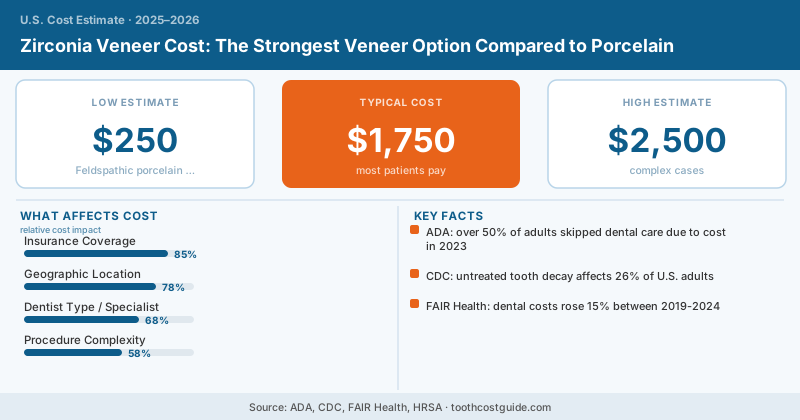
Zirconia veneers run $1,000-$2,500 per tooth, a premium over standard porcelain that buys meaningfully more fracture resistance.
| Veneer Type | Cost Per Tooth |
|---|---|
| Zirconia veneer | $1,000–$2,500 |
| Traditional pressed porcelain veneer | $900–$2,500 |
| Feldspathic porcelain veneer | $1,000–$2,500 |
| Composite veneer (comparison) | $250–$1,500 |
Why Strength Matters More Than People Expect
Veneers sit on the front surface of your teeth, but they still experience real force every time you bite, chew, or — for many people — grind or clench at night without realizing it. The American Academy of Cosmetic Dentistry has noted that veneer failure, when it happens, is most often chipping or fracture at the edges rather than the veneer coming loose entirely. That failure mode is exactly what zirconia’s higher flexural strength is designed to reduce.
For patients with a documented history of bruxism, or those getting veneers on premolars and other teeth that take more bite force than front incisors, zirconia’s added strength can be the difference between veneers that last 15+ years and ones that need chip repairs within a few years.
The Milling Process Behind the Price
Zirconia veneers are typically fabricated using CAD/CAM milling technology, where a digital scan of your prepared tooth guides a machine to carve the veneer from a solid block of zirconia. This process requires specialized equipment and often a dedicated dental lab with zirconia-specific milling capability — not every lab that makes porcelain veneers has this. That specialized production step is part of what keeps zirconia veneers priced at or above traditional porcelain.
If you have a history of grinding, need veneers on back teeth, or have had previous veneers chip, ask your dentist specifically about zirconia. If your case is purely front-tooth cosmetic work with no grinding history, traditional pressed porcelain remains an excellent, slightly more affordable option with a long track record.
The Aesthetic Trade-Off
Zirconia’s strength comes with a minor aesthetic consideration: it can be slightly less translucent than the highest-end feldspathic porcelains, which are prized specifically for how closely they mimic natural tooth translucency. Modern zirconia formulations have narrowed this gap significantly, and for most patients in normal lighting, the difference is not noticeable — but if you’re extremely particular about achieving the most natural possible light transmission, discuss this trade-off with your dentist before choosing zirconia over porcelain.
Tooth Preparation Considerations
Getting veneers — of any material — typically requires removing a thin layer of enamel from the front of the tooth to make room for the veneer and create a proper bonding surface. This step is irreversible, which is true across zirconia, porcelain, and most veneer types (ultra-thin systems like Lumineers being a partial exception). Ask your dentist how much reduction your specific case and material choice will require before committing.
Longevity and Long-Term Value
With proper care — a nightguard if you grind, avoiding using your teeth as tools, and normal oral hygiene — zirconia veneers can last 15-20 years or longer in many cases, compared to a commonly cited 10-15 year range for standard porcelain. Over that extended lifespan, the higher upfront cost often works out to a comparable or better per-year value, particularly for patients whose grinding habit would otherwise put standard porcelain at higher chip risk.
Veneers of any material don’t stop bruxism — they just need to survive it. If you grind your teeth, get a custom nightguard alongside your veneers, regardless of which material you choose. Skipping this step is one of the most common reasons veneer patients end up back in the chair for chip repairs sooner than expected.
The Bottom Line
Zirconia veneers cost $1,000-$2,500 per tooth, generally at or slightly above traditional porcelain, in exchange for meaningfully better fracture resistance. For patients who grind their teeth or need veneers on higher-force back teeth, that added strength is often worth the premium. For straightforward front-tooth cosmetic cases without a grinding history, traditional porcelain remains a strong, well-proven option at a similar or lower price point.
Frequently Asked Questions
Zirconia veneers typically cost $1,000-$2,500 per tooth, somewhat more than traditional porcelain veneers ($900-$2,500), reflecting the material's higher strength and the more specialized milling process required to fabricate them.
Yes, zirconia has notably higher flexural strength than traditional feldspathic or pressed porcelain, making zirconia veneers more resistant to chipping and fracture, particularly for patients who grind their teeth or need veneers on back teeth that experience more bite force.
It depends on the specific zirconia product — full-strength zirconia can sometimes be applied with less tooth reduction than porcelain due to its strength, but some zirconia veneer systems still require similar or slightly more reduction than ultra-thin porcelain options like Lumineers.