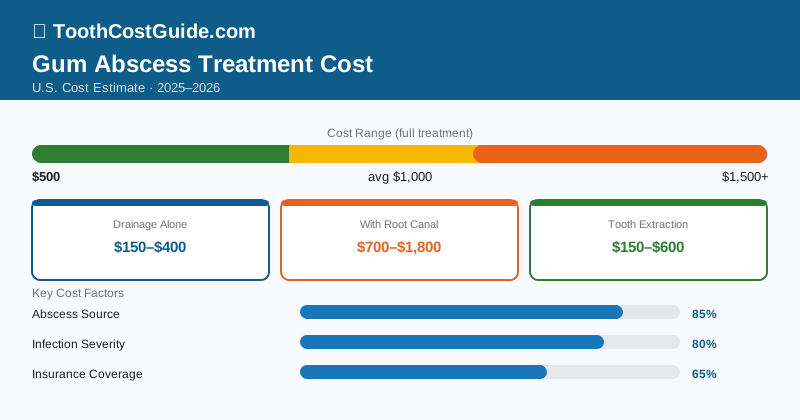
A gum abscess (periodontal abscess) treatment costs $500–$1,500 for most cases. The cost includes diagnosis, drainage of the abscess, and treatment of the underlying gum disease — typically scaling and root planing (deep cleaning) at $200–$400 per quadrant. Antibiotics add $10–$60. Unlike a dental abscess (which originates in the tooth’s root), a gum abscess originates in the periodontal tissues and is treated differently.
| Treatment Component | Cost (No Insurance) |
|---|---|
| Emergency exam + X-rays | $100–$250 |
| Abscess drainage (incision and drainage) | $150–$400 |
| Antibiotics (amoxicillin 10 days) | $10–$60 |
| Scaling and root planing (per quadrant) | $200–$400 |
| Full-mouth deep cleaning (4 quadrants) | $800–$1,600 |
| Periodontal maintenance visit | $100–$200 |
| Tooth extraction (if non-salvageable) | $150–$600 |
| Guided tissue regeneration (if bone loss) | $1,000–$3,000 |
What Affects the Cost
Type of abscess. A gingival abscess is confined to the gum tissue — typically a localized infection from food debris or a foreign object trapped under the gum. It’s often resolved with drainage and cleaning alone ($150–$400 total). A periodontal abscess involves deeper infection in the bone-supporting tissues around the tooth and requires more extensive treatment ($500–$1,500).
Extent of underlying gum disease. A gum abscess rarely occurs in a healthy mouth — it usually signals active periodontitis (advanced gum disease) with deep pockets where bacteria accumulate. Treatment addresses both the acute abscess and the chronic underlying disease. Full-mouth scaling and root planing for moderate to severe periodontitis costs $800–$1,600.
Whether the tooth can be saved. Some periodontal abscesses occur on teeth with such severe bone loss that extraction is the better option. If the tooth is extracted, the abscess resolves but you’ll face tooth replacement costs ($3,500–$6,000 for an implant).
Specialist involvement. Complex periodontal abscesses may be referred to a periodontist (gum specialist) who charges 20–30% more than a general dentist for comparable procedures.
Bone loss and regenerative procedures. If the abscess has caused significant bone loss, guided tissue regeneration (GTR) or bone grafting may be recommended to rebuild the support structures ($1,000–$3,000 per site). This is considered “major periodontal surgery” on insurance plans.
Treatment Options & Costs
Drainage and debridement ($150–$400): The primary acute treatment. The dentist anesthetizes the area, creates a small incision to drain the pus, irrigates the pocket with saline or chlorhexidine, and removes subgingival debris. Provides immediate relief. Antibiotics are usually prescribed simultaneously.
Scaling and root planing ($200–$400 per quadrant): Deep cleaning below the gumline to remove calculus (tartar) from root surfaces. This treats the underlying periodontitis that caused the abscess. Done under local anesthesia by quadrant (one-quarter of the mouth per session, or two quadrants per appointment). The most important long-term treatment for preventing recurrence.
Antibiotics ($10–$60): Amoxicillin 500 mg or clindamycin 300 mg for 7–10 days. Important for systemic control of acute infection, especially with fever or swelling. Some periodontists also use locally delivered antibiotics (Arestin, PerioChip) placed directly in deep pockets — these cost $50–$100 per site and are covered at varying rates by insurance.
Periodontal surgery ($1,500–$5,000): For severe cases with deep pockets, flap surgery allows the dentist or periodontist to access and clean root surfaces more thoroughly. Usually done 4–8 weeks after initial scaling and root planing. Not always necessary; many periodontal abscesses resolve with non-surgical treatment.
With vs. Without Insurance
Gum abscess treatment spans multiple ADA codes:
- Drainage/abscess treatment (D7510): Covered at 50–80% by most plans under oral surgery benefits
- Scaling and root planing: Covered at 70–90% as a basic periodontal procedure by most PPO plans; frequency limitations typically allow one course of SRP every 2–3 years
- Periodontal maintenance after SRP: Covered at 70–90%; typically limited to 2–4 visits per year
- Periodontal surgery: Covered at 50–80% under major periodontal benefits
- Locally applied antibiotics (Arestin): Variable coverage; some plans exclude, others cover at 50–70%
Out-of-pocket with insurance example:
- Drainage + exam: $300 → patient pays $60–$90
- Two quadrants SRP: $700 → insurance pays 80%, patient pays $140
- Total patient share: ~$200–$250
Without insurance: Full-mouth deep cleaning + drainage + antibiotics totals $1,000–$2,000. Dental schools provide SRP at $100–$200 per quadrant. FQHCs treat periodontal disease on sliding-scale fees.
What To Do
- See a dentist the same day if you have a visible swelling on the gum, especially if it’s growing, tender, or you have a fever.
- Do not pop or squeeze the abscess yourself — this risks introducing more bacteria into the tissue.
- Rinse with warm salt water (1/2 teaspoon in 8 oz water) every 1–2 hours to help draw surface infection and provide comfort.
- Take ibuprofen (400–600 mg every 6 hours) for pain and to reduce inflammation.
- Complete the full course of antibiotics if prescribed — don’t stop when you feel better.
- Follow through with deep cleaning. The abscess will likely recur if the underlying periodontitis isn’t treated with thorough scaling and root planing.
How to Save Money
Address gum disease before it abscesses. Regular cleanings and periodontal maintenance prevent the buildup that leads to abscesses. Prevention costs $100–$200 per cleaning; SRP costs $800–$1,600.
Dental schools for deep cleaning. Dental school periodontics clinics provide SRP at $100–$150 per quadrant versus $200–$400 at private practices. Full-mouth SRP: $400–$600 at dental schools vs. $800–$1,600 at private practice.
Community health centers. FQHCs typically provide SRP services at sliding-scale fees — some of the most affordable periodontal care available for qualifying income levels.
Check insurance frequency limits. If you had SRP within the last 2 years, your insurance may not cover it again. Understand what’s covered before scheduling.
A gum abscess with fever, swelling spreading to the jaw or neck, or swelling that is rapidly enlarging is no longer a simple periodontal problem — it may be a spreading infection requiring emergency care. Seek dental care the same day or go to an emergency room if a dentist isn’t immediately available.
Bottom Line
Gum abscess treatment costs $500–$1,500 for most patients — drainage plus deep cleaning to treat underlying periodontitis. With insurance, out-of-pocket is typically $200–$400. Dental schools and FQHCs provide the most affordable options. Treat the acute abscess immediately, then commit to the deep cleaning and ongoing periodontal maintenance to prevent recurrence.