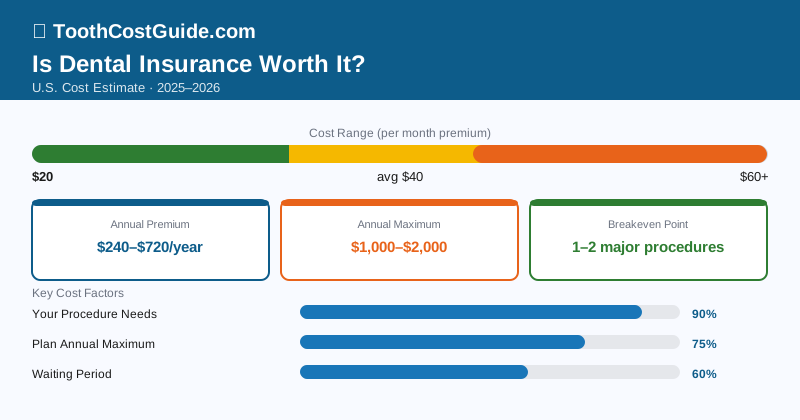
Dental insurance is worth it for most Americans who use it correctly — but its limitations are significant enough that for some people, a dental discount plan or self-pay strategy makes more financial sense. The average individual dental insurance premium runs $20–$60/month ($240–$720/year), covering two cleanings, X-rays, and partial coverage on fillings and major work. Understanding the math tells you exactly when insurance pays off and when it doesn’t.
| Insurance Scenario | Annual Cost Without Insurance | With Insurance ($35/month plan) | Net Savings |
|---|---|---|---|
| 2 cleanings + X-rays only | $400–$600 | $420 premiums + $0 copays | Break even or slight loss |
| 2 cleanings + 2 fillings | $700–$1,000 | $420 premiums + $80–$150 copays | $150–$400 saved |
| 2 cleanings + 1 crown | $1,600–$2,200 | $420 premiums + $500–$700 copays | $700–$1,100 saved |
| 2 cleanings + root canal + crown | $2,300–$3,500 | $420 premiums + $800–$1,200 copays | $1,100–$1,900 saved |
| No dental care needed | $0 | $420 premiums + $0 | -$420 lost |
How Dental Insurance Actually Works: The 100-80-50 Structure
Most dental PPO plans use a tiered coverage structure that confuses many policyholders:
100% coverage — Preventive care: Two routine cleanings per year, periodic exams, and standard X-rays. This category is fully covered by most plans with no deductible. It’s the “free” part of dental insurance that everyone uses.
80% coverage — Basic restorative: Fillings, simple extractions, periodontal maintenance cleanings. After you meet your deductible (typically $50–$100), insurance pays 80% and you pay 20%.
50% coverage — Major restorative: Crowns, bridges, dentures, root canals, oral surgery. After deductible, insurance pays 50% and you pay 50%. This is where the annual maximum matters most.
The annual maximum problem: Most plans cap total annual benefits at $1,000–$2,000. If you need a crown ($1,200) and a root canal ($1,200), the combined treatment cost ($2,400) at 50% coverage requires $1,200 from insurance — but if your maximum is $1,000, insurance only pays $1,000 and you pay $1,400 regardless of the 50% stated coverage.
Dental insurance annual maximums have barely increased in 50 years. A $1,000 annual maximum in 1970 was meaningful. That same $1,000 maximum today, given dental inflation, covers far less major treatment than it once did. Most plans cap at $1,000–$2,000 — a single crown can exhaust the annual benefit entirely.
When Dental Insurance Clearly Pays Off
You have a family with children: Kids need cleanings, fluoride treatments, sealants, X-rays, and more frequent small treatments. A family plan covering 2 adults + 2 children at $80–$150/month typically covers $1,500–$3,000 in preventive care per year. With regular use, family plans almost always deliver positive ROI.
You know you need major work: If you need a crown, root canal, or multiple fillings, insurance that covers these at 50% after your deductible can save $500–$1,500 on those procedures. The caveat: waiting periods. If you just enrolled to cover a known needed procedure, check whether the plan has a 6–12 month waiting period for major work.
Your employer subsidizes the premium: Employer-sponsored dental plans where the employer pays 50–100% of the premium shift the math dramatically. If your premium is $15–$20/month because your employer covers the rest, dental insurance is almost always worth it.
You’re in a state with strong Medicaid dental benefits: Medicaid-eligible adults in states with comprehensive dental benefits get coverage at no premium cost. This is the best dental benefit available and should be used by everyone who qualifies.
When Dental Insurance May Not Be Worth It
You’re young and healthy with excellent oral hygiene: If your only dental use is two cleanings per year and you haven’t had a cavity in 10 years, paying $420/year in premiums for cleanings that cost $300 without insurance is a net loss. A dental discount plan at $80–$120/year achieves the same cleaning discount without the overhead.
You need extensive major work immediately: If you need $8,000 in dental work, insurance with a $2,000 annual maximum and a 12-month waiting period on major services won’t help you much in year one. You’d pay $720 in premiums and receive $1,000 in coverage — a net loss compared to self-pay with a discount plan.
You can find a dentist who accepts discount plans: Dental discount plans charge $80–$200/year and offer 20–60% off all dental services with no annual maximums, no deductibles, and no waiting periods. For patients without employer dental benefits, a quality discount plan often outperforms buying individual dental insurance at $35–$60/month.
The Waiting Period Trap
Many dental insurance plans sold on the individual market (not employer-sponsored) impose waiting periods before major benefits are available:
- Preventive care: Usually available immediately
- Basic restorative (fillings): 6-month waiting period is common
- Major restorative (crowns, root canals): 12-month waiting period is common
- Orthodontics: 12–24 month waiting period is standard
If you purchase individual dental insurance specifically because you know you need a crown in two months, you will almost certainly be disappointed. Pre-existing condition limitations and waiting periods are designed precisely to prevent this.
Before purchasing individual dental insurance, call the specific plan’s customer service with these three questions: (1) What is the waiting period for major restorative benefits? (2) What is the annual maximum? (3) Does the plan use UCR (usual and customary rates) or fee schedules — and what is the fee schedule rate for CDT code D2750 (crown-porcelain-metal) in my zip code? The answers will tell you exactly what you’re actually buying.
Dental Insurance vs. Dental Discount Plans: Side by Side
| Feature | Dental Insurance | Dental Discount Plan |
|---|---|---|
| Annual cost | $240–$720/individual | $80–$200/individual |
| Annual maximum | $1,000–$2,000 | None |
| Waiting periods | Yes (6–12 months major) | None |
| Coverage for cosmetic | No | Varies |
| Preventive coverage | 100% | 20–40% discount |
| Major work coverage | 50% (up to max) | 20–60% discount |
| Best for | Families, regular users | Healthy individuals, immediate needs |
How to Maximize Dental Insurance Value
Use preventive benefits fully. Two cleanings per year, annual X-rays, fluoride — use everything covered at 100%. This is the most reliable return on your premium investment.
Time major work strategically. If you need two crowns and your annual maximum is $1,500, get one crown in November and one in January. You access two years’ worth of annual maximums for a bill that spans two calendar months.
Submit a predetermination before major work. Get a written estimate from your insurer before any crown, root canal, or bridge. This eliminates billing surprises and confirms coverage.
Stay in-network. In-network dentists have agreed to discounted fee schedules with your insurance company. Out-of-network dentists can charge higher fees — and “balance billing” means you pay the difference even after insurance pays its share.
Bottom Line
Dental insurance is worth it for most people who use it consistently and have employer-subsidized premiums. The preventive care alone — two cleanings and X-rays — is usually fully covered, and even one filling or crown per year generates positive ROI. The math gets difficult only for healthy adults on the individual market paying full premiums with minimal dental needs.
If you’re uninsured and choosing between individual dental insurance and a dental discount plan, run the specific math on your expected dental use. For routine care users, a discount plan often wins. For patients with known or likely major work coming, insurance wins — as long as you check the waiting period first.
Always get a written treatment plan before agreeing to any dental work. Before purchasing dental insurance to cover a known needed procedure, confirm the plan’s waiting period for that specific procedure type. Purchasing insurance to cover treatment needed within 12 months may result in disappointment if waiting periods apply.