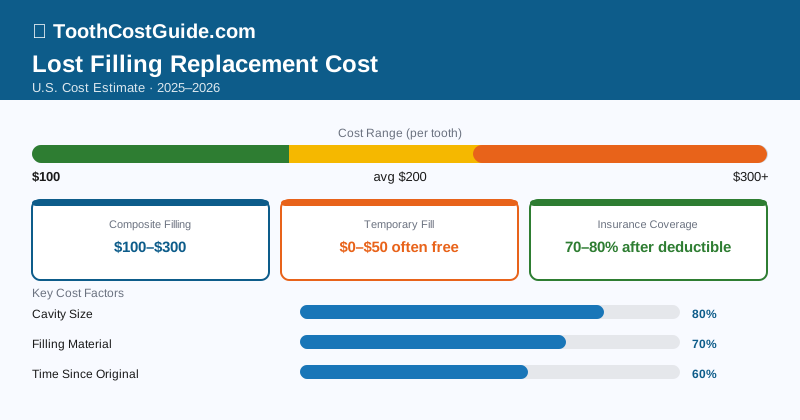
Losing a dental filling is one of the most common dental emergencies — and one of the least expensive to fix. Replacing a lost filling costs $100–$300 without insurance for a standard composite or amalgam filling. However, if the underlying tooth has decayed further or the cavity has grown since the original filling was placed, you may need a larger restoration or even a crown, which can push costs to $1,000–$1,800.
| Replacement Option | Cost (No Insurance) |
|---|---|
| Emergency exam + X-ray | $75–$200 |
| Composite (tooth-colored) filling | $100–$300 |
| Amalgam (silver) filling | $75–$200 |
| Large filling / buildup (extensive decay) | $250–$500 |
| Inlay or onlay (lab-made) | $600–$1,500 |
| Crown (if tooth too damaged for filling) | $1,000–$1,800 |
| Temporary filling (OTC or chairside) | $20–$100 |
What Affects the Cost
Size of the original filling. Small one-surface fillings are inexpensive to replace ($100–$150). A multi-surface filling covering three or more sides of a molar costs $200–$300 to redo. If the original filling was large and has been in place for years, the dentist may discover additional decay around the margins that requires a bigger restoration.
How long the filling has been out. A filling that fell out yesterday with no pain or decay is straightforward to replace. A filling that fell out weeks ago has had time for new bacteria and food to enter the cavity, potentially causing new decay or even pulp irritation. Every day without protection increases the chance of a more expensive fix.
Location in the mouth. Front teeth fillings are slightly less expensive than molar fillings because back teeth require more time, better isolation, and often involve more tooth surface.
Whether a crown is now needed. If the filling was already large (covering more than half the tooth) and it fell out, the remaining tooth walls may be too thin to support another filling. In this case, a crown is the appropriate treatment — a significant jump in cost.
Your dentist’s fee schedule and location. Filling costs vary 20–40% by geography. Urban practices charge more than suburban or rural ones.
Treatment Options & Costs
Temporary filling ($20–$100): Over-the-counter temporary filling kits (Dentemp, Recapit) cost $10–$20 at any pharmacy. Dentists can also place a temporary chairside filling for $50–$100. Temporary fixes protect the tooth from food and bacteria and reduce sensitivity while you arrange a permanent replacement. They are not a long-term solution — they’ll last days to weeks.
Standard composite filling ($100–$300): Tooth-colored resin placed directly in the cavity in one appointment. This is the standard replacement for most lost fillings. Insurance covers 70–90% of this as a basic restorative procedure.
Amalgam filling ($75–$200): If you prefer a less expensive option and the cavity is on a back tooth that won’t show, amalgam is more affordable than composite and just as durable.
Inlay or onlay ($600–$1,500): Lab-fabricated restorations for larger cavities that can’t be reliably filled with direct composite. More durable than a standard filling for large preparations. Two appointments required. Often covered at 50–80% by insurance.
Crown ($1,000–$1,800): When the tooth walls are compromised and a filling won’t hold or protect the tooth adequately, a crown is necessary. Most dental plans cover crowns at 40–60% after deductible and waiting period requirements.
With vs. Without Insurance
Replacing a lost filling falls under “basic restorative” in most dental insurance plans:
- Coverage level: 70–90% after deductible on most PPO plans
- Deductible: $50–$100 per year (if not already met)
- Annual maximum: $1,000–$2,000 — a simple filling replacement rarely impacts this significantly
- Frequency limitation: Some plans only cover filling replacement on the same tooth every 2–5 years, meaning if your filling was recently placed, the replacement may not be fully covered
Out-of-pocket with insurance example:
- Composite filling replacement: $175
- Insurance pays 80% = $140
- Patient pays: $35 (plus deductible if not met)
Without insurance: The $175 replacement comes fully out of pocket. Use a dental discount plan ($80–$150/year) to reduce it to $100–$130.
What To Do When You Lose a Filling
- Don’t panic — this is fixable. A lost filling rarely constitutes a life-threatening emergency, but you should see a dentist within 1–3 days.
- Protect the tooth temporarily. Use an OTC temporary filling kit from a pharmacy ($10–$20). These are not permanent but seal the cavity from food and bacteria and reduce sensitivity.
- Avoid chewing on that side. Food packed into the open cavity can cause pain and introduce bacteria.
- Manage sensitivity with OTC products. Ibuprofen for pain; clove oil or topical benzocaine gel for direct tooth sensitivity. Avoid very hot or cold foods.
- Call your dentist. Most dentists can accommodate a lost filling within 1–2 days as it’s a quick appointment. If you’re in severe pain, ask for a same-day slot.
- Don’t swallow the old filling material — if you find it, discard it.
How to Save Money
Replace promptly. The longer an open cavity goes unprotected, the more likely secondary decay develops — turning a $150 filling replacement into a $1,500 crown case.
Ask about material options. Amalgam fillings cost 30–50% less than composite. For a back tooth where appearance isn’t a concern, it’s a perfectly acceptable choice.
Dental discount plans. If you’re uninsured, a discount plan reduces filling replacement costs to $70–$150 — often paying for itself with a single visit.
FSA/HSA funds. Filling replacements are fully FSA and HSA eligible. Using pre-tax dollars effectively discounts the cost by your marginal tax rate (22–37% for most working adults).
Ask if a buildup or crown can wait. If the dentist says you need a crown, ask if a large direct composite buildup is a reasonable short-term alternative. This doesn’t work for every situation but can delay a $1,500 expense by 1–3 years while you save or meet your insurance waiting period.
A lost filling left open for more than a few weeks invites new decay into the gap. Protect it temporarily with an OTC kit and see a dentist within a few days. What costs $150 today can cost $1,500 if you wait months.
If a lost filling is accompanied by severe pain, swelling, or a pimple-like bump on the gum, the underlying tooth may be infected. This requires urgent dental care — possibly a root canal — not just a replacement filling.
Bottom Line
Replacing a lost filling costs $100–$300 for most patients — one of the cheapest dental procedures available. With insurance, your out-of-pocket is often under $50. The risk is waiting too long: new decay under the exposed cavity can escalate the treatment to a crown or root canal. Use a temporary OTC filling kit to protect the tooth, and see your dentist within a few days.