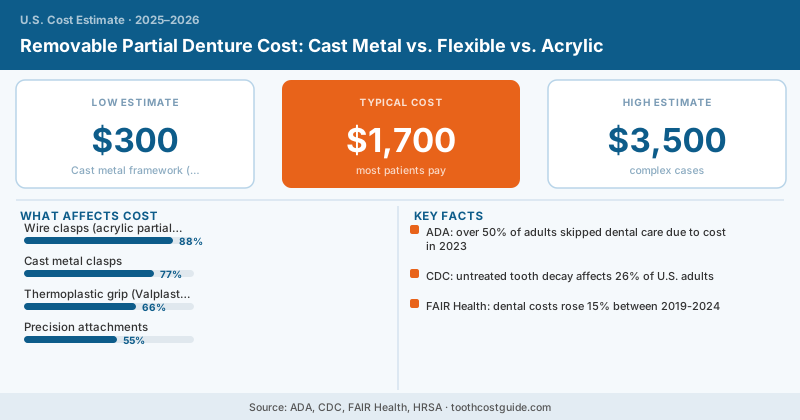
Maria, 52, was missing three back teeth on her lower left side. Her dentist told her she had three options: a cast metal partial, a flexible (Valplast) partial, and an acrylic flipper. The prices ranged from $450 to $2,200. She had no idea what distinguished them or why she’d pay five times as much for one over another.
She’s not alone. Removable partial dentures look deceptively similar in promotional photos. But the material, the fit mechanism, the lifespan, and the daily experience are genuinely different — and picking the wrong type based on upfront price alone is one of the most common mistakes in restorative dentistry.
Here’s how to actually compare them.
The Three Main Types and Their Costs
| Type | Cost Range | Lifespan | Best For |
|---|---|---|---|
| Acrylic flipper (temporary) | $300–$800 | 1–5 years | Short-term use, budget cases |
| Flexible thermoplastic (Valplast) | $700–$2,000 | 3–7 years | Esthetic needs, metal allergy |
| Cast metal framework (chrome-cobalt) | $900–$2,500 | 5–15 years | Long-term solution, best durability |
| Precision attachment partial | $1,500–$3,500 | 7–15 years | Maximum esthetics, no visible clasps |
| Dental school partial (supervised) | $400–$1,200 | Same as above | Cost-conscious patients with time flexibility |
Acrylic Partials and Flippers: The Budget Option
At $300–$800, acrylic partials — sometimes called flippers — are the least expensive type. They’re made entirely of acrylic resin with wire clasps to hold them onto adjacent teeth.
The appeal is obvious: low cost and fast turnaround (often 1–2 weeks). They work as temporary restorations while you wait for implants to integrate or finances to align.
The problems are also real. Acrylic is bulkier than cast metal and covers more palatal tissue, which some patients find uncomfortable and which can accelerate gum irritation. The wire clasps are visible and can loosen over time. More significantly, acrylic flippers rest on the gum tissue and do almost nothing to stabilize the bite — they don’t distribute chewing forces the way cast metal does. Long-term, they can actually accelerate bone resorption in the edentulous areas. The ADA and most prosthodontists consider acrylic flippers a temporary solution, not a permanent replacement.
Flexible Thermoplastic Partials: The Esthetic Middle Ground
Valplast and similar flexible partials (Flexite, Sunflex) run $700–$2,000. They’re made from a nylon-based thermoplastic that’s thinner and lighter than acrylic, with no visible metal clasps. The gum-colored material blends with surrounding tissue.
What they do well: they’re comfortable from day one, esthetically superior for visible teeth, and appropriate for patients with metal allergies who can’t wear chrome-cobalt clasps. For replacing 1–3 teeth in an esthetic zone, they’re a legitimate long-term option that many patients prefer to anything with visible clasps.
What they don’t do as well: flexible partials can’t be relined the way acrylic or metal can. As your ridge changes over time, the fit deteriorates, and there’s limited ability to correct it without replacing the whole appliance. They’re also harder to modify if more teeth are lost later. And the attachment zones — where the material grips adjacent teeth — can fatigue and stretch over years of use.
Cast Metal Partials: The Long-Term Standard
A chrome-cobalt cast metal partial costs $900–$2,500. The metal framework is precision-cast to fit your specific arch, with rests that sit in small prepared seats on your remaining teeth, distributing chewing forces through those teeth rather than solely onto the gum ridge.
This design is why cast metal partials outlast all other types. The ADA’s prosthetics guidelines identify cast metal frameworks as the definitive standard for long-term removable partial denture therapy. Properly made and maintained, a metal partial can last 10–15 years.
The clasps are visible on some teeth — typically the ones farthest from the front of the mouth. For posterior-only gaps, this usually isn’t an esthetic concern. For front teeth, it is, which is where precision attachment options or flexible partials become relevant.
Precision attachment partials ($1,500–$3,500) eliminate visible clasps by using internal slide-and-lock connections inside crowns placed on the abutment teeth. Beautiful esthetics, but you’re adding crown costs on top of the partial — and the total expense reflects it.
The small metal rests you’ll feel on adjacent teeth aren’t just for retention — they redirect chewing forces through those teeth into the bone, not onto the soft tissue ridge. This dramatically slows bone resorption under the partial compared to tissue-supported designs like flippers. Your dentist will need to prepare small “rest seats” on your natural teeth before fitting a cast metal partial — this is normal and not a sign of damage.
How They Attach to Your Remaining Teeth
Every removable partial needs a way to stay in place. The methods differ significantly between types.
Wire clasps (acrylic partials): Bent stainless steel wire that wraps around adjacent teeth. Visible, adjustable, but can loosen and are the weakest of the three systems.
Cast metal clasps: Precision-cast chrome-cobalt arms designed to engage specific undercuts on the abutment teeth. More retentive than wire, longer-lasting, and part of an engineered framework rather than an afterthought.
Thermoplastic grip (Valplast): The material itself grips the tooth contours without metal. Works well when the teeth have natural undercuts. Can’t be tightened if it loosens.
Precision attachments: Internal connectors built into crowns on the abutment teeth. No visible clasps at all, maximum retention, but requires crowning otherwise-healthy teeth and costs significantly more.
When Implants Beat a Partial
Replacing 1–3 teeth? Before committing to any partial, get an implant consultation.
A single dental implant costs $3,000–$5,500 all-in — more than any partial denture. But an implant is permanent, doesn’t require removal for cleaning, won’t cause bone loss, and doesn’t stress adjacent teeth the way clasps do. Over 15–20 years of use, an implant often costs less than repeated partial replacement and relining.
If you’re replacing 3+ adjacent teeth, the math shifts — an implant-supported bridge or partial overdenture may be a better investment. The point is: don’t choose a partial by default. Compare total long-term costs with your dentist before deciding.
Dental cost estimates in this guide reflect U.S. national averages for 2025–2026. Costs vary by geographic region, provider type, and lab quality. Cast metal partial costs vary based on the number of missing teeth and abutment configuration — a simple 3-tooth case costs less than a complex 6-tooth bilateral partial. Always request an itemized written treatment plan before approving any prosthetic work. Confirm insurance coverage using the specific CDT codes for your planned partial before your appointment.
Frequently Asked Questions
Most PPO plans cover partial dentures at 50% of the allowed fee after your deductible — usually classified as 'major' or 'basic' restorative, depending on the plan. The catch is your annual maximum: if you've already used $800 of a $1,500 maximum this year, only $700 in benefits remain. Some plans also impose a 6–12 month waiting period for major work. Call your insurer before the appointment, ask specifically about CDT codes D5213 (upper cast metal partial) or D5225 (upper flexible partial), and get the coverage percentage confirmed in writing.
Cast metal frameworks typically last 5–15 years if they're well-maintained — the metal itself doesn't degrade, but clasps can loosen and acrylic teeth wear down. Flexible thermoplastic partials (Valplast) generally last 3–7 years; the material can discolor and the attachment zones fatigue over time. Acrylic flippers have the shortest lifespan at 1–5 years. All types need periodic adjustments as your bite and ridge change, and relining if the fit becomes loose. A Journal of Prosthetic Dentistry systematic review found cast metal frameworks had significantly better 5-year outcomes than acrylic-based partials in direct comparisons.
You can eat most foods, but each type has restrictions. With a cast metal partial, avoid very hard foods (ice, hard candy) that could bend the clasps or fracture denture teeth. With a flexible partial, avoid very sticky foods that stress the attachment zones. All partials require removing and rinsing after meals — leaving food underneath causes accelerated decay on the abutment teeth, which are the most important teeth to protect. You should always remove any partial denture before sleeping to let gum tissue recover and reduce the risk of denture stomatitis.