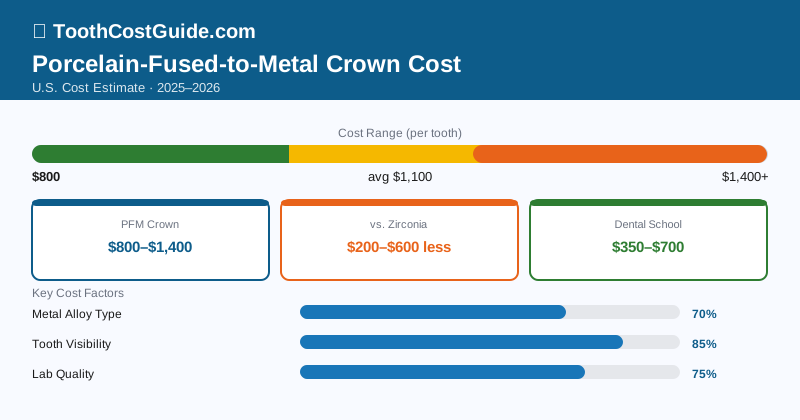
In 2010, porcelain-fused-to-metal crowns were the default. Today, dentists are placing more zirconia and all-ceramic crowns — but PFM hasn’t disappeared, and for good reason. At $800–$1,400 per tooth, it’s $200–$600 less than zirconia, and it still performs reliably for most molar applications. The material that gets dismissed as “old technology” still has a case worth making.
Here’s what PFM crowns actually cost, where they still make sense, and what to watch for.
PFM Crown Cost vs. Alternatives
| Crown Material | Average Cost (No Insurance) |
|---|---|
| Porcelain-fused-to-metal (PFM) | $800–$1,400 |
| Monolithic zirconia | $1,000–$1,800 |
| All-ceramic (e.max / lithium disilicate) | $900–$1,600 |
| Full gold / metal alloy | $800–$1,600 |
| PFM at dental school clinic | $350–$700 |
| Same-day CEREC (milled ceramic) | $1,000–$1,800 |
The PFM price advantage is real but not as dramatic as it was five years ago. As zirconia milling technology became more accessible, zirconia prices dropped — from $1,400–$2,000 in 2018 to $1,000–$1,800 today in many markets. Still, at $200–$600 less per crown, PFM matters if you’re getting multiple crowns or working within a tight annual insurance maximum.
What PFM Is (and Why It’s Complicated)
A PFM crown has a metal substructure — usually a nickel-chromium, cobalt-chromium, or precious metal alloy — covered by a layer of tooth-colored porcelain fused on top. The metal provides strength; the porcelain provides aesthetics.
That sounds straightforward, but there are a few variables that affect both quality and cost:
Metal alloy type: Base metal alloys (nickel-chromium, cobalt-chromium) are the least expensive and most widely used. High-noble alloys (gold or palladium-heavy) cost more — sometimes $100–$300 more per crown — and are the appropriate choice for patients with documented metal allergies to base metals. If you have a nickel allergy, ask specifically what alloy is being used.
Porcelain application: The aesthetic quality of a PFM crown depends heavily on the dental lab technician. A skilled ceramist produces lifelike shading, translucency, and texture. A budget lab producing crowns for $50–$80 apiece produces noticeably less natural results. Ask your dentist which lab they use and whether they use the same lab for all their crown work.
The ADA reports that PFM crowns remain one of the most commonly placed restorations in the U.S., with an estimated lifespan of 10–15 years on average — though well-placed, well-maintained PFM crowns routinely last 20+ years.
The Dark Line Problem
The most common complaint about PFM crowns over time is the dark line at the gum margin. As gums recede slightly with age — a natural process in most adults — the metal edge of the crown’s substructure can become visible as a dark gray or black line at the tooth’s base.
This is a cosmetic issue, not a structural one. But it’s the primary reason PFM has fallen out of favor for front teeth and premolars. On visible front teeth, most dentists now recommend all-ceramic or layered zirconia specifically to avoid this risk.
On second and third molars that you’d never see even with your mouth wide open? The dark line argument essentially disappears. PFM on a lower second molar is a perfectly reasonable clinical choice.
The question isn’t “PFM or zirconia?” in the abstract — it’s “where is this tooth?” PFM on a hidden molar is a sensible, cost-effective choice. PFM on an upper front tooth is a different calculation, given the aesthetic risk over time. Ask your dentist specifically about the visibility of the tooth and whether gum recession could create a visible margin issue later.
Insurance Coverage for PFM Crowns
Most insurance plans classify all crown types as major restorative — covered at 50% after the deductible, up to the annual maximum. The important nuance is the LEAT (least expensive alternative treatment) clause.
Some insurers define PFM as the standard for posterior teeth. If you’re getting zirconia on a molar, your plan may only pay the PFM rate and you cover the difference. If you’re getting PFM, you’re already getting the “standard” — no downgrade penalty.
For a $1,200 PFM crown with 50% coverage and a $1,500 annual maximum:
- Insurance pays: $600 (50% of the crown cost, assuming your deductible is already met)
- You pay: $600
That’s a meaningful reduction. Add a core buildup ($150–$250) if needed and confirm whether your plan covers that separately.
A 2024 survey by the CDC found that about 56% of American adults visited a dentist in the past year — and for those with insurance, major restorative coverage is still one of the top reasons patients go ahead with treatment they’d otherwise delay.
How to Lower Your PFM Crown Cost
Dental school clinics are the most effective cost lever. PFM crowns at accredited dental school programs typically run $350–$700 — roughly half the private practice rate. Appointments are longer and more numerous, but the work is faculty-supervised.
Schedule strategically across calendar years. If you need two crowns and have a $1,500 annual max, placing one in late December and one in early January effectively doubles your insurance coverage.
Ask about your insurer’s covered amount. Request a pre-authorization before treatment begins. This is a free, binding estimate from your insurer of what they’ll cover. It takes 1–2 weeks and eliminates billing surprises.
Don’t assume the cheapest crown option is always the right one. A $1,000 PFM placed by a dentist using a high-quality lab on a tooth where aesthetics don’t matter is a smart, durable choice. A $1,000 PFM placed on an upper premolar visible in your smile may need to be replaced in 10–15 years as your gums recede — which means paying for another crown. The location and your aesthetics goals matter as much as the upfront price.
Bottom Line
PFM crowns cost $800–$1,400 without insurance — meaningfully less than zirconia or all-ceramic options. On back molars where aesthetics are less critical and bite forces are high, PFM remains a clinically sound, cost-effective choice. On visible teeth, all-ceramic or zirconia is generally the better long-term investment. If cost is a constraint and the tooth is out of sight, PFM with a quality lab is a reasonable decision you don’t need to feel pressured out of.