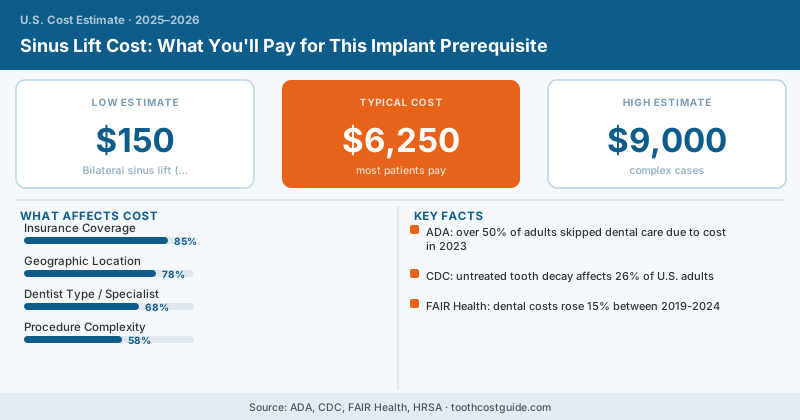
Up to 25% of upper back implant cases require a sinus lift before an implant can even be placed — that’s the figure from the American Academy of Implant Dentistry (AAID). And yet most patients learn this only after they’re already in the treatment planning chair, staring at a cost estimate they weren’t expecting.
Here’s what you’re actually paying for, how the two surgical approaches differ in price, and why insurance almost never helps.
Why a Sinus Lift Is Sometimes Necessary
Your maxillary sinuses sit just above the upper back teeth — the premolars and molars. While those teeth were present, their roots kept the sinus floor elevated. Once a tooth is lost, the bone in that area naturally shrinks, and the sinus can gradually drop lower. The result: not enough vertical bone to anchor a dental implant. Implants typically need at least 4–6mm of bone above the sinus floor to integrate properly.
A sinus lift (technically a “sinus floor augmentation”) solves that problem. The surgeon lifts the sinus membrane upward and packs bone graft material into the space created, building a new bone foundation for the implant to fuse with.
Sinus Lift Cost by Approach
| Procedure | Typical Cost |
|---|---|
| Lateral window sinus lift (large augmentation) | $1,500–$3,000 per side |
| Osteotome / crestal sinus lift (minor augmentation) | $500–$1,000 per implant site |
| Bone graft material (often billed separately) | $300–$800 additional |
| Implant placement (separate appointment) | $1,500–$2,500 per implant |
The lateral window approach is the more involved surgery. The surgeon cuts a small opening in the outer wall of the jaw, carefully lifts the sinus membrane away from the bone, packs graft material underneath, and closes the opening. You wait 4–9 months for the graft to consolidate before implant placement. This approach is used when significant bone volume is needed — typically when less than 4mm of bone is available.
The crestal (osteotome) approach works when there’s modest but insufficient bone — usually 4–6mm present, but a bit short of the implant minimum. Instruments are inserted through the same channel where the implant will go, gently tapping the sinus floor upward. Less invasive, faster recovery, and considerably cheaper. It’s often done at the same appointment as implant placement.
Before agreeing to a lateral window procedure, ask your surgeon whether the crestal approach is appropriate for your case. It can save you $500–$2,000 and means a simpler recovery. If you need the larger procedure, ask to see the CT scan measurements showing your exact bone height — you’re entitled to understand the clinical rationale before committing.
What Bone Graft Material Adds to the Cost
Most sinus lifts require bone graft material to fill the augmented space. Some surgeons include this in their quoted fee; others bill it separately at $300–$800. The material comes in several forms:
- Autograft (your own bone, harvested during surgery): biologically optimal, no separate material cost, but adds time to the procedure
- Allograft (donor bone): most commonly used, predictable results
- Xenograft (bovine or porcine mineral): well-documented in published surgical literature, widely available
- Alloplast (synthetic calcium phosphate): fully synthetic, no donor source
When you get your treatment estimate, confirm whether bone graft material is included in the sinus lift fee or priced separately. This is one of the most common sources of billing confusion on sinus lift cases.
Does Insurance Cover It?
Usually not — and the reason is how insurers categorize the procedure. A sinus lift is a prerequisite for implant placement, and implants are typically excluded from standard dental plans as elective or cosmetic. That exclusion commonly flows downstream to preparatory procedures like sinus lifts and bone grafts.
There are exceptions. If tooth loss resulted from an accident, cancer treatment, or documented disease, some insurers will consider partial coverage under medical — not dental — benefits. That’s worth a call to your medical carrier specifically. The AAID recommends asking whether your plan includes “reconstructive” or “medically necessary” provisions for bone augmentation surgery.
What to do before scheduling: Request a predetermination letter from both your dental and medical insurer. It won’t commit them to paying, but it documents exactly what their position is before you spend anything.
| Scenario | Estimated Out-of-Pocket |
|---|---|
| Crestal lift + implant (adequate bone) | $2,000–$3,500 |
| Lateral lift + graft + implant (one site) | $3,500–$6,000 |
| Bilateral lateral lifts + grafts + two implants | $7,000–$12,000+ |
Ways to Reduce the Cost
Oral surgery school clinics offer the clearest savings. Programs at accredited dental schools with oral surgery residencies often perform sinus lifts at 40–60% below private practice rates, under faculty supervision. Search “[your city] oral surgery residency clinic” to find programs near you.
Get two surgical evaluations. Not every surgeon quotes the same fee for the same anatomy, and technique preferences vary. A surgeon who favors crestal approaches may quote a very different number than one who defaults to lateral window. Getting a second opinion is standard practice for major surgical procedures.
HSA and FSA funds apply here. Sinus lifts are a qualified medical expense under IRS Publication 502 — you can use pre-tax dollars from a health savings or flexible spending account, which effectively reduces the cost by your marginal tax rate.
Be cautious of estimates that seem to bundle the sinus lift and implant into a single fee — then present them as separate line items when billing. Always ask for a complete, itemized written treatment plan before signing anything. The plan should list the sinus lift, bone graft material, any membrane barrier used, and implant placement as distinct procedure codes with individual fees.
Bottom Line
A sinus lift adds $500–$3,000 to your implant cost depending on how much bone augmentation you need — and it’s not optional if you don’t have enough bone. The implant simply won’t integrate without an adequate foundation. Budget for the full sequence: sinus lift, 4–9 months of healing, then implant placement and crown. The total per-implant cost in the upper back jaw typically runs $4,000–$7,000 when all stages are included.
The good news: the AAID notes that sinus augmentation has a high predictability rate when performed by experienced surgeons. Most published series report implant survival rates above 90% in grafted sinuses. You’re not taking a gamble — you just need to go in knowing the real cost before you start.