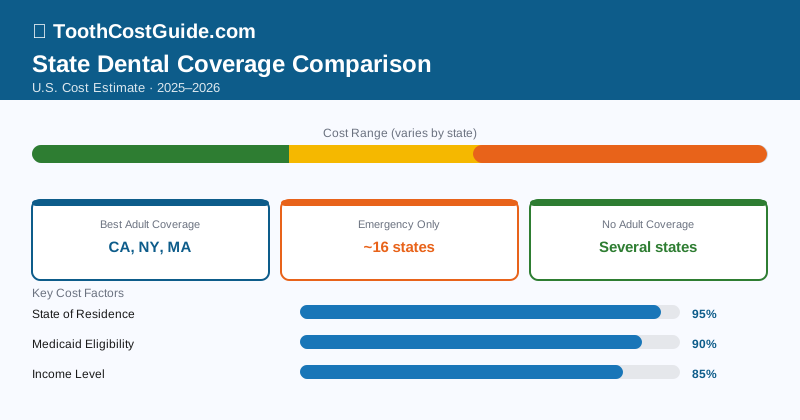
Adult Medicaid dental benefits vary more dramatically by state than almost any other area of health policy — ranging from comprehensive care covering cleanings, fillings, and crowns in some states, to literally nothing beyond emergency extractions in others. A low-income adult who needs a crown in California may pay $0 out of pocket; the same person in Texas or Alabama may pay $1,000–$1,500. Understanding where your state falls on this spectrum is essential for anyone relying on Medicaid for dental care.
| Coverage Tier | States | What’s Typically Covered |
|---|---|---|
| Comprehensive adult coverage | CA, NY, MA, OR, WA, MN, VT, CT, NJ, CO, AZ, NV, HI, RI, ME, IL, MD, DE | Preventive + basic + major (crowns, dentures, root canals) |
| Limited adult coverage | TX, FL, PA, MI, OH, WI, IN, MO, LA, AR, SC, OK, IA, KS, NM | Preventive + limited basic (emergency extractions, some fillings) |
| Emergency-only coverage | AL, TN, MS, GA, NC, WY, SD, ND, MT, ID, AK | Emergency extractions only; no preventive or restorative |
| Varies by managed care plan | Varies by state implementation | Dependent on which MCO you’re enrolled in |
How State Medicaid Dental Variation Happens
The federal government sets minimum requirements for Medicaid but gives states enormous latitude to design benefit packages. For adult dental benefits (ages 21+), the federal minimum is essentially: states must cover emergency dental services. Everything beyond that — preventive cleanings, fillings, crowns, dentures — is optional and funded by a combination of federal Medicaid matching funds and state funds.
Why states vary so much:
- State budget priorities: States with larger Medicaid budgets can offer broader dental benefits
- Political will: Some state legislatures prioritize dental health; others don’t
- Managed care variation: In states using Medicaid managed care organizations (MCOs), dental benefits can vary between different MCOs within the same state
- Expansion vs. non-expansion: States that expanded Medicaid under the ACA extended coverage to more adults; many (but not all) also added dental benefits for newly eligible adults
- Historical precedent: States that historically had robust dental benefits continue them; those that cut dental in budget crunches often haven’t restored full benefits
Children’s coverage is universal: Federal EPSDT requirements mandate comprehensive dental for children in all states — the dramatic variation only affects adults 21 and over. Children under 21 receive medically necessary dental care in all 50 states through Medicaid/CHIP.
The difference between living in a comprehensive-coverage state vs. an emergency-only state can mean thousands of dollars per year in dental costs for low-income adults. If you’re considering relocating and have dental health needs, Medicaid dental coverage is one practical factor to consider — a move from Alabama to California could mean free access to crowns, dentures, and root canals.
State-by-State Coverage Details
Comprehensive Adult Coverage States:
California (Medi-Cal Dental): One of the most comprehensive Medicaid dental programs in the US. Covers preventive care (2 cleanings/year), exams, X-rays, fillings, root canals, crowns, bridges, dentures, oral surgery, and more. No copays for most services. Covers adults enrolled in Medi-Cal. Coverage: essentially everything medically necessary. Approximately 14 million Californians are enrolled. Waiting times for Medi-Cal dental appointments can be long due to provider shortages.
New York (Medicaid Dental): Comprehensive coverage for eligible adults under 21 and for many adult Medicaid categories. Covers preventive, diagnostic, restorative, endodontic (root canals), prosthodontic (dentures), and oral surgery services. Some services require prior authorization. Copays are nominal ($0–$3 per visit).
Massachusetts (MassHealth): Comprehensive coverage for most MassHealth adult members. Covers 2 cleanings/year, X-rays, fillings, root canals, dentures, extractions. Limited coverage for crowns for some plan types. Copays: $0–$3. MassHealth Dental also covers ortho for children.
Oregon (Oregon Health Plan): Comprehensive adult dental coverage including preventive, basic restorative, major restorative, and prosthodontics. Oregon’s program is notable for including implants as a covered benefit for eligible adults under specific clinical criteria.
Washington (Apple Health): Covers routine dental care including cleanings, fillings, extractions, root canals, and dentures for eligible adults. Managed care organizations (MCOs) handle dental in many areas; check which dental plan your specific MCO uses.
Minnesota, Vermont, Connecticut: All offer comprehensive adult dental coverage with similar scope — preventive + basic + major services at little or no copay for Medicaid members.
Limited Adult Coverage States:
Texas (STAR Medicaid): Adult Medicaid dental in Texas is extremely limited. Comprehensive dental is largely unavailable to adult Medicaid members. Emergency extractions and limited urgent care are covered, but routine cleanings, fillings, and crowns are generally not covered for most adult populations. Low-income adults who aren’t pregnant or in specific Medicaid categories often receive no dental benefit.
Florida (Florida Medicaid): Limited adult dental. Covers emergency services and some basic care for limited populations (pregnant women receive more dental coverage). Most adults on Florida Medicaid have access only to emergency dental.
Georgia (Georgia Medicaid): Emergency-only adult dental. Routine preventive care, fillings, and crowns are not covered for standard adult Medicaid. Pregnant women have somewhat expanded dental coverage.
Ohio (Ohio Medicaid): Ohio has expanded Medicaid under the ACA but adult dental coverage is limited. Emergency dental services are covered; routine care varies by managed care plan and has historically been restricted.
Michigan (MI Health Link): Michigan provides limited dental for standard adult Medicaid. Some Medicaid managed care plans offer enhanced dental; check your specific plan. Expansion adults have access to some preventive and basic services.
Emergency-Only or Minimal Coverage States:
Alabama (Medicaid): Adult dental limited to emergency procedures — essentially extractions for pain or infection. No preventive care, no fillings, no crowns for most adult Medicaid members. Alabama is one of the least generous states for adult dental.
Tennessee (TennCare): Very limited adult dental. Emergency extractions covered; routine preventive and restorative care not covered for most adults.
Mississippi (Mississippi Medicaid): Similarly restrictive; adult dental limited to emergency services in most cases.
Wyoming, North Dakota, South Dakota, Montana: Rural states with minimal or emergency-only adult Medicaid dental benefits.
Dental Coverage for Specific Populations Within States
Even in states with limited general adult dental coverage, specific populations often receive better benefits:
Pregnant women: Most states provide expanded dental coverage during pregnancy, recognizing the association between periodontal disease and adverse pregnancy outcomes (preterm birth, low birth weight). Typically includes cleanings, X-rays, fillings, and extractions during pregnancy.
Children under 21 (EPSDT): All states; comprehensive coverage as required by federal law.
People with disabilities: Some states offer enhanced dental benefits for Medicaid members with intellectual or developmental disabilities.
Long-term care residents: Some states cover dental for Medicaid members in nursing homes or other institutional settings.
Federally Qualified Health Centers (FQHCs): Even in states with poor Medicaid dental, FQHCs are required to provide comprehensive dental services to Medicaid patients. FQHCs receive enhanced reimbursement that allows them to serve Medicaid members even when regular dentists won’t.
Pros and Cons of State-Based Dental Coverage
States with comprehensive coverage:
- Pros: Low-income adults access preventive care, preserving teeth and avoiding expensive emergencies; better oral health outcomes
- Cons: Provider shortages (low Medicaid reimbursement); long waits for appointments; some services still require prior authorization
States with limited/emergency coverage:
- Pros: Saves state budget money (short-term)
- Cons: Adults lose preventable teeth; emergency extractions cost more than preventive fillings; missing teeth affect nutrition, employment, and wellbeing; long-term cost to state is arguably higher
How to Get Help Regardless of Your State’s Coverage
Find Federally Qualified Health Centers (FQHCs). The HRSA database at findahealthcenter.hrsa.gov lists over 1,400 FQHC locations nationwide. These centers are required to see all patients regardless of ability to pay and must accept Medicaid. They offer sliding-scale fees for services Medicaid doesn’t cover. Even in emergency-only Medicaid states, FQHCs provide comprehensive dental on a sliding scale.
Contact dental schools. All states have dental schools (or nearby ones). Dental schools provide comprehensive care at 40–60% below market rates. Care is supervised by licensed faculty. Many accept Medicaid and sliding-scale fee arrangements.
Ask your Medicaid managed care plan. In states using MCOs for Medicaid dental, coverage can vary between plans. Ask your plan specifically what dental services are covered — some MCOs exceed the state minimum as a value-added benefit to attract enrollment.
Advocate for coverage expansion. Several states have recently expanded adult Medicaid dental coverage following advocacy by dental associations, public health groups, and patient advocates. If your state has limited coverage, dental advocacy organizations like the Oral Health America network can connect you with advocacy resources.
Check dental benefit changes at annual Medicaid redetermination. Coverage levels can change when Medicaid benefits are redetermined annually. Specifically ask about dental benefits during your redetermination if dental care is a priority for you.
Even in comprehensive-coverage states, finding a Medicaid-accepting dentist can be challenging. Medicaid reimbursement rates for dentists are typically 30–50% below private insurance rates, causing many practices to limit or not accept Medicaid patients. Call multiple offices and ask specifically: “Do you accept [state] Medicaid for adult patients?” Not just “Do you accept Medicaid?” — some accept it for children only.
Adult Medicaid dental coverage varies more by state than almost any other health benefit. If you’re in California, New York, Massachusetts, or about 15 other states, comprehensive dental care is available at minimal cost. If you’re in Texas, Alabama, Tennessee, or similar states, adult Medicaid dental is severely limited. Regardless of state, FQHCs and dental schools provide sliding-scale access to comprehensive dental care for low-income adults.
Bottom Line
State Medicaid dental programs for adults range from comprehensive coverage (CA, NY, MA, OR, WA and about 15 others) to emergency-only (AL, TN, MS, and several others). Children receive comprehensive care in all 50 states under federal EPSDT requirements. For adults in states with limited or no Medicaid dental coverage, the best alternatives are Federally Qualified Health Centers (FQHCs) for sliding-scale comprehensive care and dental school clinics for 40–60% discounted care. If you’re in a state with limited Medicaid dental, knowing your state’s FQHC locations and the nearest dental school may be more valuable than any insurance plan.