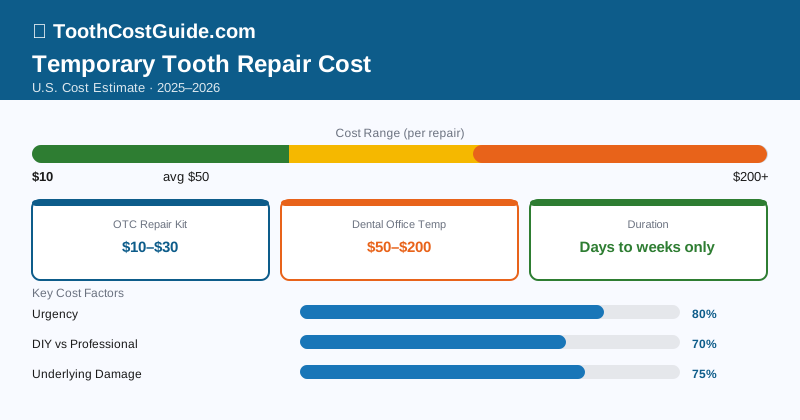
Temporary tooth repairs cost $10–$20 for OTC pharmacy kits that you apply yourself, or $75–$200 for a chairside temporary fix from a dentist. These are short-term solutions — typically lasting days to weeks — that protect the tooth and reduce pain while you arrange permanent treatment. They are never a substitute for professional dental care, but they’re a valuable, low-cost way to bridge an emergency outside office hours.
| Temporary Fix Option | Cost | Lasts |
|---|---|---|
| OTC temporary filling (Dentemp, Recapit) | $10–$20 | Days to 2 weeks |
| OTC dental wax (for sharp edges) | $5–$10 | Hours to 1 day |
| OTC tooth repair kit (chipped tooth) | $15–$25 | Days |
| Temporary crown kit (OTC) | $15–$25 | Days to 1 week |
| Clove oil for pain relief | $8–$15 | 30–60 minutes per application |
| Chairside temporary filling (dentist) | $50–$100 | 2–8 weeks |
| Chairside temporary crown (dentist) | $100–$300 | 2–8 weeks |
| Prefab temporary crown (dental lab) | $200–$400 | 4–12 weeks |
What Affects the Cost
OTC vs. chairside. You can buy temporary filling materials at virtually any pharmacy for $10–$20. These products (Dentemp, Recapit, GC Fuji TEMP) are zinc oxide-based cements that harden in the mouth. They’re the same general category of material that dentists use for temporaries — just less refined. A chairside temporary placed by a dentist costs more but fits better and lasts longer.
Type of repair needed. A lost filling is the easiest temporary fix — just press material into the hole. A lost crown is slightly harder to manage at home. A broken tooth with a sharp edge can be covered with orthodontic wax ($5–$10) from a pharmacy. Each situation has different OTC solutions with different costs.
How long you need it to last. A temporary that needs to hold for 24 hours until your Monday appointment is very different from one that needs to last 3 weeks while you save for a crown. The longer the required duration, the more you need a professional temporary.
Dentist’s office temporary vs. dedicated temporary crown. A dentist can place a quick chairside temporary (acrylic or composite, $100–$300) that lasts 2–8 weeks. A lab-fabricated temporary crown is more precise and durable, adding cost but extending the useful life.
Treatment Options & Costs
OTC temporary filling kits ($10–$20): Products like Dentemp OS, Recapit, and Den-Temp are available at CVS, Walgreens, and Walmart. They contain zinc oxide powder and a liquid eugenol (clove oil) component that sets hard in the mouth. Easy to use: clean and dry the cavity, mix or press the material in, and let it harden. Lasts a few days to 2 weeks with normal use. Good for lost fillings when you can’t see a dentist for a day or two.
Orthodontic wax ($5–$10): Covers sharp edges from a chipped or broken tooth to prevent cutting the tongue or cheek. Not structural — it just pads the sharp edge. Available in the dental section of any pharmacy or grocery store. Must be replaced after eating.
OTC crown replacement kits ($15–$25): Specifically designed to temporarily re-seat a lost crown. Contains zinc oxide cement and instructions. Clean the inside of the crown, apply cement, and press the crown into place. Can hold for days to a week. A reasonable option before a Monday appointment.
Dental wax + clove oil ($13–$25 combined): For an exposed nerve causing severe pain, wax physically blocks the opening and clove oil (eugenol) provides topical anesthesia. Apply a tiny amount of clove oil with a cotton swab directly to the sensitive area — relief within minutes. Not a fix, but a pain-management tool.
Chairside temporary filling ($50–$100): A dentist places a formal temporary material (glass ionomer, zinc oxide eugenol, or IRM) that is stronger and better-fitting than OTC options. Lasts 2–8 weeks. Good for patients who need a few weeks before permanent treatment.
Chairside temporary crown ($100–$300): After tooth preparation, the dentist creates a temporary crown from an acrylic shell or builds one chairside with bis-acryl composite. Protects the prepared tooth until the permanent crown arrives from the lab (typically 2–3 weeks). Some dentists include temporary crown cost in the overall crown fee.
With vs. Without Insurance
OTC temporary repair products are not covered by insurance — they’re over-the-counter products. However, they may be FSA/HSA eligible if classified as a dental care product. Check your plan.
Chairside temporary fillings may be covered at 80% as basic restorative procedures if done in a dental office. Temporary crowns placed before a final crown are typically included in the crown procedure fee and covered at the crown’s coverage rate (40–60%).
Emergency exam for the temporary fix: Covered at 80–100% for the diagnostic component. The temporary treatment itself may be covered as “palliative treatment” (ADA code D9110), which most plans cover at 80–100%.
What To Do
- Assess whether OTC is adequate. For a brief delay of 1–3 days, an OTC kit is entirely appropriate. For anything longer or for symptoms that suggest infection, see a dentist.
- Clean and dry the affected area before applying any temporary material — debris prevents adhesion.
- Follow package directions exactly. Most OTC kits instruct you to mix two components and press them in. Don’t skip steps.
- Avoid chewing on the temporary. Temporaries are fragile. Stick to soft foods.
- Make a dental appointment immediately. A temporary is exactly that — do not treat it as a permanent solution. Call your dentist the next business day.
- Watch for infection signs. If you develop swelling, fever, or throbbing pain that worsens rather than improves, the temporary is insufficient — you need urgent dental care for possible infection.
How to Save Money
Use OTC products for short gaps. If the gap to your appointment is 24–72 hours, a $12 OTC kit is the right tool. Spending $200 on a chairside temporary for a 2-day bridge is unnecessary.
Ask if the temporary is included in your procedure cost. Many dentists include the temporary crown in their crown fee quote. Confirm before agreeing to pay separately.
Dental school clinics for longer-duration temporaries. If you need a quality temporary crown or filling for several weeks, dental schools provide these at 40–60% of private practice cost.
OTC pain management. Before purchasing expensive products, try clove oil ($8–$15) for exposed nerve pain — it’s the same active ingredient (eugenol) in most OTC dental pain products and works rapidly.
OTC temporary repair products work well for bridge gaps of 1–5 days. For anything longer, a professionally placed temporary from a dentist provides better protection and longevity. Either way, plan your permanent treatment — temporaries are not cures.
If you’re using a temporary fix and develop worsening pain, swelling, fever, or a bad taste (indicating pus), remove the temporary material and seek dental care promptly. Sealing an infected tooth with temporary cement can trap bacteria and worsen the infection.
Bottom Line
Temporary tooth repair costs $10–$20 at the pharmacy or $75–$300 from a dentist for chairside temporaries. OTC kits are appropriate for brief gaps before your dental appointment. Always follow up with definitive professional treatment — temporary materials do not prevent decay, protect the nerve, or address any underlying infection. They simply buy you time.