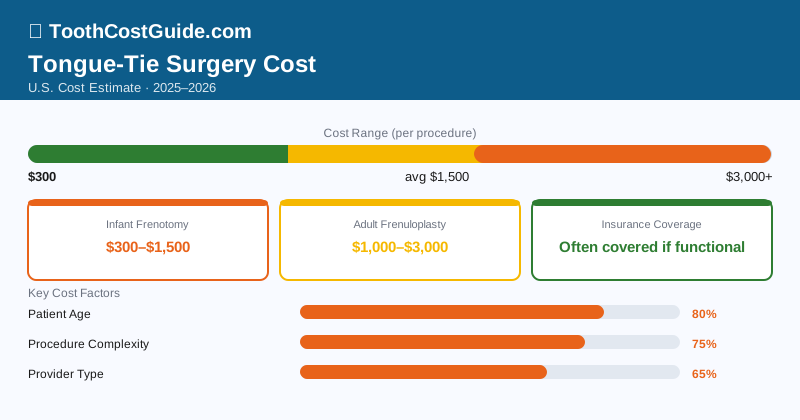
Four to eleven percent of newborns come into the world with ankyloglossia — tongue-tie — and yet the procedure to fix it remains one of the most argued-about minor surgeries in pediatric dentistry. Costs swing wildly: $300 at one office, $1,500 two blocks away for what seems like the same thing. The difference usually comes down to three factors — who does it, whether they use a laser, and whether your insurance decides it’s medically necessary or not.
What Tongue-Tie Release Actually Costs
Two procedures fall under the tongue-tie umbrella. A frenotomy is the simpler snip — cutting the lingual frenulum with scissors or a laser, usually done in minutes on infants. A frenuloplasty is more involved, used for thicker or posterior ties where sutures are needed, and it’s more common in older children and adults.
| Procedure | Typical Cost |
|---|---|
| Infant frenotomy (scissors) | $300–$600 |
| Infant frenotomy (laser) | $600–$1,500 |
| Adult/older child frenuloplasty | $1,000–$3,000 |
| Lactation consultant (1–3 sessions post-op) | $75–$200 per session |
| Speech therapy evaluation | $100–$300 per session |
Laser frenotomies cost more because the equipment is expensive, but they tend to produce less bleeding and a slightly faster recovery — not necessarily a clear clinical winner over scissors for infants. A 2021 review in Pediatrics found the evidence for routine laser use isn’t conclusive, so don’t assume “laser = better” just because the price tag is higher.
Who performs the procedure drives cost as much as technique does. Pediatric dentists, oral surgeons, ENTs, and even some lactation-informed midwives all do tongue-tie releases. Oral surgeons typically charge more than pediatric dentists for the same procedure.
Does Insurance Cover It?
Here’s where things get genuinely complicated. Coverage hinges almost entirely on how the claim is coded and documented. If the tie is causing a documented feeding issue in an infant — poor latch, failure to thrive, maternal nipple damage — it’s much more likely to be covered under medical insurance (not dental) as a medically necessary procedure.
Get a letter from your pediatrician or lactation consultant documenting specific feeding problems before the procedure. Claims submitted with supporting documentation from multiple providers are approved at higher rates. Ask your provider to code it under your medical insurance, not dental — the medical plan often covers what dental denies.
Cosmetic tongue-tie releases in adults — done purely for speech improvement without documented pathology — are rarely covered. Adults getting it done before orthodontic work or for chronic speech issues will typically pay every dollar out of pocket.
Don’t overlook the follow-up costs. If you’re navigating this for an infant, expect to spend $75–$200 on a lactation consultant both before and after the procedure — that follow-up work is often what actually determines success versus needing a revision.
Tongue-tie diagnosis is genuinely controversial. Some providers are more aggressive about recommending release than others. If your baby is gaining weight well and breastfeeding isn’t causing significant pain, get a second opinion before proceeding — revision rates for unnecessary releases are not trivial.
Adults Getting Tongue-Tie Release
Adult frenuloplasty is a different animal than infant frenotomy. The frenulum is typically thicker, sutures are required, and recovery takes 1–2 weeks. Most adults pursue it for one of three reasons: persistent speech articulation issues, preparation for orthodontic treatment, or symptoms like tongue fatigue and difficulty eating certain foods.
Cost for adults runs $1,000–$3,000 depending on technique and surgeon. General anesthesia is rarely needed — local handles it just fine — but if it’s performed in an outpatient surgical center rather than a dental office, facility fees push the total higher.
Post-operative myofunctional therapy is often recommended for adults to retrain tongue posture after release. That means 8–12 sessions at $75–$150 each, though some insurance plans cover this under speech therapy benefits. The ADA notes that outcomes without myofunctional follow-up in adults are less predictable, so it’s not optional if you want lasting results.
For anyone also dealing with related oral health concerns, see our guide on tooth extraction cost for a sense of how other minor oral surgeries are priced.
Bottom Line
Tongue-tie release for an infant typically costs $300–$1,500 depending on laser versus scissors and who performs it. Adults pay $1,000–$3,000 for the more involved frenuloplasty. Insurance often covers it when feeding problems or medical necessity are documented — but you need to build that paper trail before the procedure, not after. Budget for lactation or speech therapy follow-up regardless of what the surgery itself costs.